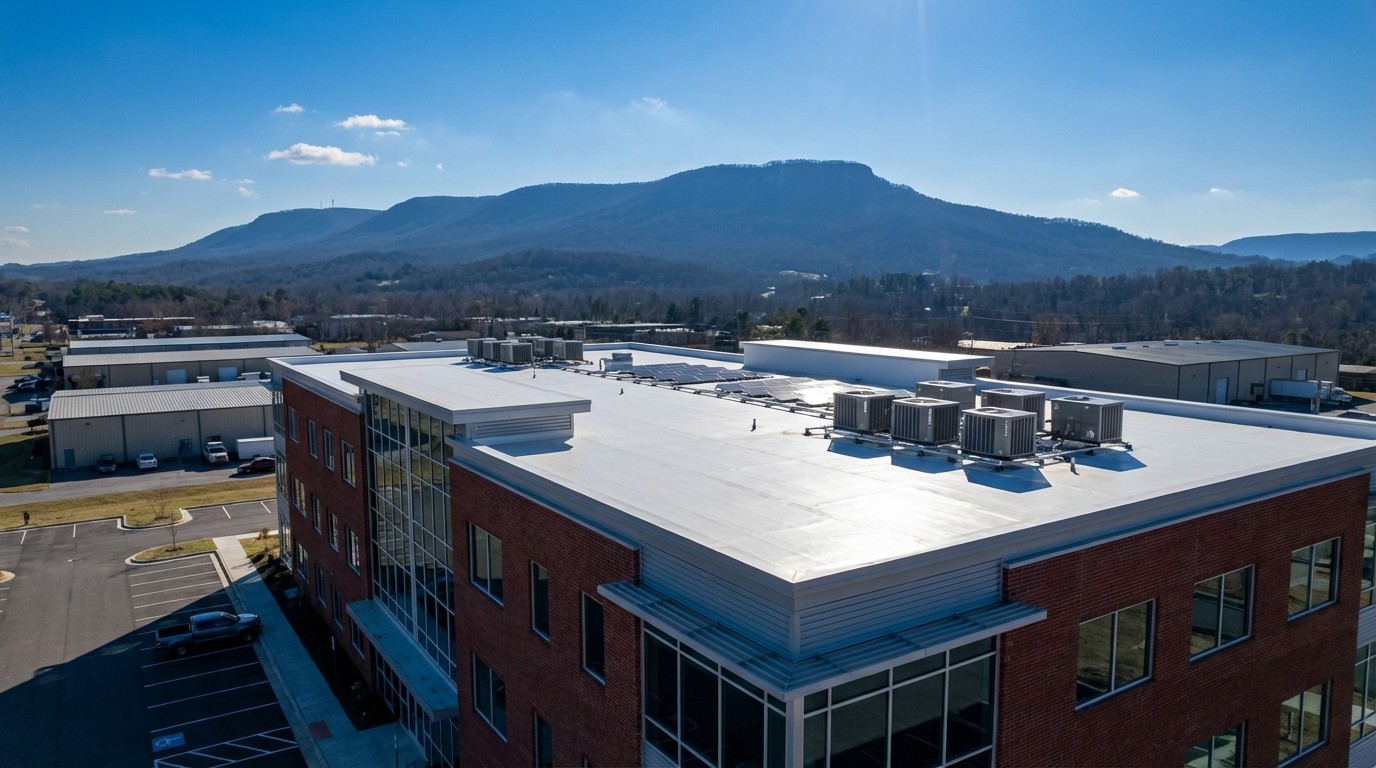
Chattanooga's humid subtropical climate is harder on flat roofs than most property owners realize. According to ClimateCheck data, our region faces projected increases in extreme heat days (from 7 to 43 annually by 2050) and extreme precipitation risk, with 25% of buildings facing flood risk. Choosing the right flat roof repair material is not just about cost. It is about finding a material that can handle our unique weather challenges for decades.
If you own a commercial building, manage rental properties, or have a home with a flat roof section, the material you choose today will determine whether you are making emergency repair calls after every spring storm or enjoying decades of leak-free protection. This guide explains which flat roof materials perform best in Chattanooga's challenging climate, what you will pay, and how to choose the right option for your property.
Why Chattanooga's Climate Demands Careful Material Selection
Chattanooga sits in a humid subtropical climate zone with no distinct dry season. This creates specific challenges that flat roof materials must handle to perform well over their expected lifespan.
Humid Subtropical Climate Challenges
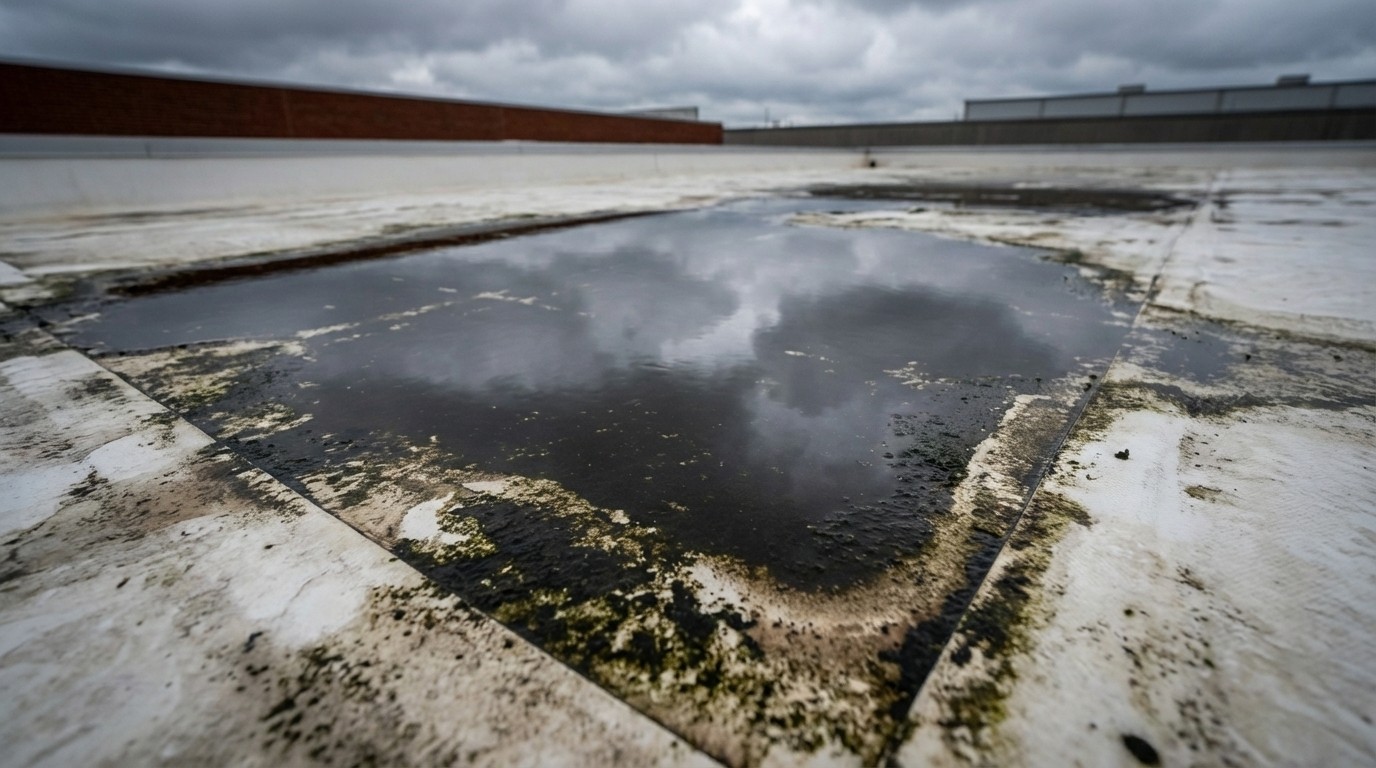
Our climate combines high humidity, heavy rainfall, temperature extremes, and seasonal storms. Each of these factors stresses flat roof materials in different ways.
High humidity promotes moisture-related issues. Constant moisture in the air can degrade adhesive seams over time, especially on EPDM systems. It also creates conditions for mold and mildew growth if water infiltrates the membrane.
Heavy rainfall creates ponding water concerns. Chattanooga receives extreme precipitation. Flat roofs with poor drainage develop standing water that accelerates membrane degradation. Materials must resist ponding water damage.
Temperature extremes cause expansion and contraction stress. Summer days above 95°F followed by winter freezes create thermal cycling that stresses seams and fasteners. Materials expand in heat and contract in cold, and this constant movement can create gaps where water enters.
Seasonal storms bring impact damage risk. Spring and early summer thunderstorms, plus late summer hurricane remnants, mean our flat roofs face high winds, hail, and flying debris. Materials need impact resistance and strong attachment systems to survive.
Common Flat Roof Problems in Chattanooga
Understanding what typically goes wrong helps you choose materials that avoid these issues.
Ponding water after heavy rain events is the most common problem. Even small areas of standing water (which should drain within 48 hours) can sit for days on improperly sloped roofs. This degrades membranes and creates leak points. Professional roof repair services can assess drainage issues and recommend solutions.
UV degradation from intense summer sun breaks down some materials faster than expected. Chattanooga's increasing number of 95°F+ days means more UV exposure, especially on dark-colored membranes.
Seam failure from temperature cycling affects glued or taped seams more than heat-welded ones. The adhesive bond weakens over time as materials expand and contract with temperature swings.
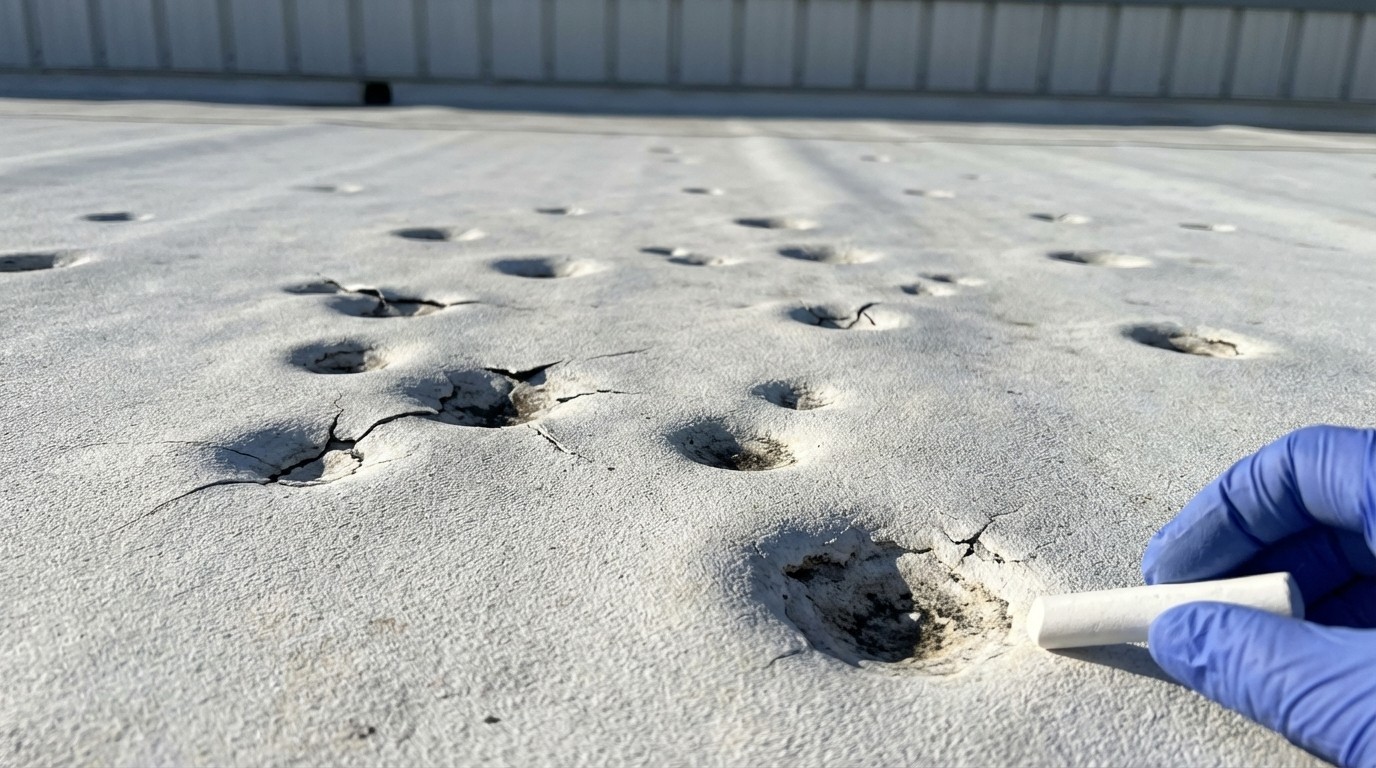
Storm debris damage happens when branches, hail, or wind-blown objects impact the roof. Thinner membranes puncture more easily than thicker, reinforced options. After severe weather, use the hail storm impact checker to see if your property was affected.
Ice formation affecting winter drainage is less common here than up north, but occasional freezes can create ice dams around drains and scuppers, backing up water onto the membrane.
Chattanooga Building Code Requirements
As of May 26, 2023, Chattanooga adopted updated building codes that affect flat roof installations.
The Tennessee Residential Code 2018 requires secondary emergency overflow drains or scuppers where the roof perimeter construction extends above the roof. Overflow drains must be installed with the inlet flow line located 2 inches above the low point of the roof.
This drainage requirement is critical. It prevents ponding water from building up to dangerous levels if primary drains clog. Your chosen material and installation must meet this standard, or you will not pass inspection.
For specific flat roof requirements in Chattanooga, contact the Chattanooga Inspection Division at 1250 Market Street, #1000, or call 423-468-1967. They can clarify current slope requirements, drainage specifications, and fire ratings for your specific building type.
Top 5 Flat Roof Repair Materials for Chattanooga Properties
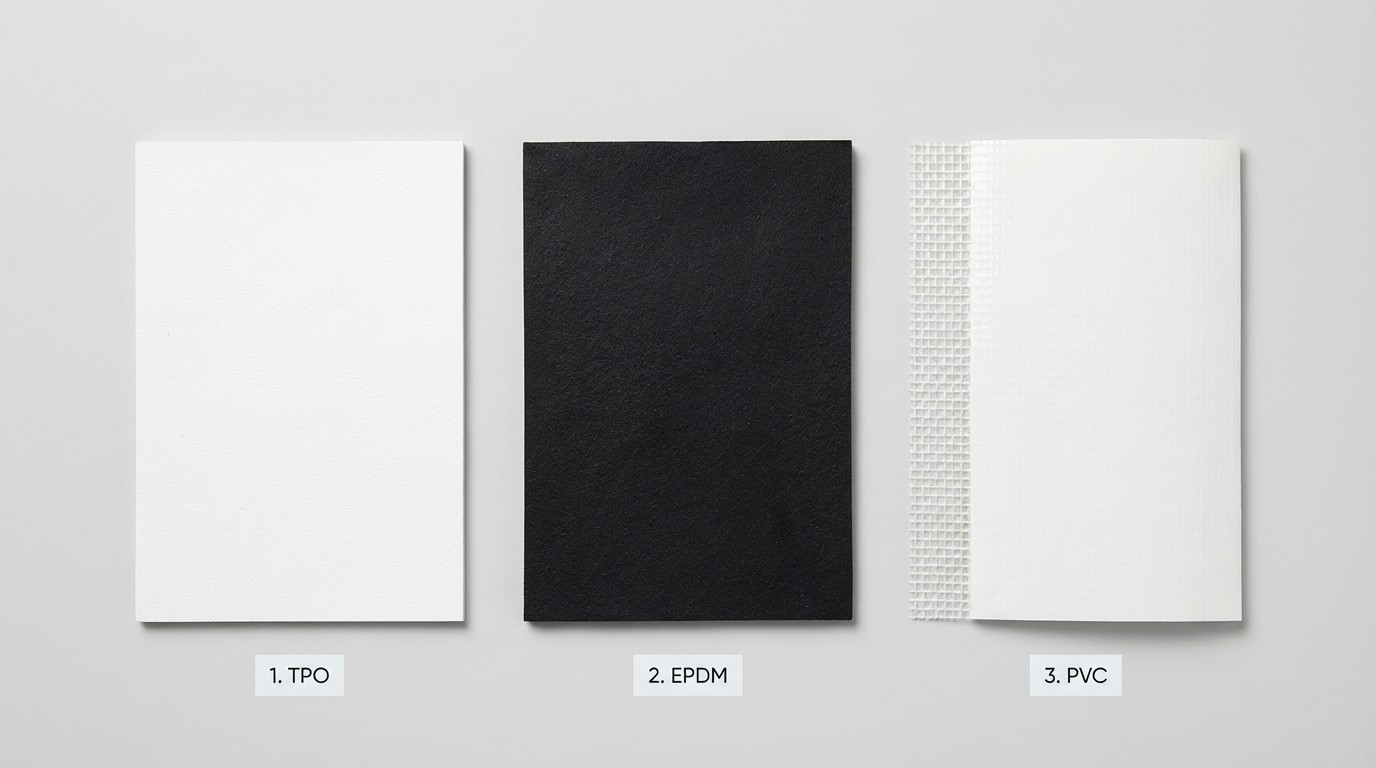
Here is how the most common flat roof materials perform in our climate, with honest assessments of strengths and weaknesses.
1. TPO (Thermoplastic Polyolefin): Best for Energy Efficiency
TPO is a single-ply membrane installed in wide sheets and joined with heat-welded seams. The bright white surface reflects heat, making it popular for commercial buildings focused on reducing cooling costs. According to IKO's complete guide to commercial flat roofing systems, TPO has become one of the fastest-growing commercial roofing materials due to its energy efficiency and durability.
Chattanooga Performance:
TPO offers excellent heat reflection, which reduces cooling costs in hot Chattanooga summers. That white surface can lower your roof temperature by 30-50°F compared to dark materials, translating to meaningful energy savings.
The heat-welded seams create strong, waterproof bonds. Unlike adhesive seams that can fail in our humidity, heat-welded TPO seams typically hold up well through temperature cycling and moisture exposure.
TPO is puncture-resistant compared to EPDM. It handles foot traffic better and resists damage from debris during storms.
However, TPO can shrink over time, especially in climates with temperature extremes. This shrinkage creates gaps at curves and edges, leaving potential leak points. Quality installation and proper fastening minimize this issue.
The material also has variable quality. TPO is newer technology (widespread since the 1990s), and some formulations have not lasted as expected. Early TPO roofs sometimes failed around the 10-year mark. Modern formulations from major manufacturers (GAF, Firestone, Carlisle) perform much better, but the lack of 30+ year track record makes some property owners hesitant.
Lifespan in Chattanooga Climate: 15-25 years (climate-adjusted based on quality of installation and product line)
Best For: Commercial buildings, energy-conscious property owners, roofs with regular foot traffic
Cost Range: Mid-range ($5.50-$8.50 per square foot installed)
Local Availability: Widely available. Most Chattanooga contractors install TPO and stock materials from major manufacturers.
2. EPDM (Rubber Membrane): Best for Proven Longevity
EPDM is synthetic rubber, the workhorse material that has protected flat roofs since the 1960s. It is durable, flexible, and has a proven 30+ year track record in climates like ours.
Chattanooga Performance:
EPDM handles temperature extremes well. The rubber remains flexible in winter freezes and does not degrade quickly in summer heat. This temperature tolerance makes it reliable in our climate with hot summers and occasional cold snaps.
The proven 30+ year track record locally gives property owners confidence. Chattanooga has thousands of EPDM roofs from the 1990s still performing well, which is more than you can say for some newer materials.
EPDM offers cost-effective initial investment. It is typically the most affordable single-ply option, making it attractive for budget-conscious property owners or rental properties where upfront cost matters most.
The downsides are significant, though. Adhesive seams can fail in humidity. EPDM is usually joined with adhesive tape or liquid glue, and our constant moisture can degrade these bonds over time. Seam repairs are the most common EPDM maintenance issue in Chattanooga.
EPDM is puncture-prone compared to TPO or PVC. The thinner material tears more easily from sharp debris or heavy foot traffic. If your roof sees regular maintenance access, EPDM may not be the best choice.
The material also degrades under ponding water. While EPDM handles rain well, standing water breaks down the rubber over time, creating soft spots and eventual leaks. Proper drainage is critical.
Lifespan in Chattanooga Climate: 20-30 years (with proper maintenance and good drainage)
Best For: Budget-conscious property owners, residential flat roof sections, garages and outbuildings
Cost Range: Most affordable ($4.00-$6.50 per square foot installed)
Local Availability: Very common. All Chattanooga contractors install EPDM, and replacement materials are readily available.
3. PVC (Polyvinyl Chloride): Best for Maximum Durability
PVC is the premium single-ply option, engineered for long-term performance in challenging conditions. It costs more upfront but often provides the best total cost of ownership.
Chattanooga Performance:
PVC delivers the longest lifespan, often 30+ years, with many manufacturers offering lifetime warranties. This durability makes it attractive for property owners planning to hold buildings long-term.
The material offers excellent ponding water resistance, which is critical for Chattanooga. PVC is the most resistant single-ply material to standing water damage. If your roof has drainage challenges, PVC will tolerate ponding better than EPDM or TPO.
PVC features superior seam strength through heat-welding. The seams are often stronger than the membrane itself, creating a watertight barrier that holds up through decades of temperature cycling and moisture exposure.
The material resists oils and chemicals, making it ideal for restaurant roofs or any building where grease, oils, or chemical exposure is a concern. EPDM degrades quickly when exposed to oils, but PVC is unaffected.
The main drawback is higher upfront cost. PVC typically costs 20-40% more than EPDM and 10-20% more than TPO. However, the longer lifespan often makes it cheaper per year of service.
Lifespan in Chattanooga Climate: 30+ years, often with lifetime warranty
Best For: Premium commercial buildings, long-term investment properties, roofs with ponding water issues, restaurants
Cost Range: Highest cost ($7.00-$10.50 per square foot installed)
Local Availability: Available through specialized contractors. Not all roofers install PVC, so your contractor options may be more limited.
4. Modified Bitumen: Best for Traditional Reliability
Modified bitumen is a multi-layer asphalt-based system that combines traditional built-up roofing reliability with modern polymer modifications for flexibility and durability.
Chattanooga Performance:
Modified bitumen offers proven 30+ year performance when maintained. It has been used in commercial roofing since the 1970s and performs well in humid climates like ours.
The superior waterproofing is critical for heavy rain. Multiple layers create redundancy, so even if the top layer is compromised, underlying layers continue protecting the roof deck.
Modified bitumen handles temperature fluctuations well. The polymer modification (usually SBS or APP) keeps the asphalt flexible in cold and stable in heat, reducing cracking from thermal cycling.
All local contractors are familiar with modified bitumen. It has been a Chattanooga commercial roofing staple for decades, so finding qualified installers and replacement materials is easy.
The installation requires professional expertise. Torch-down modified bitumen involves open flames, requiring experienced crews and proper safety protocols. Cold-applied versions are safer but require precise application.
Lifespan in Chattanooga Climate: 20-30 years with proper maintenance (periodic inspections and recoating)
Best For: Replacement for aging built-up roofs, property owners preferring traditional systems, commercial buildings
Cost Range: Mid-range ($5.00-$8.00 per square foot installed)
Local Availability: Common. Traditional choice among Chattanooga commercial roofers.
5. Built-Up Roofing (BUR): Best for Budget Replacement
Built-up roofing is the original flat roof system, consisting of multiple layers of asphalt and reinforcing fabric topped with gravel. While being replaced by modern systems, it still has applications.
Chattanooga Performance:
Multiple waterproof layers provide redundancy. If one layer fails, others continue protecting the structure. This has made BUR reliable for over a century.
BUR is good for heavy foot traffic. The gravel surface protects the underlying membrane, and the system can handle regular access better than thin single-ply membranes.
The long track record (20-30 years typical) gives some property owners confidence in the proven system.
However, BUR is heavy, requiring structural load considerations. Older buildings may need reinforcement, and the weight can be a concern for some structures.
Installation creates odor and disruption. Hot asphalt application creates strong smells and requires significant on-site work compared to rolling out single-ply membranes.
The system is being replaced by modern alternatives. Most new commercial flat roofs use single-ply membranes, and BUR is declining in market share. Finding contractors who prefer this method is getting harder.
Lifespan in Chattanooga Climate: 20-30 years
Best For: Older commercial buildings needing like-for-like replacement, budget-conscious replacement, buildings with regular roof access
Cost Range: Mid-range ($5.50-$8.00 per square foot installed)
Local Availability: Still available but declining. Older-generation contractors more likely to install.
Chattanooga Flat Roof Material Comparison
Here is how these materials compare across factors that matter most in Chattanooga's climate:
Material | Lifespan (Chattanooga) | Humidity Resistance | Ponding Water Tolerance | UV Resistance | Storm Damage Resistance | Cost ($/sq ft) | Energy Efficiency | Maintenance |
|---|---|---|---|---|---|---|---|---|
TPO | 15-25 years | Good | Good | Excellent | Very Good | $5.50-$8.50 | Excellent | Low |
EPDM | 20-30 years | Fair | Fair | Good | Fair | $4.00-$6.50 | Fair | Moderate |
PVC | 30+ years | Excellent | Excellent | Excellent | Excellent | $7.00-$10.50 | Excellent | Very Low |
Modified Bitumen | 20-30 years | Good | Very Good | Good | Good | $5.00-$8.00 | Fair | Moderate |
Built-Up Roofing | 20-30 years | Good | Good | Fair | Good | $5.50-$8.00 | Poor | Moderate-High |
Key Takeaway: For most Chattanooga properties, PVC offers the best long-term value if you can afford the upfront cost. TPO provides good performance at a lower price point. EPDM remains the budget choice but requires attention to drainage and seam maintenance.
How to Choose the Right Material for Your Chattanooga Flat Roof
Selecting the best material depends on your specific building, budget, and priorities. Here is how to think through the decision.
Consider Your Building Type
Commercial buildings with high-value interiors (offices, retail, warehouses) typically justify premium materials like PVC. The cost of interior water damage from a roof leak far exceeds the extra investment in better roofing.
Residential flat roof sections on homes or attached garages can often use mid-range options like TPO or EPDM. The smaller roof area makes even premium materials affordable.
Rental properties where budget is the primary concern often choose EPDM to minimize upfront costs, accepting higher maintenance and shorter replacement cycles.
Foot traffic expectations matter. Roofs with regular HVAC maintenance access or other equipment need puncture-resistant materials like TPO or PVC. EPDM tears more easily under repeated foot traffic.
Structural load capacity is a consideration for older buildings. BUR and modified bitumen are heavier than single-ply membranes. Your building may need structural evaluation before selecting these systems.
Evaluate Your Budget vs. Longevity
Total cost of ownership matters more than initial price. A roof that costs $8,000 and lasts 30 years ($267/year) is cheaper than one that costs $5,000 and lasts 15 years ($333/year), even though the second one feels more affordable today. Learn more about average roof lifespan by material type.
Maintenance costs over lifespan add up. EPDM seam repairs every 5-10 years can cost $1,000-$3,000 per visit. PVC rarely needs seam work, so maintenance costs stay lower over decades.
Energy savings potential in Chattanooga summers can offset material costs. TPO or PVC can reduce cooling costs by 10-20% compared to dark EPDM or BUR. Over 20 years, those savings can equal thousands of dollars.
Calculate the per-year cost, not just the initial investment. Divide total installed cost by expected lifespan to see the annual cost of each option. This often makes premium materials look more attractive.
Assess Climate-Specific Needs
Does your roof pond water after heavy rain? If yes, choose PVC or modified bitumen. EPDM degrades quickly under ponding conditions, and even TPO can have issues. PVC is the most ponding-resistant single-ply option.
Is your building in a storm-prone location (hilltop, open area, near the Tennessee River)? Choose materials with higher wind uplift ratings and impact resistance. PVC and quality TPO systems handle storms better than EPDM.
Does your roof get full sun or is it shaded? Full-sun roofs face more UV degradation. White TPO or PVC membranes reflect UV and stay cooler. Dark EPDM absorbs heat and breaks down faster in intense sun.
Do you have specific chemical exposure (restaurant, manufacturing)? PVC resists oils and chemicals. EPDM degrades when exposed to grease, petroleum products, or certain solvents.
Check Building Code Compliance
Drainage requirements are non-negotiable. Your chosen material and installation must include secondary overflow drains 2 inches above the roof low point, per Chattanooga's current code.
Emergency overflow needs depend on your roof perimeter design. If your roof has walls extending above the roofline (parapet walls), overflow provisions are required to prevent catastrophic ponding.
Fire rating requirements vary by building type and location. Commercial buildings in certain zones need Class A fire-rated roof systems. Verify your requirements with the Chattanooga Inspection Division before selecting materials.
Working with Chattanooga Flat Roofing Contractors
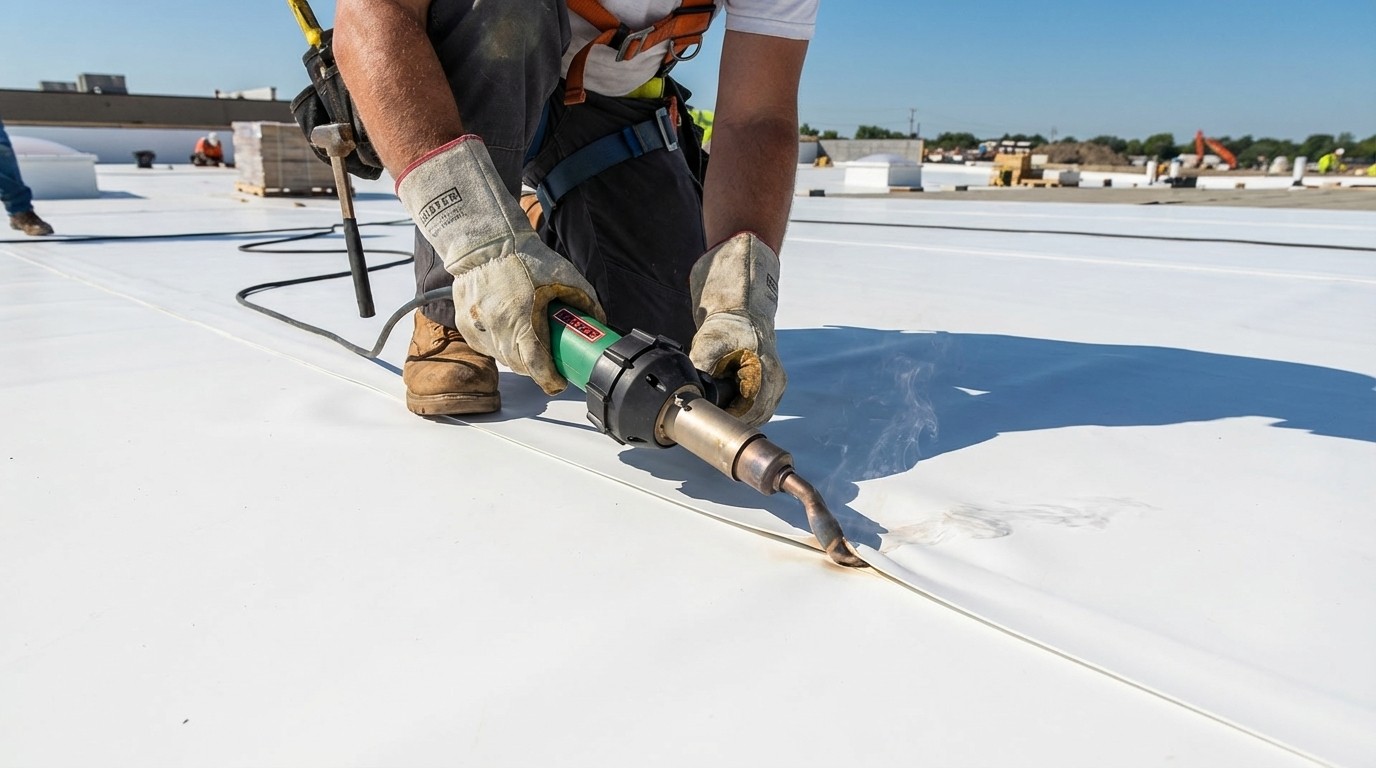
Even the best material performs poorly with bad installation. Here is how to find qualified contractors and ensure proper installation.
Questions to Ask Local Contractors
"Which materials do you install most often in Chattanooga?" This reveals their expertise and preferences. A contractor who installs mostly TPO will give you better TPO work than one who rarely uses it.
"What is your experience with [specific material] in our climate?" Ask about specific Chattanooga projects with your chosen material. Request references from local commercial buildings or homes with similar roofing.
"How do you handle our drainage code requirements?" They should immediately mention the 2-inch overflow drain requirement and explain how they design drainage systems to prevent ponding.
"What warranties do you offer on materials and workmanship?" Manufacturer warranties cover material defects. Workmanship warranties (from the contractor) cover installation errors. You want both. Expect 10-20 year workmanship warranties from quality contractors.
"Can I see recent Chattanooga projects with this material?" Photos are nice, but visiting a completed local project lets you see real-world performance and talk to other property owners about their experience. Consider using a free quote review service to ensure you are getting fair pricing and complete specifications.
Getting Multiple Quotes for Comparison
Never accept the first quote without comparison. Flat roof pricing varies significantly between contractors, and you need multiple bids to understand fair market pricing.
Request line-item quotes that break down material costs, labor, tear-off and disposal, drainage improvements, and warranty coverage. Vague total-price quotes make comparison impossible.
Compare material specifications, not just brands. Two contractors might both propose "TPO," but one uses 60-mil premium material while the other uses 45-mil economy grade. The specifications matter as much as the brand name.
Understand installation methods. Heat-welded seams cost more to install than glued seams but perform better long-term. Mechanically attached systems differ from fully adhered systems. Make sure you are comparing similar installation quality.
At roofquotes.com, we help Chattanooga property owners gather multiple vetted quotes with clear line-item pricing so you can compare options side by side. You will see exactly what each contractor proposes and what you are paying for each component. This transparency takes the guesswork out of choosing between materials and contractors. Get free quotes from vetted Chattanooga flat roofing contractors.
Red Flags When Hiring
Pressure to choose a specific material without climate explanation is a warning sign. A good contractor explains why they recommend a material based on your building, drainage, and Chattanooga's weather patterns.
Unwillingness to discuss drainage solutions means they may not understand local code requirements or best practices for our heavy rainfall. Drainage design is critical for flat roof performance here.
No references from local Chattanooga projects suggests they lack experience in our market. Climate-specific installation knowledge matters. You want contractors familiar with our weather challenges.
Significantly low bids often mean cut corners. If one quote is 30-40% below others, ask detailed questions about material specifications, installation methods, and warranty coverage. The lowest price rarely delivers the best value.
Maintenance Tips for Chattanooga Flat Roofs
Proper maintenance extends any material's lifespan and prevents small issues from becoming expensive repairs.
Bi-annual inspections should happen before spring storm season (March) and after fall weather (November). Look for standing water, seam separation, punctures, or debris accumulation. Schedule a professional roof inspection to catch issues early.
Clear drains before heavy rain season. Spring thunderstorms bring intense rainfall. Ensure all drains and scuppers are clear of leaves, debris, and sediment so water can exit quickly.
Address ponding water immediately. If you see standing water 48+ hours after rain, you have a drainage problem. Small areas of ponding accelerate membrane degradation. Fix drainage issues before they cause leaks.
Storm damage assessment protocol means inspecting your roof after any severe weather event. Look for debris impacts, lifted seams, or new soft spots. Catching damage early prevents water infiltration.
Professional inspection after severe weather is worth the cost. After major storms, hail events, or high winds, have a qualified roofer inspect for damage you might miss. Insurance claims require documentation, and early detection prevents further damage.