A roofing calculator is an online tool that estimates how much your roof project will cost based on your roof's size, pitch, and the materials you choose. You enter some basic information about your home, and the calculator spits out a ballpark figure. It's not a quote and it won't match exactly what contractors charge, but it gives you a starting point so you're not walking into conversations completely blind.
Using a roofing calculator before you start collecting quotes helps you understand whether the numbers contractors give you are in the right ballpark or way off base.
What Information You'll Need
Most roofing calculators ask for similar inputs. Having this information ready makes the process faster and more accurate.
Your roof's approximate size. Some calculators ask for square footage, others ask for the footprint of your home and estimate from there. If you know your roof is around 2,000 square feet, enter that. If you don't know, the calculator might estimate based on your home's floor plan.
Roof pitch or slope. This is how steep your roof is, usually expressed as a ratio like 6:12 (meaning the roof rises 6 inches for every 12 inches of horizontal run). Steeper roofs require more materials and more labor, so pitch affects cost significantly. If you don't know your pitch, some calculators let you select from visual examples or use a default average.
Material type. Basic three-tab shingles cost less than architectural shingles, which cost less than metal or tile. The calculator needs to know what you're planning to install to give you a relevant estimate.
Your location. Labor costs vary dramatically by region. A roof that costs $10,000 in rural Tennessee might cost $18,000 in a major metropolitan area. Good calculators factor in regional pricing differences.
Project type. Are you replacing an existing roof or doing new construction? Replacement includes tear-off and disposal costs that new construction doesn't.
Step by Step: Using an Online Roofing Calculator
The process is pretty straightforward, but here's what to expect.
First, you'll enter your address or zip code. This helps the calculator pull regional pricing data and, in some cases, satellite measurements of your actual roof.
Next, you'll answer questions about your roof. Size, pitch, number of stories, complexity. Some calculators show you aerial views of your property and let you verify or adjust the measurements they've pulled.
Then you'll select materials. Most calculators offer options ranging from basic asphalt to premium shingles to metal roofing. Pick whatever you're actually considering so the estimate reflects real options.
Finally, you'll get your estimate. This usually shows up as a range rather than a single number, something like "$11,500 to $14,200." That range accounts for variation in contractor pricing and the unknowns that only a physical inspection can reveal.
Understanding Your Results
The number you get from a roofing calculator is an estimate, not a promise. Treat it as a reference point rather than a budget you can count on.
A few things the calculator can't know:
The actual condition of your roof deck. If there's rotted plywood under your shingles, that's extra cost. The calculator assumes everything underneath is fine.
Access issues. A roof that's easy to reach costs less to work on than one that requires special equipment or has landscaping complications.
Existing layers. Removing two layers of old shingles costs more than removing one. The calculator might assume one layer unless you specify otherwise.
Local permit requirements. Some areas require permits for roof work, others don't. Permit costs vary widely.
The Federal Trade Commission advises homeowners to get written estimates from contractors rather than relying solely on online calculators, since actual costs depend on factors only a professional inspection can assess.
Why Calculator Estimates Differ from Actual Quotes
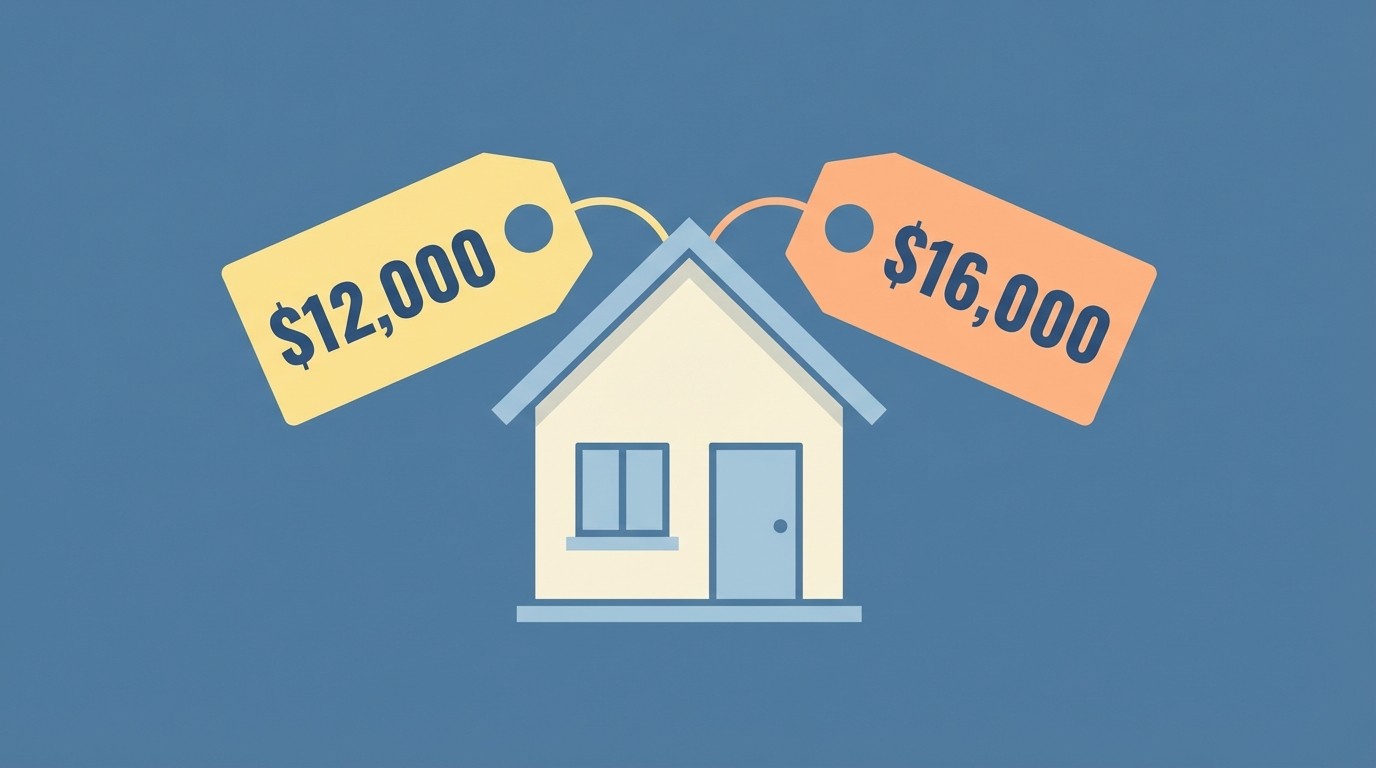
You run a calculator and get an estimate of $12,000. Then you get three quotes: $10,500, $14,800, and $16,200. What happened?
Several things, probably.
Contractors price jobs differently based on their overhead, crew costs, and current workload. A busy contractor might bid high because they don't really need the job. A contractor looking for work might sharpen their pencil.
Material specifications matter too. The calculator assumed mid-grade architectural shingles. One contractor quoted premium shingles with a 50-year warranty. Another quoted builder-grade product. Same roof, different materials, different prices.
Scope variations also create gaps. One quote might include new gutters, another doesn't. One includes a full replacement of all flashing, another plans to reuse existing flashing where possible.
This is why calculators are starting points, not final answers. They help you know if a quote is roughly reasonable, but they can't replace actual bids from contractors who've seen your roof.
When Calculator Estimates Are Most Useful
Calculators work best for initial planning and sanity-checking.
Early budgeting. If you're wondering whether roof replacement is a $5,000 project or a $20,000 project, a calculator answers that question quickly. You'll know what you're roughly looking at before you invest time in getting formal quotes.
Spotting outliers. If the calculator says $13,000 and a contractor quotes $28,000, something's off. Maybe they're seeing damage the calculator couldn't know about. Maybe they're just expensive. Either way, you know to ask questions.
Comparing material options. Running the same roof through a calculator with different material selections shows you the price difference between, say, asphalt and metal. That helps you decide which options are worth pursuing.
Regional reality checks. If you're moving to a new area and wondering what roofing costs there, a calculator gives you local pricing context before you've built relationships with local contractors.
Limitations Worth Knowing
No calculator can see your actual roof. They work from averages, satellite data, and regional pricing databases. That's useful but imperfect.
Complex roofs with lots of valleys, dormers, skylights, and varying angles are harder to estimate accurately. The more complicated your roof, the wider the gap between calculator estimates and real quotes.
Older homes sometimes have surprises that no calculator can predict. Unusual construction, outdated materials, or hidden damage only shows up when someone's actually on the roof.
And calculators can't evaluate contractors. A low estimate doesn't help if you end up hiring someone who does subpar work.
From Calculator to Actual Quotes
Think of the calculator as step one. It tells you what neighborhood you're in, price-wise. Step two is getting real quotes from real contractors.
For homeowners in the Chattanooga area, getting quotes from local roofers familiar with regional conditions will give you numbers grounded in local reality. Same goes for surrounding communities like Ringgold and Cleveland.
When you do get quotes, compare them against your calculator estimate. If they're in the same general range, you know the market is functioning normally. If there's a big gap, dig into why.