Roofing is one of the most fraud-prone home improvement industries in the country. Every year, homeowners lose thousands of dollars to dishonest contractors who take advantage of their lack of roofing knowledge. Roofing scams follow predictable patterns, and understanding them is your first line of defense against becoming a victim.
The good news is that most scam artists use the same playbook. Once you know what to look for, spotting a dishonest contractor becomes much easier. This guide covers the 12 most common roofing scams you need to know, the warning signs that should raise suspicion, and exactly what to do if you become a victim.
Whether you are dealing with storm damage, planning a roof replacement, or just received an unexpected knock on your door, this information will help you make smart decisions and protect your investment.
12 Most Common Roofing Scams
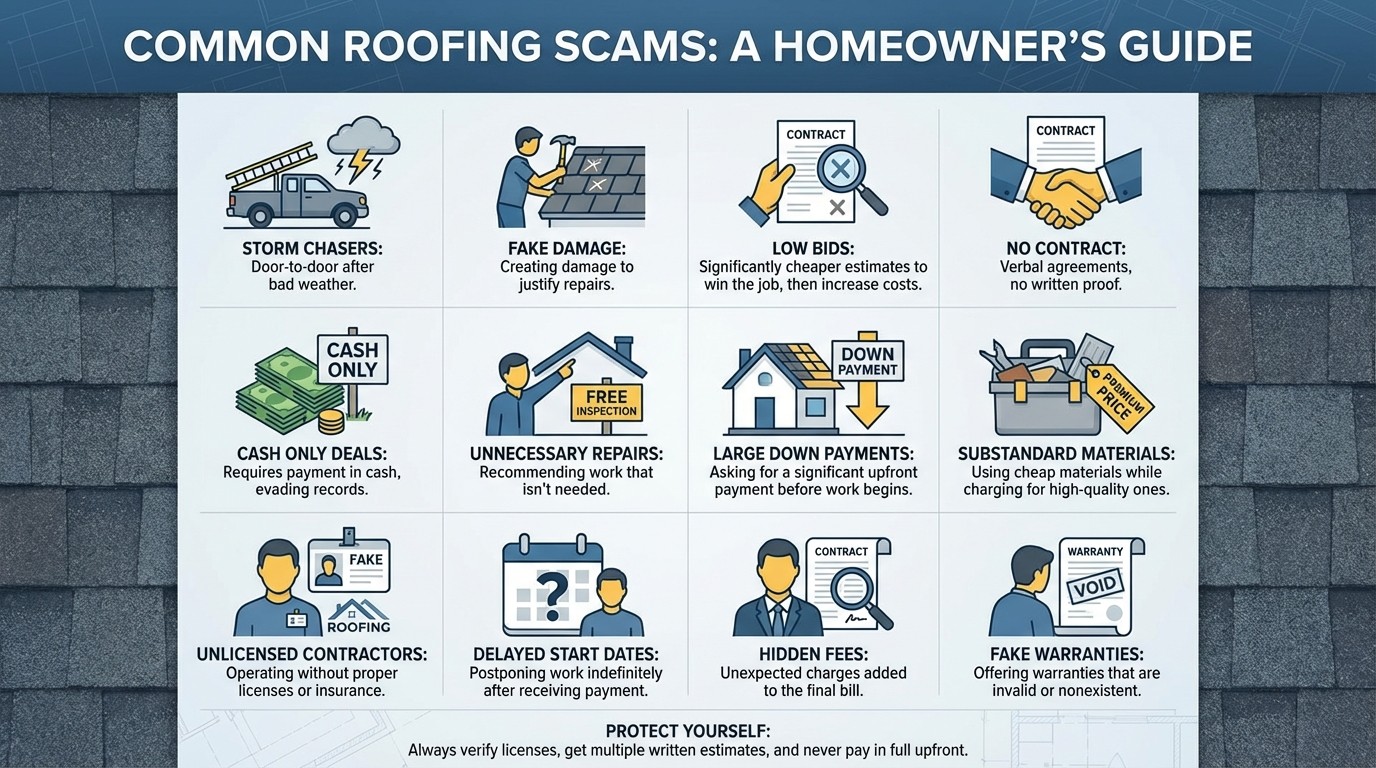
Scam artists in the roofing industry have developed a playbook of deceptive tactics. Here are the twelve most common ways dishonest roofers try to take advantage of homeowners.
1. Storm Chasers
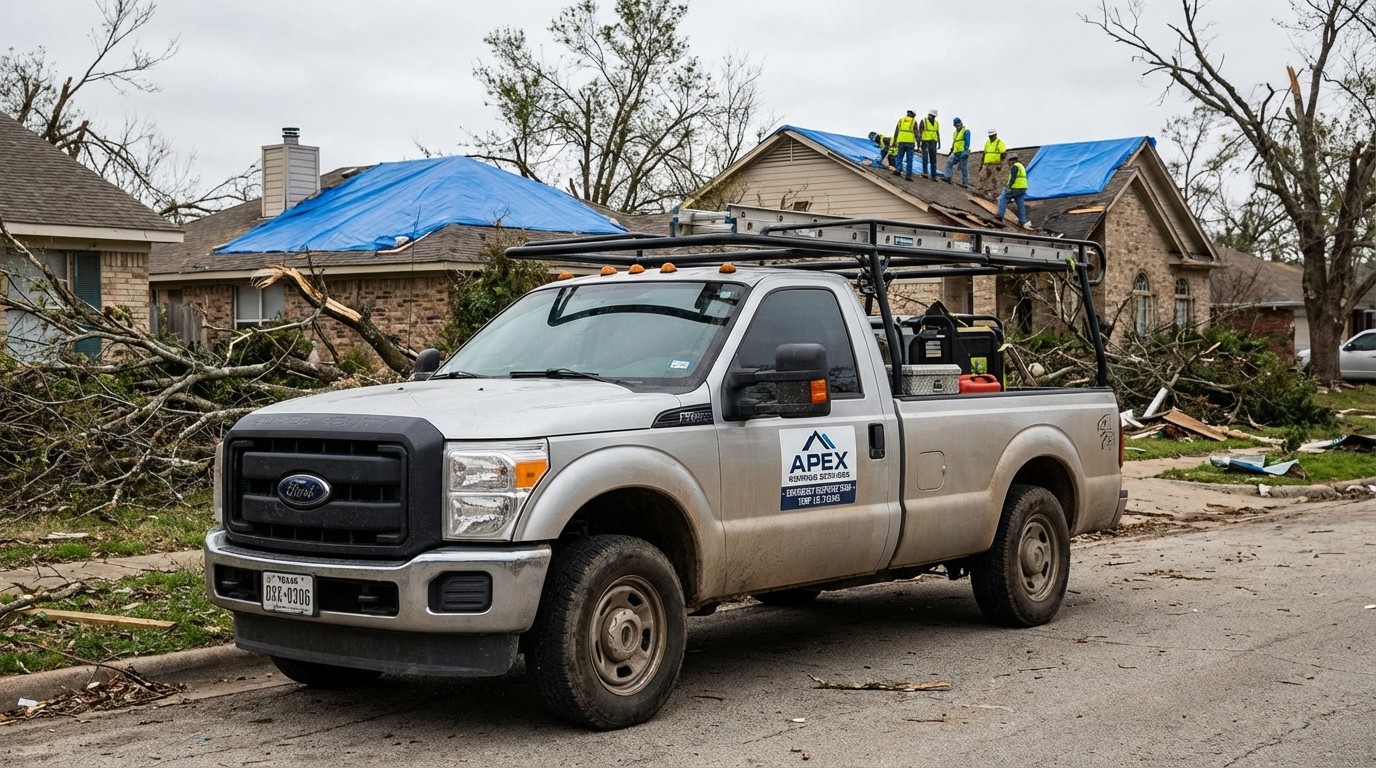
After major storms, out-of-town contractors flood affected areas looking for quick jobs. These storm chasers often have no local reputation to protect and no intention of returning if problems arise with their work.
They typically offer aggressive pricing and pressure you to sign immediately. Without a local presence, getting warranty service or corrections becomes nearly impossible. Once they leave town, you have no recourse. Stick with established local companies that will be around years from now.
2. Extremely Low Bids
Some contractors hook you with an attractively low initial quote. Once the project starts, they suddenly discover problems that require expensive additions. The final bill ends up far higher than what you agreed to pay.
This bait-and-switch tactic relies on the fact that most homeowners feel trapped once work has begun. Get detailed written specifications before any work starts, and be suspicious of quotes significantly below market rates.
3. Fake or Exaggerated Damage
Dishonest contractors may climb on your roof and create damage, or exaggerate minor issues into major emergencies. They use these false assessments to pressure you into signing immediately before you can get a second opinion.
Never let a contractor onto your roof without first getting an independent inspection. A legitimate contractor welcomes a second opinion and will not pressure you to decide on the spot.
4. Demanding Large Upfront Payments
A legitimate roofing contractor will never ask for full payment before starting work. The industry standard for deposits ranges from 10% to 30% of the total project cost. This covers initial materials and scheduling.
If a roofer demands 50% or more upfront, consider it a major red flag. Many scammers collect large deposits, then disappear without completing the work. Some never show up at all. Protect yourself by agreeing only to reasonable deposit terms and withholding final payment until the job is complete.
5. No Written Contract
Handshake deals might seem friendly, but they leave you completely unprotected. A verbal agreement means nothing if disputes arise later about scope, timeline, or materials.
Every legitimate roofing project should have a detailed written contract. This document should specify exact materials by brand and model, start and completion dates, payment schedule, warranty terms, and what happens if unexpected issues arise. If a contractor resists putting details in writing, walk away immediately.
6. Skipping Permits and Inspections
Pulling permits and passing inspections takes time and money. Dishonest contractors skip these steps to speed up projects and increase their profit margins at your expense.
This creates serious problems for you. Unpermitted work violates building codes, can void your homeowner's insurance, and creates major issues when you sell your home. Always verify that your contractor pulls proper permits and schedules required inspections.
7. Using Cheap or Leftover Materials
Your contract might specify premium architectural shingles, but the crew installs cheaper 3-tab shingles instead. Some contractors use leftover materials from other jobs, which may be damaged, mismatched, or past their prime.
This scam is hard to detect since most homeowners cannot easily identify roofing products from the ground. Request material delivery receipts and inspect product labels before installation begins. Legitimate contractors have no problem providing this documentation.
8. Insurance Claim Fraud
After storm damage, some contractors offer to work with your insurance in ways that cross ethical and legal lines. They might inflate damage reports, add phantom repairs, or submit fraudulent claims on your behalf.
This is insurance fraud, and you can face serious consequences. Your policy could be canceled, claims denied, or you might face legal action. Never sign any document that misrepresents the actual condition of your roof or the work being performed.
9. High-Pressure Sales Tactics
Scammers love creating false urgency. They might claim a special discount expires at midnight, or that your roof is about to collapse if you do not act immediately. This pressure is designed to prevent you from researching their company or getting competing quotes.
Legitimate contractors understand that a new roof is a major investment. They give you time to think, encourage you to get other quotes, and answer all your questions patiently. Never let anyone rush you into signing a roofing contract.
10. No License or Insurance
Operating without proper licensing and insurance is a major red flag. Unlicensed contractors have no accountability to state oversight boards, and without insurance, you are liable if workers get injured on your property.
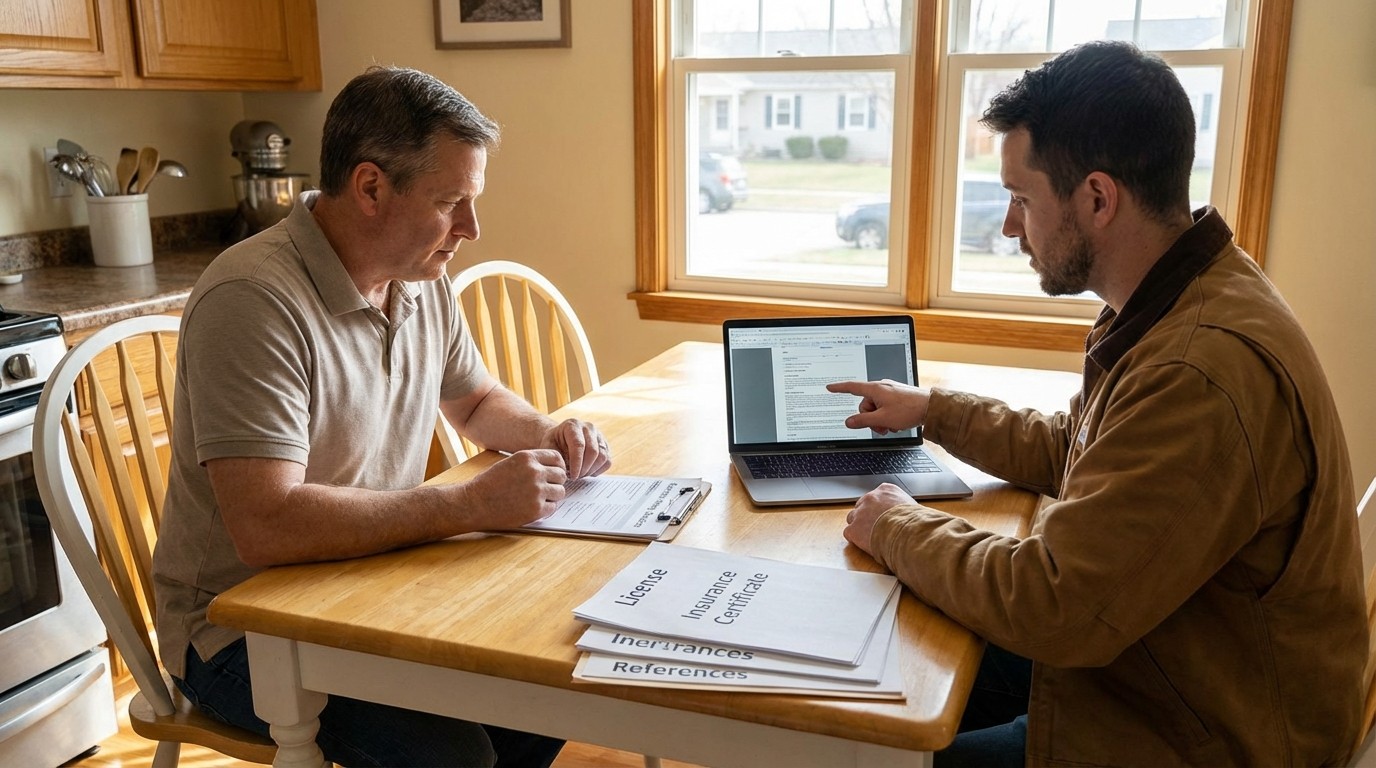
Always ask for license and insurance certificates, then verify them independently. Scammers often provide fake documents or expired policies. Call the licensing board and insurance company directly to confirm active coverage.
11. Cash-Only Payments
Contractors who insist on cash-only payments are trying to avoid a paper trail. This makes disputes nearly impossible to resolve and often indicates tax evasion or other shady business practices.
Legitimate contractors accept checks, credit cards, or other traceable payment methods. The small processing fee is worth the protection it provides in case problems arise.
12. Disappearing After Deposit
The most brazen scammers collect large deposits and simply never return. They may give excuses about material delays or scheduling conflicts, then become completely unreachable.
Protect yourself by never paying more than 30% upfront. Research the company thoroughly before signing any contract, and verify they have a physical location you can visit if needed.
Understanding these common roofing scams helps you spot dishonest contractors before it is too late.
Warning Signs of a Dishonest Roofer
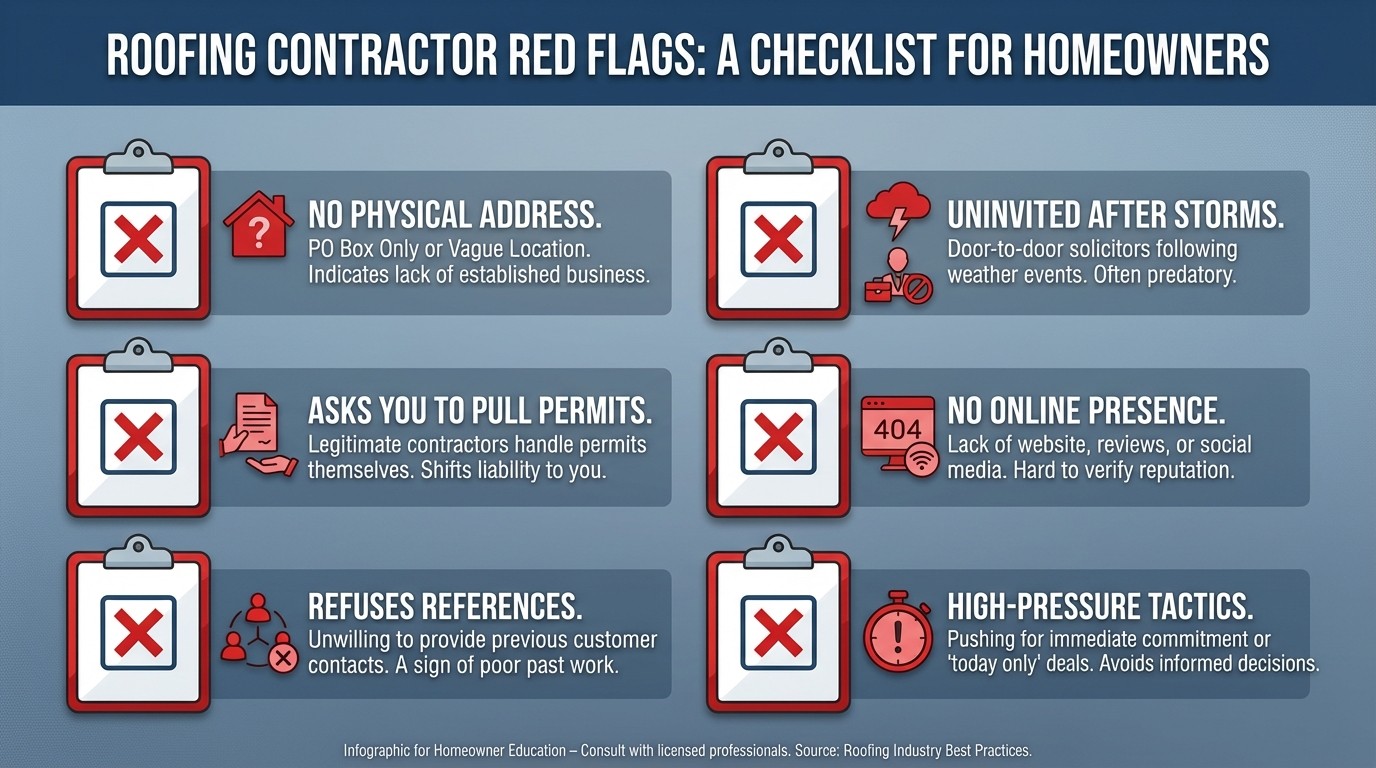
Beyond specific roofing scams tactics, certain behaviors indicate you are dealing with an untrustworthy contractor. Pay close attention to these warning signs.
A legitimate roofing company has a physical business address you can verify. If they only provide a cell phone number and PO box, be cautious. This makes them hard to find if problems occur later.
Watch for contractors who show up uninvited after storms. While some legitimate companies do canvass neighborhoods, this is also prime territory for common roofing scams. Apply extra scrutiny to anyone who knocks on your door offering roof services.
Be suspicious if a contractor asks you to pull the building permit yourself. This is their responsibility, and passing it to you suggests they may not have proper licensing or want to avoid accountability.
Look for online reviews and a web presence. Established contractors have Google reviews, a professional website, and possibly social media accounts. A complete absence of online presence is concerning for any modern business.
Request local references and actually call them. Ask about the quality of work, how problems were handled, and whether the homeowner would hire them again. Legitimate contractors gladly provide references.
Finally, trust your instincts. If something feels off about the interaction, it probably is. Reputable contractors are happy to provide documentation, answer questions, and give you time to decide without pressure.
How to Verify a Roofing Contractor Is Legitimate
Protecting yourself from roofing scams starts with thorough verification before signing any contract. These steps to avoid roofing scams take time but can save you thousands of dollars and major headaches down the road.
Start by checking your state's contractor licensing database. Every state maintains public records of licensed contractors. Verify that the license is current and in good standing. Note any past violations or complaints on record.
Next, confirm insurance coverage. Ask for certificates of liability insurance and workers' compensation. Then call the insurance company directly to verify the policy is active. Coverage that lapsed yesterday does not protect you today.
Research the company online. Check their rating with the Better Business Bureau. Look for reviews on Google, Yelp, and Angie's List. Pay attention to patterns in negative reviews, especially regarding billing disputes or incomplete work.
Ask for a list of recent local projects with reference contacts. Call at least three references. Good questions include how well the crew communicated, whether the project stayed on budget, and how the company handled any issues that came up.
If you have already received a quote, consider using a free quote review service to check whether pricing and terms are reasonable. An objective second opinion can spot problems you might miss.
What to Do If You Have Been Scammed
Report the company to the Better Business Bureau and the Federal Trade Commission at ftc.gov. These reports create public records that warn other consumers.
Consider small claims court for disputes under your state's dollar limit, typically $5,000 to $10,000. You can represent yourself and the filing fees are minimal compared to potential recovery.
If the scam involved your insurance claim, contact your insurance company immediately. Explain the situation honestly. Early disclosure may help protect you from accusations of complicity in the fraud.
Review how to read a roof estimate to better understand contract terms for future projects. Knowledge is your best protection against repeating this experience.