A standing seam metal roof is the premium choice for homeowners who want a roof that lasts 40 to 60 years with minimal maintenance. These roofs combine exceptional durability with a clean, modern look that adds serious curb appeal to any home.
But here is the reality: standing seam metal roofs cost two to three times more than asphalt shingles upfront. That price tag makes many homeowners hesitate, especially when the options seem confusing. Snap-lock or mechanical seam? Steel or aluminum? Is the investment actually worth it?
This guide breaks down everything you need to know about standing seam metal roofing. You will learn about the different panel types, real costs per square foot, installation requirements, and honest pros and cons. By the end, you will know whether a standing seam metal roof makes sense for your home and budget.
What Is a Standing Seam Metal Roof?
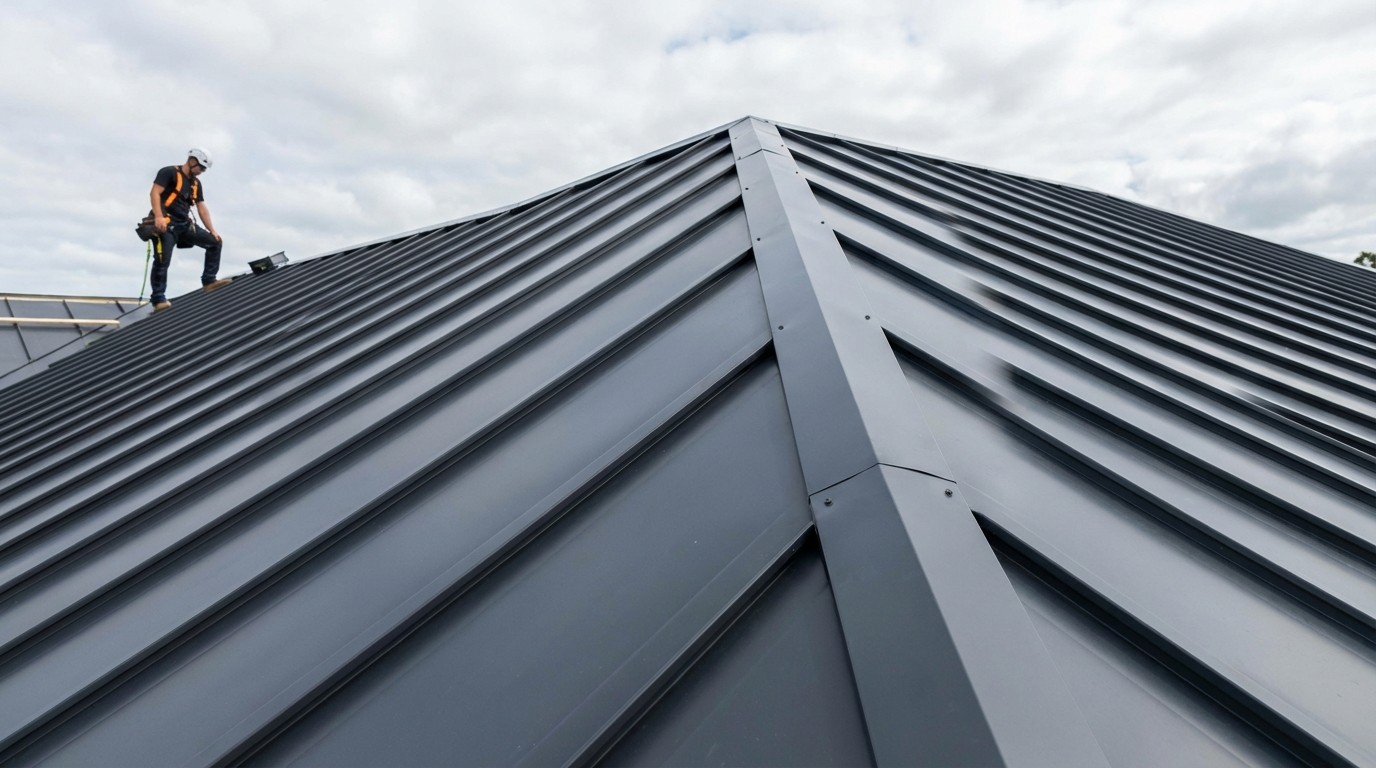
A standing seam metal roof is a premium roofing system made of vertical metal panels with raised ribs (called seams) that interlock to create a watertight barrier. Unlike corrugated metal or exposed fastener panels, standing seam metal roofing uses concealed fasteners hidden beneath the seams.
The "seam" refers to the raised rib where two panels connect. These ribs typically stand 1 to 2 inches above the flat panel surface. When panels interlock at the seam, they create a continuous barrier that keeps water, snow, and debris from penetrating the roof.
Here is why concealed fasteners matter: Exposed fastener metal roofs have screws driven directly through the panel surface. Over time, these fasteners can back out, rust, or allow water infiltration around the holes. Standing seam systems eliminate this weakness entirely because no fasteners penetrate the panel face.
The panels attach to the roof deck using hidden clips that allow for thermal movement. As metal heats and cools throughout the day and seasons, it expands and contracts. These floating clips prevent buckling and stress on the panel seams.
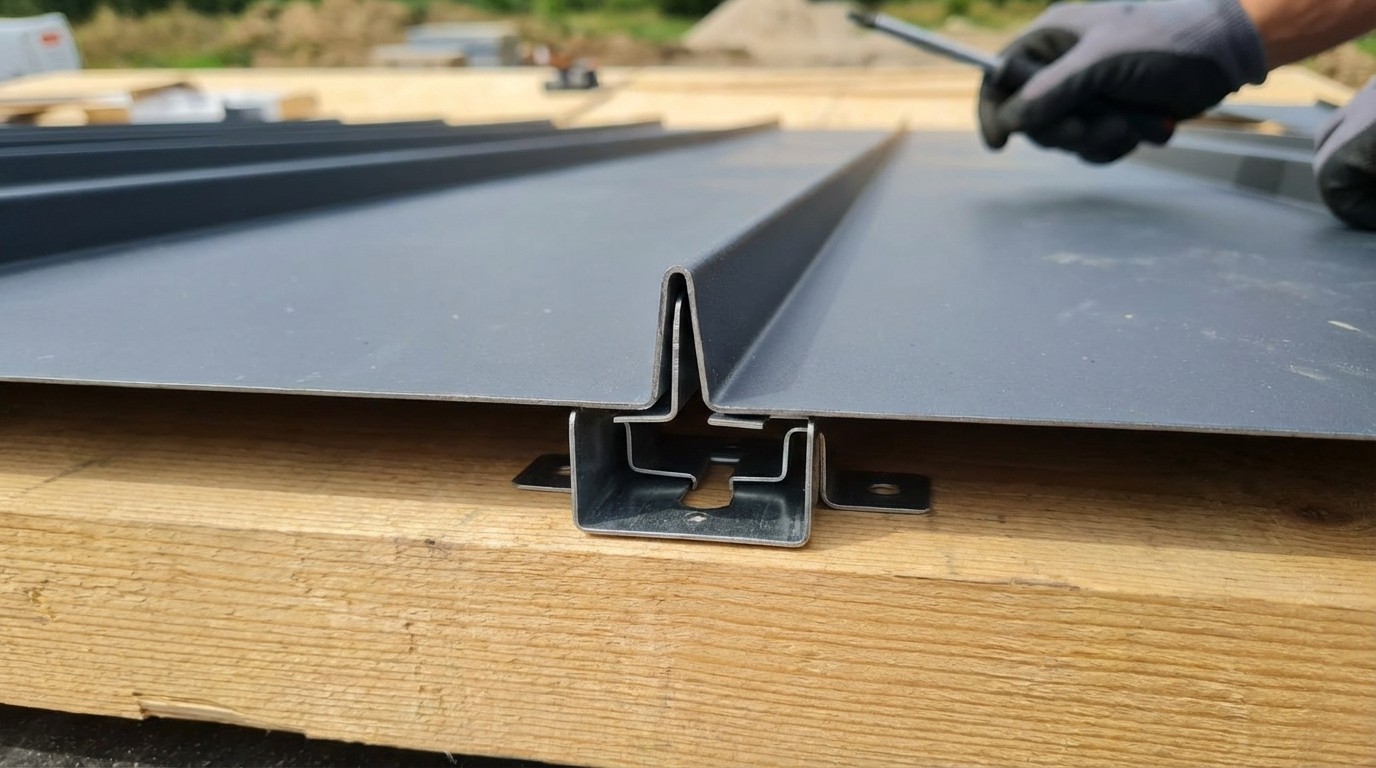
The result is a roof that handles harsh weather better and requires less maintenance over its lifespan. Standing seam metal roofs can withstand winds up to 140 mph when properly installed, meeting FM Global standards for high-wind zones, making them ideal for storm-prone regions.
Types of Standing Seam Metal Roof Panels
Not all standing seam panels are created equal. The panel type you choose affects installation cost, wind resistance, and whether DIY installation is realistic.
Snap-Lock Panels
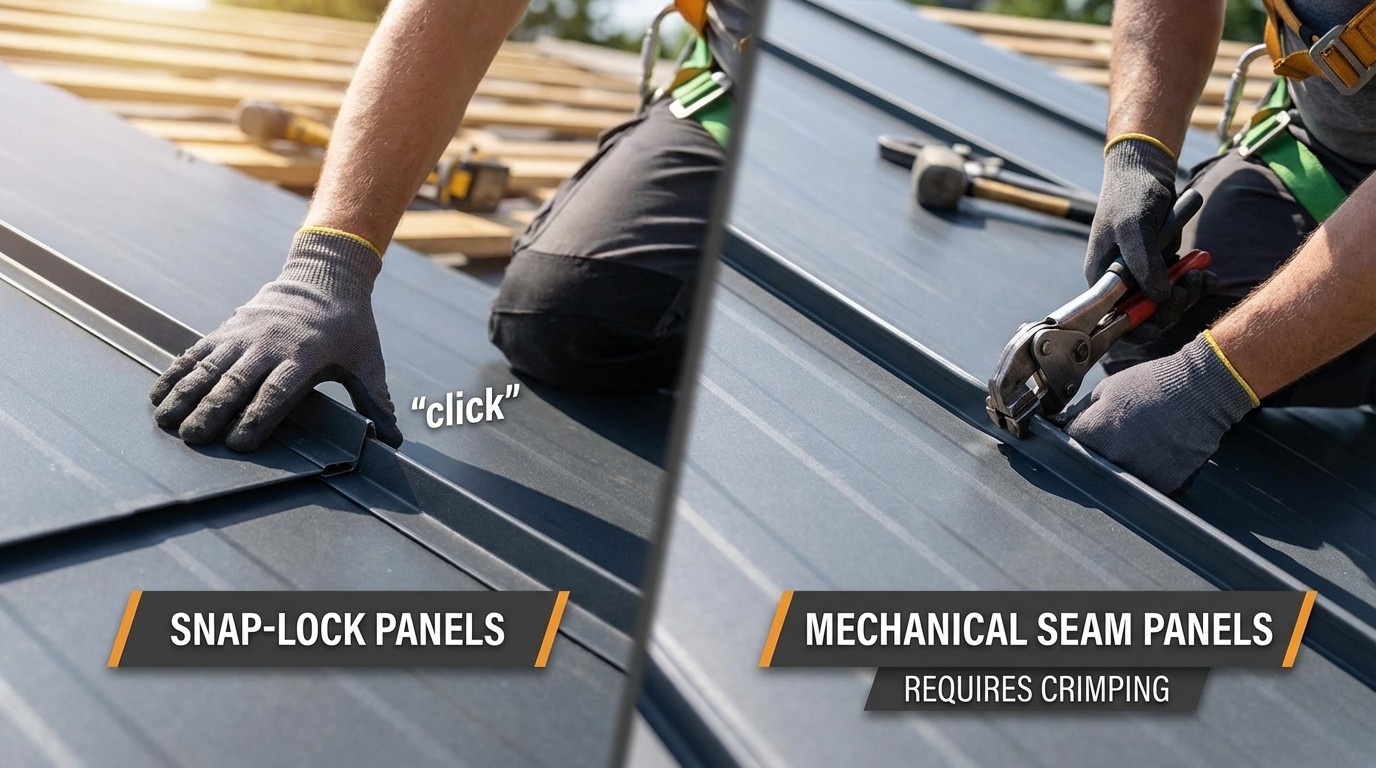
Snap-lock panels feature a male and female edge that literally snap together during installation. One panel edge has a raised leg that clicks into the receiving channel of the adjacent panel.
Best for: Residential roofs with standard pitch, DIY-friendly installations, and budget-conscious homeowners.
Limitations: Lower wind resistance (typically rated to 110 mph) compared to mechanical seam panels. Not recommended for roof pitches below 3:12.
Cost: Generally $1 to $2 per square foot less than mechanical seam panels.
Mechanical Seam Panels
Mechanical seam panels require a special hand or electric seaming tool to crimp the panel edges together on-site. This creates an extremely tight, weatherproof connection.
Best for: Low-slope roofs (down to 1:12 pitch), commercial buildings, high-wind areas, and coastal climates.
Types: Single-lock seams fold the edges 180 degrees. Double-lock seams fold 360 degrees for maximum wind and water resistance.
Cost: Higher labor costs due to specialized equipment and installation time.
Batten Panel Systems
Batten panels attach over wood or metal battens rather than directly to the roof deck. The battens create a raised platform, and the panels clip to the batten structure.
Best for: Historic restoration projects, traditional aesthetics, and situations where deck ventilation is important.
Nail Flange (Fastener Flange) Panels
Nail flange panels have an exposed fastener strip along one edge. While technically not a "true" standing seam system, they offer a similar appearance at lower cost.
Best for: Budget projects, outbuildings, and applications where maximum weather resistance is less critical.
Panel Type | Wind Rating | Best Application | DIY Friendly |
|---|---|---|---|
Snap-Lock | 110 mph | Residential | Yes |
Mechanical (Single) | 120 mph | Commercial/Residential | No |
Mechanical (Double) | 140+ mph | Coastal/Hurricane zones | No |
Batten | Varies | Historic/Aesthetic | Moderate |
Nail Flange | 90 mph | Budget/Outbuildings | Yes |
Standing Seam Metal Roof Cost: What to Expect
Standing seam metal roofs cost more than asphalt shingles, but the price varies significantly based on material, panel type, and your specific roof.
Cost Per Square Foot
The national average for standing seam metal roof installation runs between $8 and $14 per square foot, fully installed. Here is how that breaks down:
Materials only: $3 to $6 per square foot
Labor: $4 to $8 per square foot
Tear-off and disposal: $1 to $2 per square foot (if removing old roof)
Cost by Material Type
The metal you choose significantly impacts your total project cost:
Material | Cost Per Sq Ft (Installed) | Lifespan | Best For |
|---|---|---|---|
Steel (Galvalume) | $8 to $12 | 40-60 years | Most residential applications |
Aluminum | $10 to $14 | 50-70 years | Coastal areas, lightweight needs |
Zinc | $15 to $22 | 80-100 years | Premium homes, self-healing finish |
Copper | $20 to $35 | 100+ years | Luxury homes, historic properties |
Steel with Galvalume coating (a blend of aluminum and zinc) is the most popular choice for residential standing seam roofs. It offers the best balance of durability, corrosion resistance, and affordability.
Cost by Roof Size
Here is what homeowners typically pay for a complete standing seam metal roof installation:
Home Size (Sq Ft) | Roof Size (Approx) | Cost Range |
|---|---|---|
1,500 | 1,500-1,800 sq ft | $12,000 to $21,000 |
2,000 | 2,000-2,400 sq ft | $16,000 to $28,000 |
2,500 | 2,500-3,000 sq ft | $20,000 to $35,000 |
3,000 | 3,000-3,600 sq ft | $24,000 to $42,000 |
Use our roofing calculator to estimate your specific project cost based on your roof size and location.
Factors That Affect Price
Several variables push costs higher or lower:
Roof pitch: Steeper roofs (above 6:12) require more safety equipment and slow installation.
Roof complexity: Multiple valleys, dormers, and penetrations increase labor time.
Panel width: Custom widths cost more than standard 12 to 18 inch panels.
Seam height: Taller seams (1.5 to 2 inches) cost more than standard 1 inch seams.
Coating quality: Kynar/PVDF finishes with 30 to 40 year fade warranties cost more than SMP coatings.
Geographic location: Labor rates vary significantly by region.
Standing Seam Metal Roof vs Shingles
The most common comparison homeowners face: Is a standing seam metal roof worth two to three times the cost of asphalt shingles?
Factor | Standing Seam Metal | Asphalt Shingles |
|---|---|---|
Upfront Cost | $8-$14/sq ft | $3-$5/sq ft |
Lifespan | 40-60 years | 15-25 years |
Wind Resistance | 110-140 mph | 60-110 mph |
Maintenance | Very low | Moderate |
Energy Efficiency | Excellent (reflects heat) | Average |
Resale ROI | 85-95% | 60-70% |
Weight | 1-1.5 lbs/sq ft | 2-4 lbs/sq ft |
The Lifetime Cost Calculation
Here is where standing seam roofs start making financial sense. A 2,000 square foot roof comparison:
Asphalt shingles: $8,000 initial cost. Replace at year 20 for another $10,000 (adjusted for inflation). Total 40-year cost: approximately $18,000.
Standing seam metal: $22,000 initial cost. No replacement needed for 40+ years. Total 40-year cost: $22,000.
The difference shrinks to about $4,000 over the roof's lifetime. Factor in lower maintenance, potential insurance discounts, and energy savings, and standing seam often costs less in the long run.
When Shingles Make More Sense
Standing seam is not always the right choice:
You plan to sell within 5 to 7 years (you will not recoup the full investment)
Budget is your primary constraint
Your home is in a historic district with material restrictions
You prefer a traditional appearance over modern aesthetics
Pros and Cons of Standing Seam Metal Roofing
Every roofing material has trade-offs. Here is an honest assessment of standing seam metal roofs.
Advantages
1. Exceptional longevity. A properly installed standing seam roof lasts 40 to 60 years, two to three times longer than architectural shingles. Steel and aluminum last 40 to 60 years. Zinc and copper can exceed 100 years.
2. Superior wind and weather resistance. Concealed fasteners and interlocking seams create a continuous barrier. Standing seam roofs regularly survive hurricanes that strip shingle roofs bare.
3. Energy efficiency. Metal roofs reflect solar radiation rather than absorbing it. According to the Department of Energy, reflective metal roofing can reduce cooling costs by 10 to 25 percent in hot climates.
4. Minimal maintenance. No granule loss, no moss or algae growth, no curling shingles. An annual visual inspection and occasional debris clearing is typically all that is needed.
5. Environmental benefits. Most standing seam panels contain 25 to 95 percent recycled metal and are 100 percent recyclable at end of life, according to the Metal Construction Association. Asphalt shingles end up in landfills.
6. Insurance discounts. Many insurers offer 5 to 35 percent premium reductions for metal roofs due to their fire resistance and durability against storms.
7. Snow shedding. The smooth surface allows snow to slide off rather than accumulating, reducing ice dam risk.
Disadvantages
1. Higher upfront cost. Expect to pay $16,000 to $28,000 for a typical home versus $6,000 to $12,000 for shingles.
2. Oil canning. Flat areas of metal panels can develop visible waviness or rippling. This is cosmetic and does not affect performance, but some homeowners find it unappealing.
3. Noise during rain. Metal roofs can be louder during heavy rain or hail. Proper underlayment and attic insulation minimize this issue significantly.
4. Denting potential. Large hail can dent thinner gauge panels. Thicker gauges (24 gauge steel vs 26 gauge) offer better dent resistance.
5. Thermal expansion. Metal expands and contracts with temperature changes. Proper installation uses floating clips that allow panels to move without damage.
6. Repair complexity. Replacing a single damaged panel is more difficult than swapping a few shingles. The entire panel typically needs replacement from ridge to eave.
7. Color matching challenges. If you need to repair or extend your roof years later, matching the exact color can be difficult due to fading.
Standing Seam Metal Roof Installation
Professional standing seam metal roof installation requires specialized tools, precise clip spacing, and proper seaming technique to ensure the 40-70 year lifespan these roofs are known for. The process involves installing high-heat underlayment, attaching concealed fastener clips at specific intervals, and either snap-locking or mechanically seaming panels together.
For a complete step-by-step installation guide including materials needed, tools required, DIY vs professional analysis, and common installation mistakes to avoid, see our standing seam metal roof installation guide.
Standing Seam Metal Roof Colors and Finishes
Color choice affects more than aesthetics. The right color and finish impact energy efficiency, fade resistance, and long-term appearance.
Popular Colors
The most popular standing seam colors include:
Charcoal gray: Versatile, hides dirt, pairs with most exteriors
Matte black: Bold, modern, increasingly popular
Dark bronze: Warm, traditional, complements brick and stone
Forest green: Classic, works well with wooded settings
Galvalume (natural): Industrial aesthetic, no painting required
Finish Types
Kynar/PVDF coatings are the premium standard. These fluoropolymer finishes resist fading, chalking, and weathering for 30 to 40 years. Most major manufacturers offer 30-year fade warranties on Kynar finishes.
SMP (silicone modified polyester) coatings cost less but offer shorter fade protection, typically 20 to 25 years. SMP is acceptable for budget projects or less visible applications.
Color Selection Tips
Hot climates: Light colors (white, light gray, tan) reflect more heat and reduce cooling costs
Cold climates: Darker colors absorb heat, helping with snow melt
HOA restrictions: Check requirements before selecting non-traditional colors
Resale considerations: Neutral colors appeal to more buyers
Maintenance and Lifespan
One of the biggest advantages of standing seam metal roofs is minimal maintenance requirements.
Maintenance Schedule
Annual tasks:
Visual inspection from ground level (look for debris, damage, or loose trim)
Clear debris from valleys and around penetrations
Check gutters for metal shavings (indicates panel movement issues)
Every 2 to 3 years:
Walk the roof (carefully) to inspect seams and flashing up close
Clean any leaves or pine needles that accumulate in valleys
Check sealant around penetrations for cracking or separation
Every 5 to 10 years:
Professional inspection of sealants around penetrations and flashing
Touch up any scratches or minor paint damage
Check fastener tightness on trim and accessories
That is essentially it. Unlike shingles, you are not replacing granules, treating moss, or resealing flashings every few years.
Common Issues and Solutions
Oil canning: Minor waviness in flat panel areas. Often cosmetic only. Thicker gauge panels and striator ribs reduce visibility.
Scratches: Touch up with manufacturer-matched paint pens. Address promptly to prevent rust on steel panels.
Loose trim: Re-fasten or replace trim pieces that work loose over time. Use compatible fasteners to avoid galvanic corrosion.
- Sealant failure: Replace degraded sealants around penetrations before leaks develop. Use sealants rated for metal roofing.
Lifespan by Material
Material | Expected Lifespan | Notes |
|---|---|---|
Galvalume Steel | 40-60 years | Most common residential choice |
Painted Steel | 40-50 years | Depends on coating quality |
Aluminum | 50-70 years | Does not rust, ideal for coastal |
Zinc | 80-100 years | Develops protective patina |
Copper | 100+ years | Premium option, turns green over time |
Use our roof lifespan checker to see how your current roof compares.
Warranty Coverage
Standing seam manufacturers typically offer two warranty types:
Material/finish warranty: Covers defects and premature fading (20 to 40 years depending on coating)
Workmanship warranty: Provided by your installer, covers installation defects (typically 5 to 10 years)
Read both warranties carefully. Many material warranties require certified installation to remain valid.