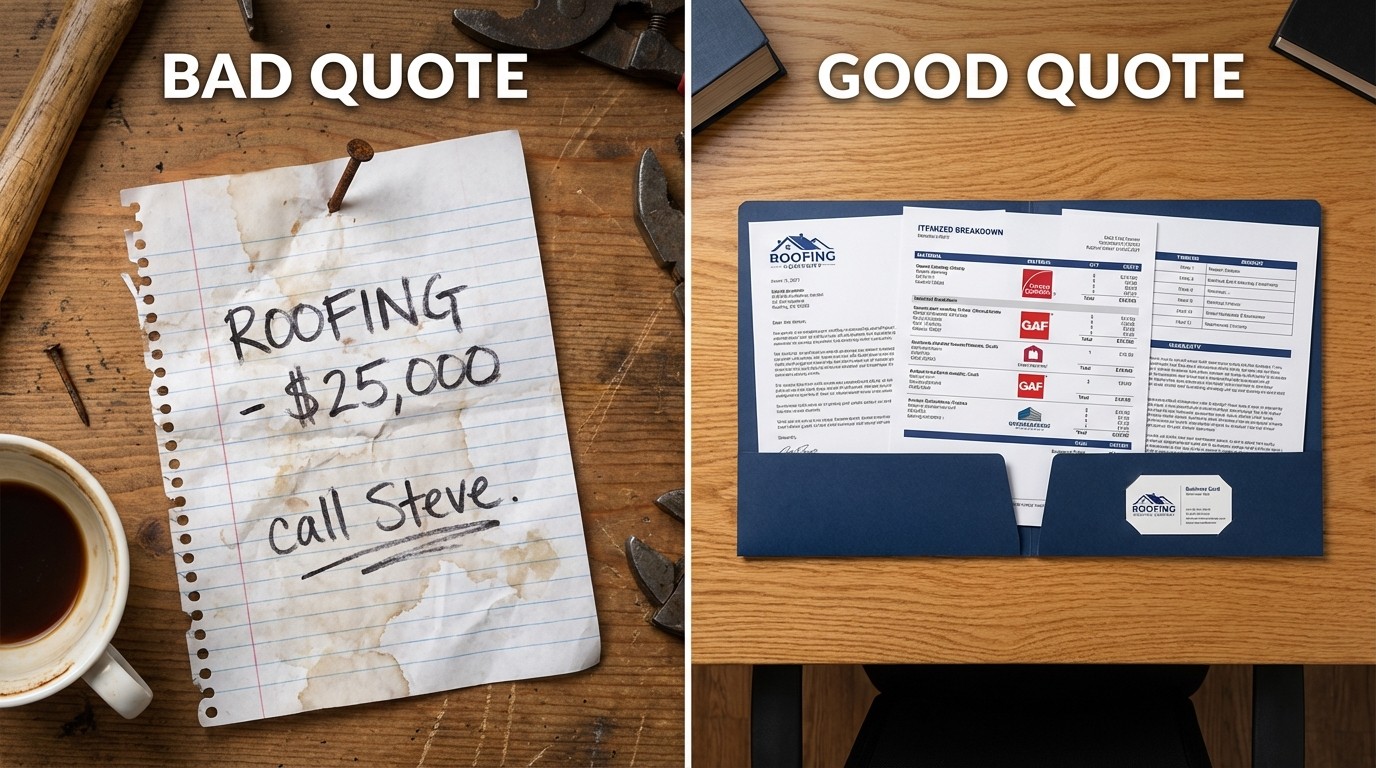
A good roof quote should include the total price, a detailed materials list with brand names, labor costs, tear-off and disposal fees, warranty information, and a projected timeline. If a contractor hands you a quote that's just a single number with no breakdown, that's not a quote. That's a guess on a piece of paper.
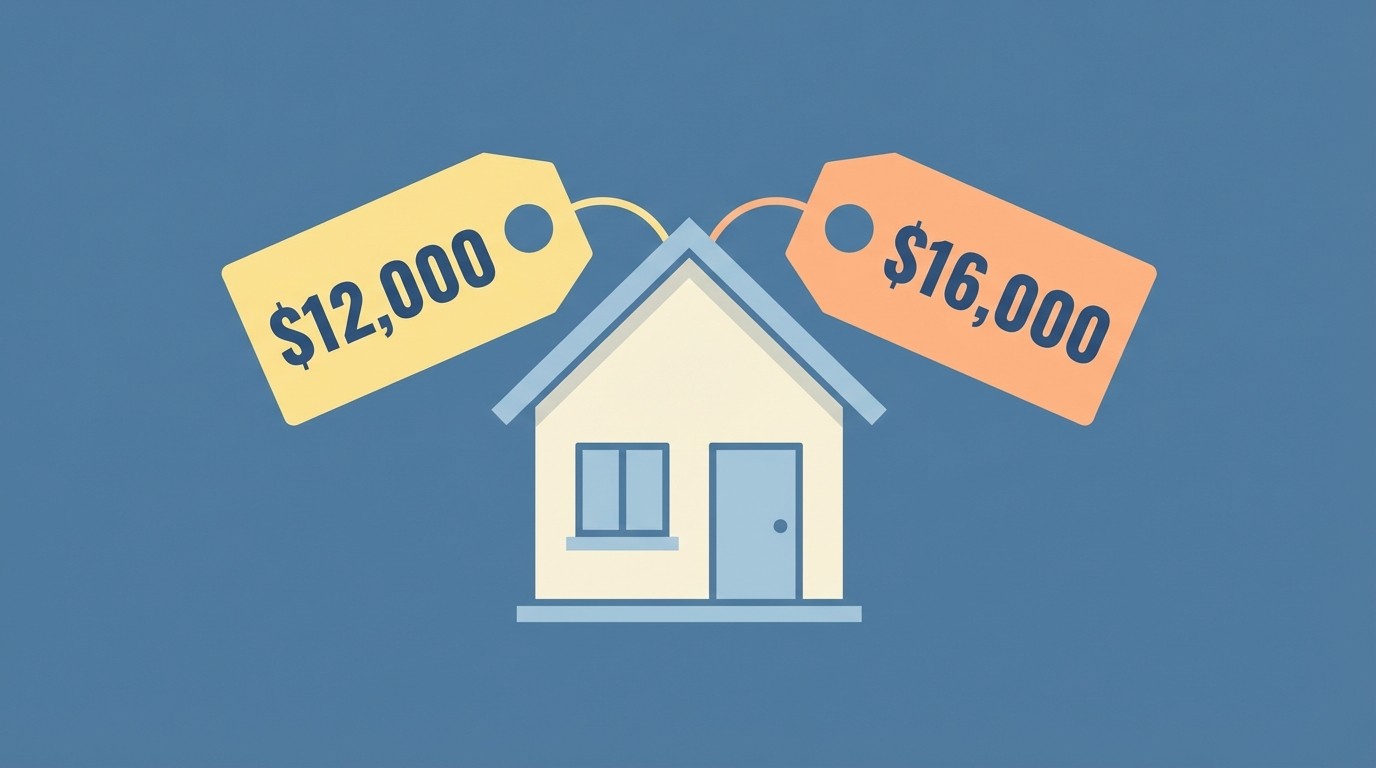
The details matter because roofing quotes that look similar on the surface can actually describe very different jobs. One $15,000 quote might include premium materials and a 10-year workmanship warranty. Another $15,000 quote might use builder-grade shingles and offer no labor guarantee at all. You won't know the difference unless you know what to look for.
The Materials Section
This is where a lot of homeowners get tripped up. A quote that just says "architectural shingles" isn't telling you much. There's a massive quality range within that category, from budget products that might last 20 years to premium lines designed to last 50.
What you want to see is specificity. The brand name, the product line, and ideally the color. Something like "Owens Corning Duration, Estate Gray" tells you exactly what's going on your roof. You can look up that product, read reviews, and verify that the price makes sense for that material.
The same goes for underlayment, flashing, and other components. Synthetic underlayment costs more than felt but performs better. New drip edge and flashing should be specified if they're being replaced. If the quote is vague on materials, ask the contractor to fill in the blanks.
According to Consumer Reports, material quality is one of the biggest factors in how long your roof will actually last. Cutting corners here to save a few hundred bucks usually isn't worth it.
Labor and Installation Details
Some quotes break out labor separately, others roll it into the total. Either approach is fine as long as you can get clarity on what the labor charge covers.
Key questions to consider: Who's actually doing the work? Some contractors use their own crews, others subcontract everything out. Neither is automatically better, but you should know who's going to be on your roof.
How many workers will be on the job? This affects how long the project takes. A crew of two working your roof for a week is a different experience than a crew of six knocking it out in a day.
What's included in the installation? Proper nailing patterns, starter strips, ridge vents, pipe boot replacements. These details might seem minor but they affect both the quality and longevity of your roof.
Tear-Off and Disposal
If you're getting a full roof replacement, the old roofing has to come off. This creates a significant amount of debris that needs to go somewhere.
Your quote should specify whether tear-off is included and how many layers are being removed. Removing two layers of old shingles costs more than removing one. If the quote assumes one layer but your roof actually has two, that's going to create problems later.
Disposal fees cover the dumpster and landfill costs for all that old material. Some contractors include this in their overall price, others list it as a separate line item. Either way, make sure it's accounted for. You don't want a surprise charge showing up at the end.
Decking and Repairs
Here's where quotes can get tricky. The decking is the plywood or OSB underneath your shingles, and contractors can't fully assess its condition until the old roof comes off. Some boards might be rotted, water-damaged, or just worn out.
Good quotes address this upfront with language like "replacement of damaged decking up to X square feet included" or "decking replacement billed at $X per sheet if needed." This tells you how the contractor handles the unknown.
Quotes that don't mention decking at all should make you nervous. Either the contractor is assuming everything underneath is perfect (risky) or they're planning to hit you with add-on charges once the job starts (annoying at best, predatory at worst).
Warranty Information
Two types of warranties apply to roofing work, and your quote should address both.
Manufacturer warranties cover defects in the roofing materials themselves. These come from the shingle maker, not the contractor. Most quality shingles carry 25 to 50 year warranties, though the fine print matters a lot. Some warranties are prorated, meaning coverage decreases over time.
Workmanship warranties cover the installation itself. This comes from the contractor and protects you if something goes wrong because of how the roof was installed rather than a material defect. These vary wildly, from one year to lifetime coverage depending on the company.
If a quote doesn't mention warranties at all, ask. A contractor who won't stand behind their work is a contractor you should think twice about hiring.
Timeline and Payment Terms
When does the work start? How long will it take? These seem like basic questions, but plenty of quotes skip over them entirely.
Roofing contractors book out, sometimes weeks or months in advance during busy seasons. Knowing the expected start date helps you plan, especially if your roof has active problems that can't wait.
Payment terms matter too. Most contractors require some money upfront, typically 30% to 50%, with the balance due upon completion. Be wary of anyone asking for full payment before work begins. That's not standard and it removes your leverage if something goes wrong.
Red Flags in Roof Quotes
Missing details. If a quote is vague on materials, scope, or timeline, that's concerning. Either the contractor didn't think the job through or they're leaving room to change things later.
No physical address or license number. Legitimate roofing contractors have business addresses and proper licensing. If these are missing from the quote, verify them independently before moving forward.
Pressure to sign immediately. Professional contractors give you time to review quotes and make decisions. Anyone pushing for an on-the-spot signature is using sales tactics rather than earning your business.
Price that seems too good. A quote significantly lower than others for the same scope of work should raise questions. Maybe they found efficiencies others didn't. Maybe they're cutting corners you can't see yet.
If you're unsure how a contractor's pricing compares to the market, running your roof through a roofing calculator gives you a baseline to work with.
Putting It All Together
When you're comparing roof quotes, create a simple checklist. Does each quote specify the exact materials being used? Is tear-off and disposal included? How do the warranties compare? What about decking repair policies?
Line everything up side by side. The lowest price might not look so attractive once you realize it skips the details that others include. The highest price might suddenly make sense when you see the premium materials and extended warranty backing it up.
A roof is a major investment. The quote is your window into what you're actually buying. Take the time to understand it before you sign anything.