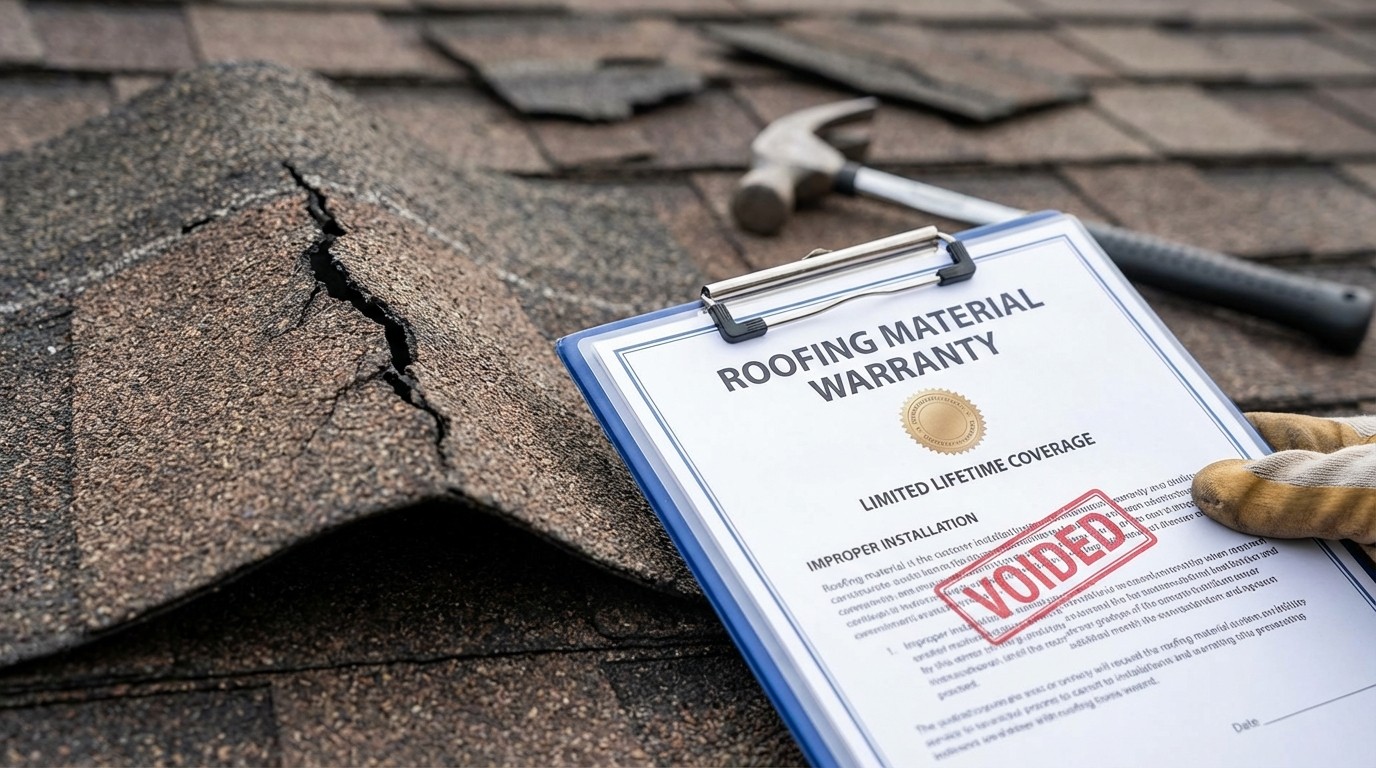
Your roof warranty only works if you follow its rules. Many homeowners void their warranty without knowing it. Small mistakes can leave you paying for repairs out of pocket. Sadly, this happens more often than you might think.
A new roof costs between $8,000 and $25,000. This makes it one of the biggest home purchases you will make. The warranty protects that purchase for years to come. One wrong move can cancel your coverage for good. You could lose thousands of dollars in future repairs.
This guide shows what voids a roof warranty. You will learn the difference between warranty types. You will also learn how to keep your coverage active. We cover the most common mistakes homeowners make and how to avoid them. Read on to protect your investment.
Quick Answer: What Actions Void a Roof Warranty?
Here are the most common actions that void a roof warranty:
DIY repairs without maker approval
Bad install by workers who lack proper training
Poor attic airflow that causes early wear
Pressure washing that strips away shingle coating
Adding items like solar panels without asking
Not signing up for your warranty on time
These actions fall into two groups. The first is maker warranties. The second is workmanship warranties. Maker warranties cover defects in the materials. Workmanship warranties cover mistakes made during install. Some actions void one type. Others void both at once.
You need both types of coverage for full safety. A material defect plus bad install means no warranty helps you. So keeping both warranties active matters a lot.
Most problems happen because people skip the fine print. Taking five minutes to read your warranty terms can save thousands later. Many homeowners wish they had done this sooner.
The Two Types of Roof Warranties
Before we cover what voids your coverage, you need to know what you have. Most roofing jobs come with two warranties. Each one guards different parts of your roof.
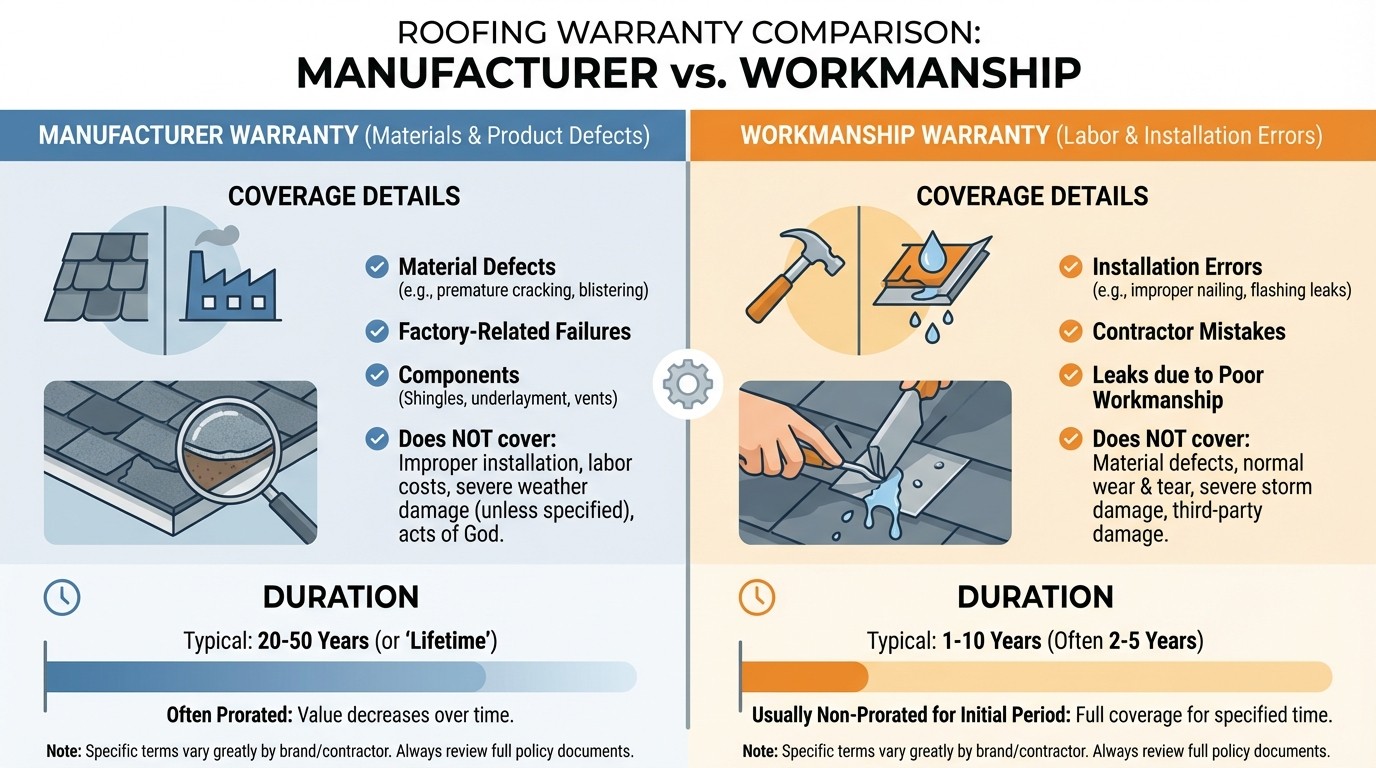
Maker (Material) Warranty
The maker warranty comes from the company that made your shingles. Big brands like GAF, Owens Corning, and CertainTeed offer this coverage. According to the National Roofing Contractors Association, this coverage guards against defects in their products.
This warranty covers these problems:
Early granule loss not caused by storms
Factory defects in the shingles
Materials that fail too soon under normal use
Algae-resistant coating failures on treated shingles
Maker warranties last 20 to 50 years. The length depends on the product you chose. Better shingles often carry longer coverage.
Here is something key to know. Many maker warranties are prorated. This means coverage drops as your roof ages. A 30-year warranty might only cover half of costs after 15 years. So your safety net shrinks over time.
To keep maker warranty coverage, you must use approved install methods. You must also use matching system parts on your roof. Using off-brand underlayment or generic flashing can void your warranty. This happens even if the shingles were put on right. Everything must work as a system.
Workmanship (Contractor) Warranty
The workmanship warranty comes from the roofer who put on your roof. This coverage guards against install errors that cause leaks or early failure.
This warranty covers these issues:
Wrong flashing install around chimneys and vents
Bad nailing patterns that let wind lift shingles
Poor sealing around roof holes
Install defects that let water get in
Errors in starter strip and ridge cap install
These warranties last one to ten years. Most good roofers offer two to five years of coverage. These are not prorated. You get full coverage for the whole warranty period. This makes the workmanship warranty very valuable.
The key limit is that you must contact your original installer for repairs. Having another roofer work on your roof voids this coverage. This happens right away. Even if the new roofer does great work, you still lose your warranty. This is why keeping your original roofer's contact info matters so much.
12 Things That Void Your Roof Warranty
Here are the most common ways homeowners void their warranty. Each action can end your safety net. You would pay for full repair or replacement costs.
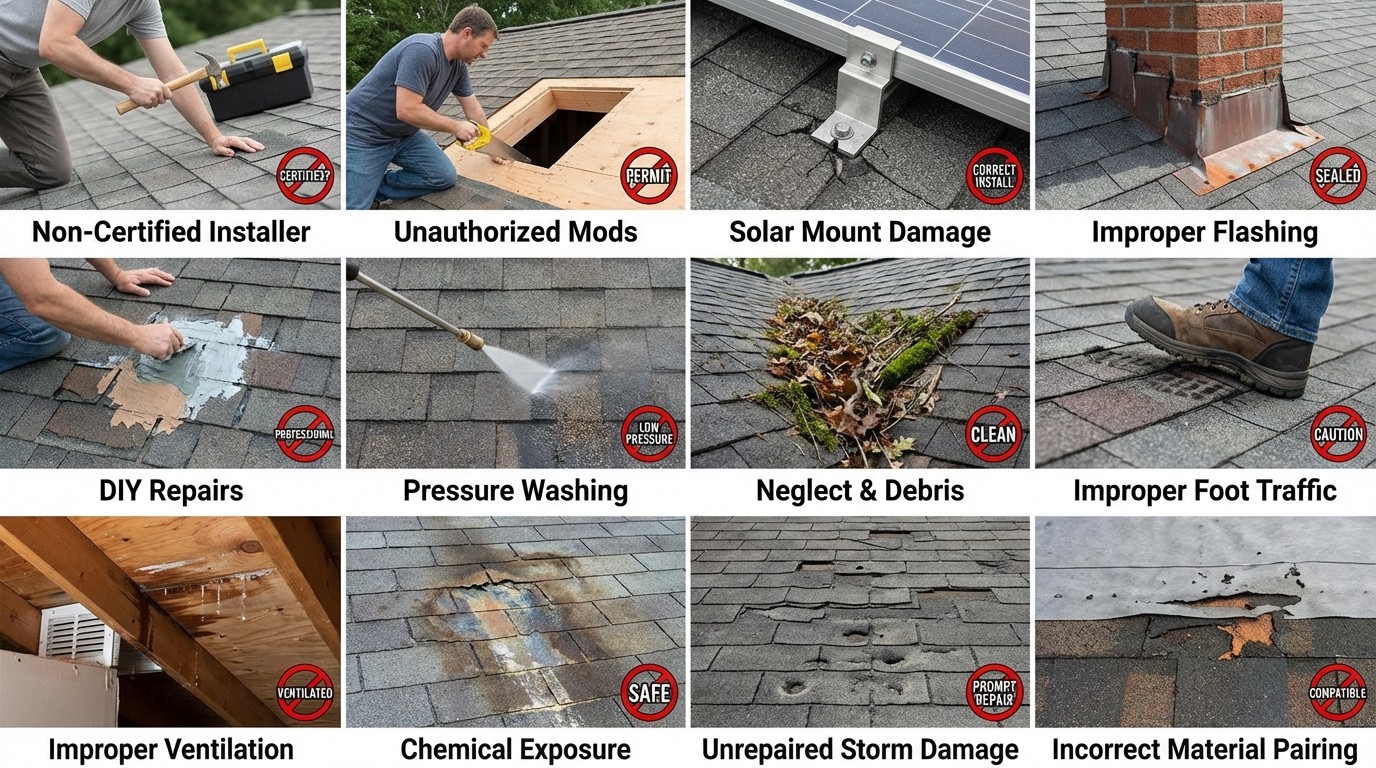
1. Bad Install From the Start
The top cause of voided warranties is bad install from the start. Makers need trained installers. These workers must follow rules for nailing, underlayment, and airflow. Many roofers claim to know what they are doing but lack the proper papers.
If your roof was put on by someone without training, your warranty may have been void from day one. The installer might have cut corners to save time or money. Always check that your installer has current papers from your shingle maker. Ask to see proof of this training. Do this before any work begins on your roof.
2. Poor Attic Airflow
Bad attic airflow causes heat and moisture buildup. This hurts shingles from below. You cannot see this problem until big damage occurs.
Makers state minimum airflow ratios. The standard is one square foot of venting per 150 square feet of attic floor space. Many homes do not meet this rule.
Blocked soffit vents cause problems. Missing ridge vents cause problems too. Not enough intake and exhaust venting can void your warranty. The damage builds slowly over years. Makers will deny claims if they find airflow problems.
3. Pressure Washing Your Roof
Pressure washing seems like a good way to clean moss, algae, or debris. The high-pressure water strips granules from shingles. This speeds up wear. It creates early aging that voids your warranty.
Makers suggest soft washing instead. Use low-pressure water with the right cleaning products. If you must clean your roof, hire pros who know the right methods for your shingle type.
4. DIY Roof Repairs
That small leak might seem like an easy weekend fix. DIY repairs void most warranties. Makers need all repairs done by trained pros. They must use approved materials and proper methods.
Even small repairs can void your coverage. Replacing a few damaged shingles seems simple. Resealing flashing around a vent pipe seems easy too. But if done wrong, your warranty is gone. The money you save on DIY repairs may cost you thousands later. It is simply not worth the risk.
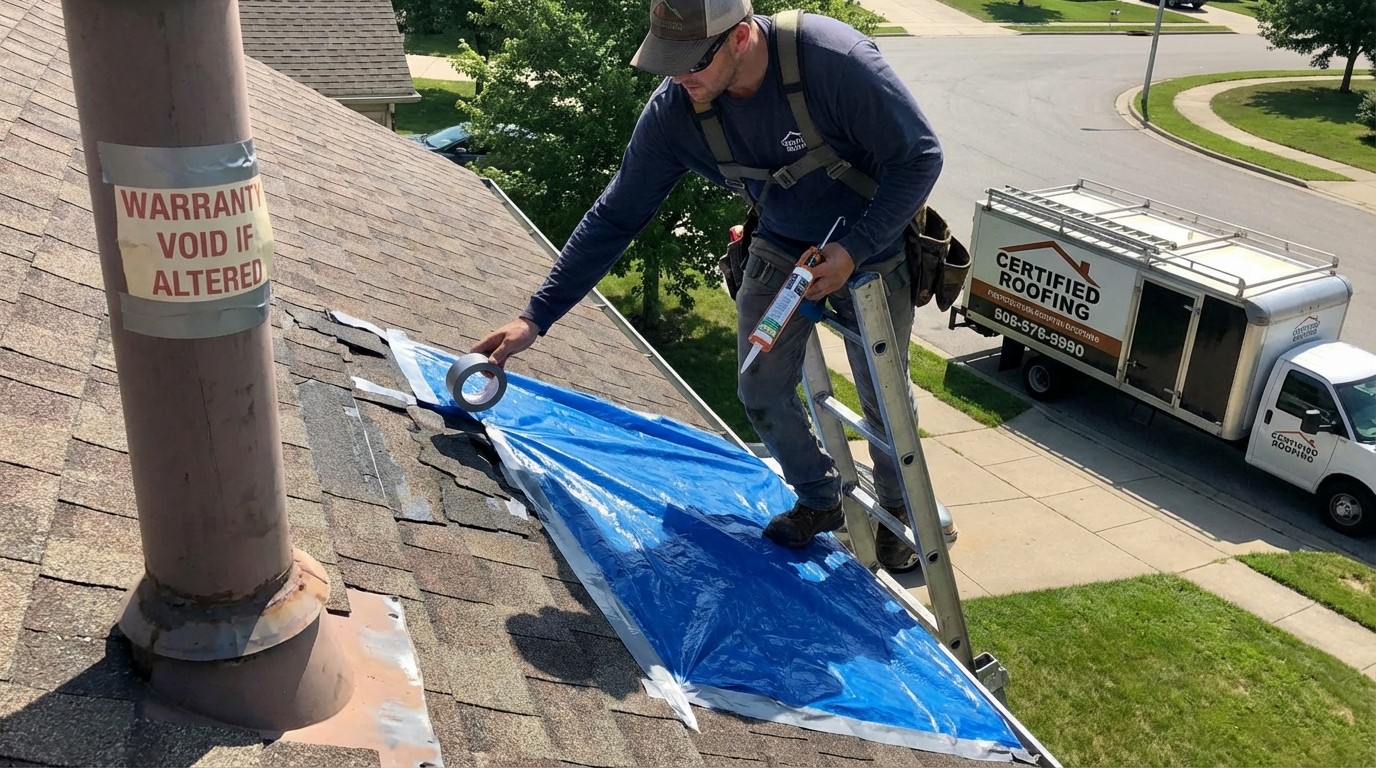
5. Hiring a Different Contractor
Your workmanship warranty needs you to contact the original installer for repairs. Bringing in a different roofer voids your coverage. This happens right away.
Before hiring another company, contact your original installer first. If they cannot be reached, write down your tries. Keep records of phone calls and emails. Some warranty terms allow exceptions. This happens when original contractors cannot be found.
6. Putting on Solar Panels Wrong
Solar panels need roof holes for mounting hardware. These holes must be sealed right. Both roofing and solar maker specs must be followed.
Many solar installers are not roofing experts. They may not know proper sealing methods. Wrong mounting can void your roof warranty. It can also create leak points. If adding solar, make sure your installer works with your roofing maker. Some systems use approved mounting that does not cut into the roof.
7. Adding Skylights or Satellite Dishes
Any roof hole creates a weak point. Adding skylights, satellite dishes, or antenna mounts can void your warranty. This happens when done without maker approval.
Before putting on anything that cuts into your roof, check your warranty terms. Many makers need pre-approval. They also need install by trained pros. This keeps full coverage on the whole roof.
8. Putting New Shingles Over Old
Some roofers offer to put new shingles over existing ones. This saves money on tear-off and disposal. This practice voids most maker warranties.
Layering hides problems with the roof deck. These problems should be found and fixed. It also adds weight that can stress your roof structure. Most warranties need complete tear-off. The roof must be stripped down to bare decking before new shingle install.
9. Using Wrong Materials
System warranties from makers like GAF and Owens Corning need their complete roofing system. This includes matching underlayment, starter strips, ridge caps, and other parts. Mixing brands or using generic parts voids these better warranties.
Even using the right brand but wrong product line can cause problems. Check your warranty papers with care. Make sure any repairs or changes use approved materials. They must match your original install specs.
10. Skipping Regular Care
Warranties need homeowners to do reasonable upkeep on their roof. This includes several tasks:
Keep gutters clean
Remove debris from the roof surface
Trim branches that hang over the roof
Fix small issues before they grow
Yearly roof inspections create records. These records prove you cared for your roof properly. This proof helps if you ever need to file a warranty claim.
11. Not Signing Up for Your Warranty
Many maker warranties need signup within 30 to 60 days of install. Without proper signup, you may only receive limited coverage. You could miss out on the full warranty.
Check your warranty papers right after install is done. GAF, Owens Corning, and CertainTeed all offer easy online signup. Do not assume your roofer did it for you. Check it yourself.
12. Not Reporting Storm Damage Fast
Storm damage must be reported and recorded quickly. If you delay checks or repairs, extra damage may not be covered. Ongoing leaks can cause more problems over time.
Most warranties include terms about reporting damage on time. The usual window is 30 days. Use the storm damage checklist to record damage right after bad weather. Take photos and videos as proof.
What Will NOT Void Your Roof Warranty
Knowing what keeps your coverage matters just as much. These common activities will not void your roof warranty:
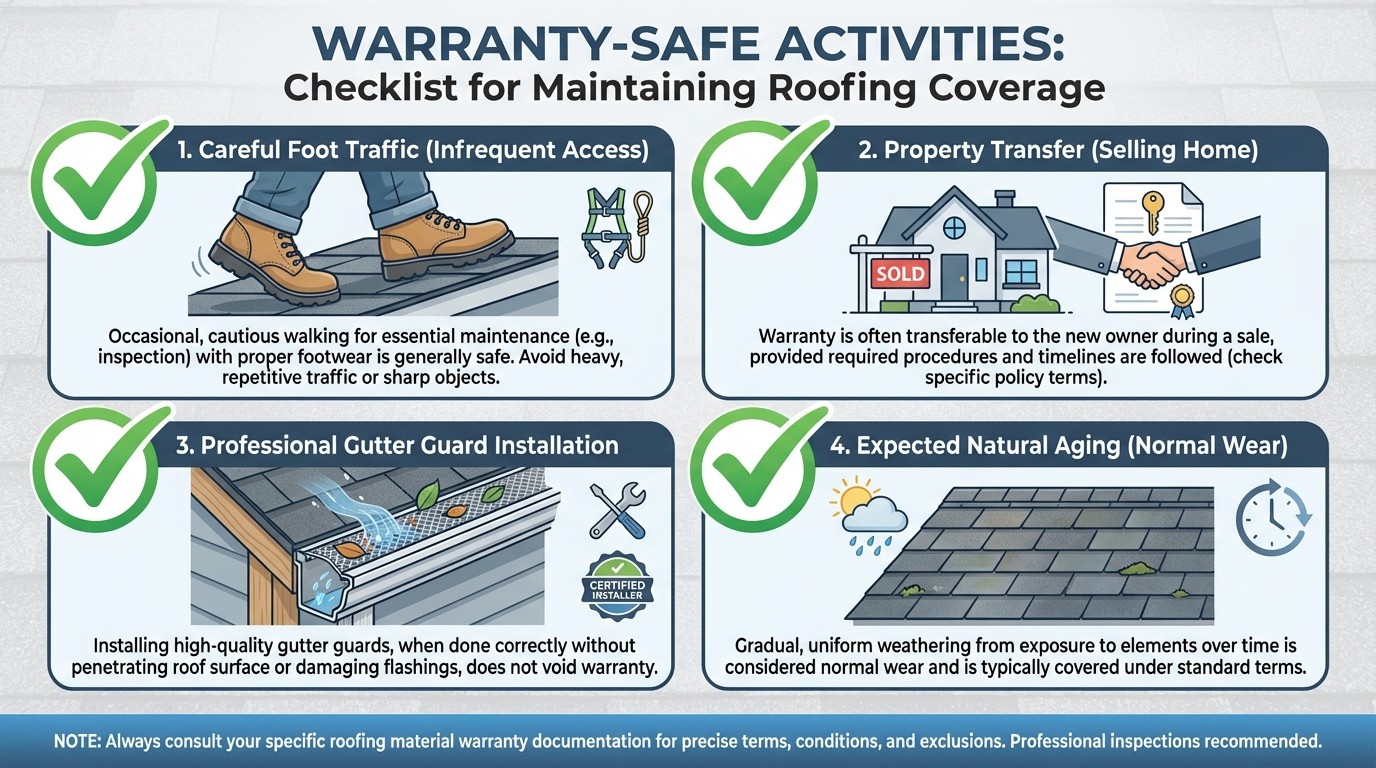
Normal wear and tear is expected over your roof's life. Warranties cover early failure and defects. They do not cover gradual aging within normal limits. Some granule loss in gutters during the first year is normal and expected.
Walking on your roof with care for checks or to get items will not void coverage. Avoid walking on it more than needed. Never walk on wet, icy, or very hot surfaces. These can hurt shingles.
Putting on gutter guards is generally fine. They attach to gutters, not the roof surface. Check your warranty terms for guidance.
Selling your home does not void your warranty by itself. Many maker warranties are transferable to new owners. You may need to fill out transfer papers within a set time after the sale. Some warranties charge a small fee.
Acts of nature like severe storms, hail, and wind damage are covered by homeowners insurance. They are not covered by your roof warranty. Your warranty stays good for making and workmanship defects. This is true after storm damage is properly repaired.
Minor looks issues are also fine. Slight color changes between shingle batches is normal. Minor granule shedding during the first year is expected.
How to Check If Your Roof Warranty Is Still Good
If you are unsure about your warranty status, follow these steps:
Step 1: Find your warranty papers. Check your closing papers or filing cabinet. You can also contact your roofer for copies. Your papers should include both maker warranty papers and workmanship warranty info.
Step 2: Check signup status with the maker. Visit the maker's website to verify your warranty is properly signed up. GAF, Owens Corning, and CertainTeed all have online warranty lookup tools. You will need your address and install date.
Step 3: Review any work done since install. Write down all repairs, changes, or additions made to your roof. This includes solar panels, skylights, and satellite dishes. Also note any repairs by contractors other than your original installer.
Step 4: Schedule a pro check. A skilled roofer can assess your roof's current state. They can spot potential warranty issues before you need to file a claim. This creates helpful records for the future. Ask specific questions about your roof's state and warranty coverage.
What to Do If Your Warranty Claim Is Denied
A denied warranty claim is frustrating. It is not always the final word. Follow these steps to fight the decision:
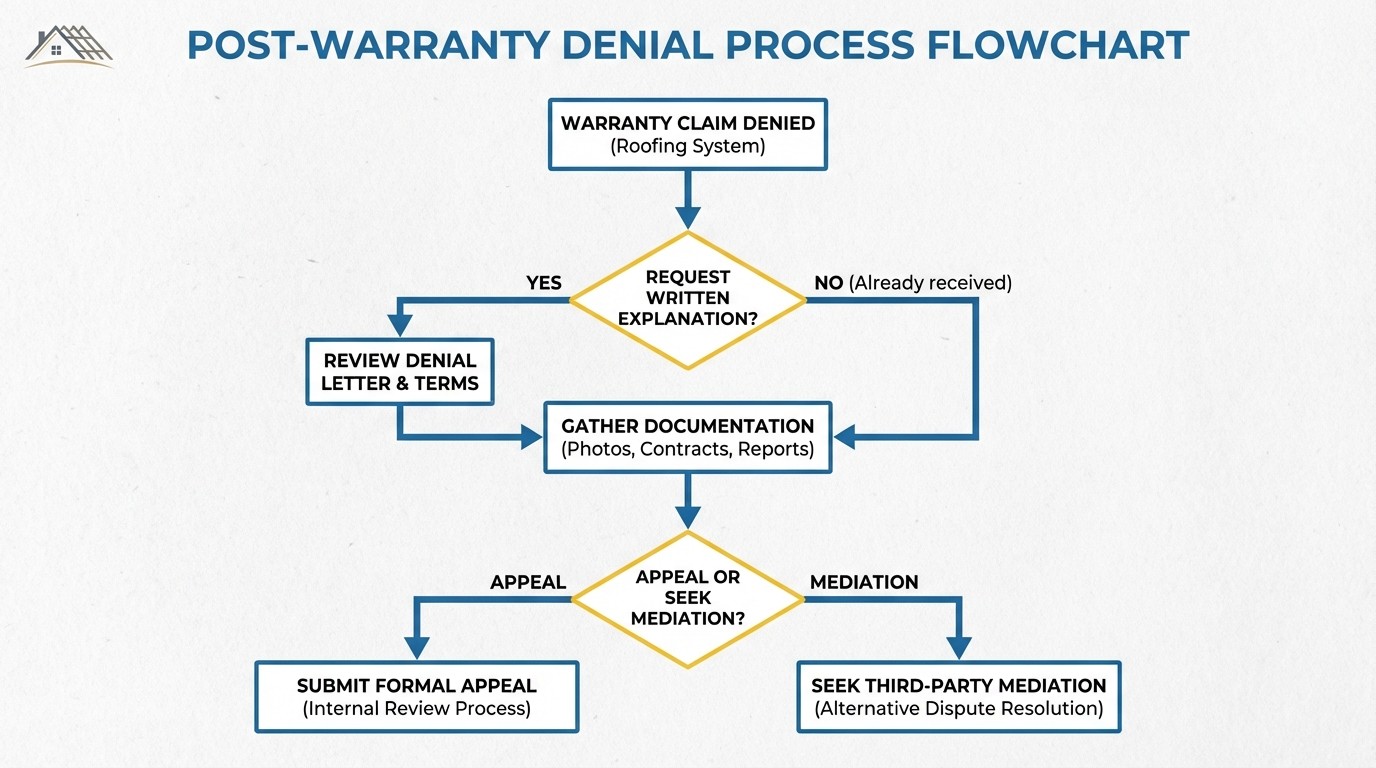
Step 3: Gather proof of proper care. Collect all inspection reports, repair receipts, and photos. These records should show you cared for your roof properly.
Step 4: Appeal or seek help. Contact the maker's customer service to formally appeal. For workmanship warranty disputes, request help from a third party. Many disputes solve through direct talks. Clear records help your case.
When to contact a lawyer: If big money is at stake and direct appeals fail, contact a construction lawyer. Most warranty disputes solve without legal action.