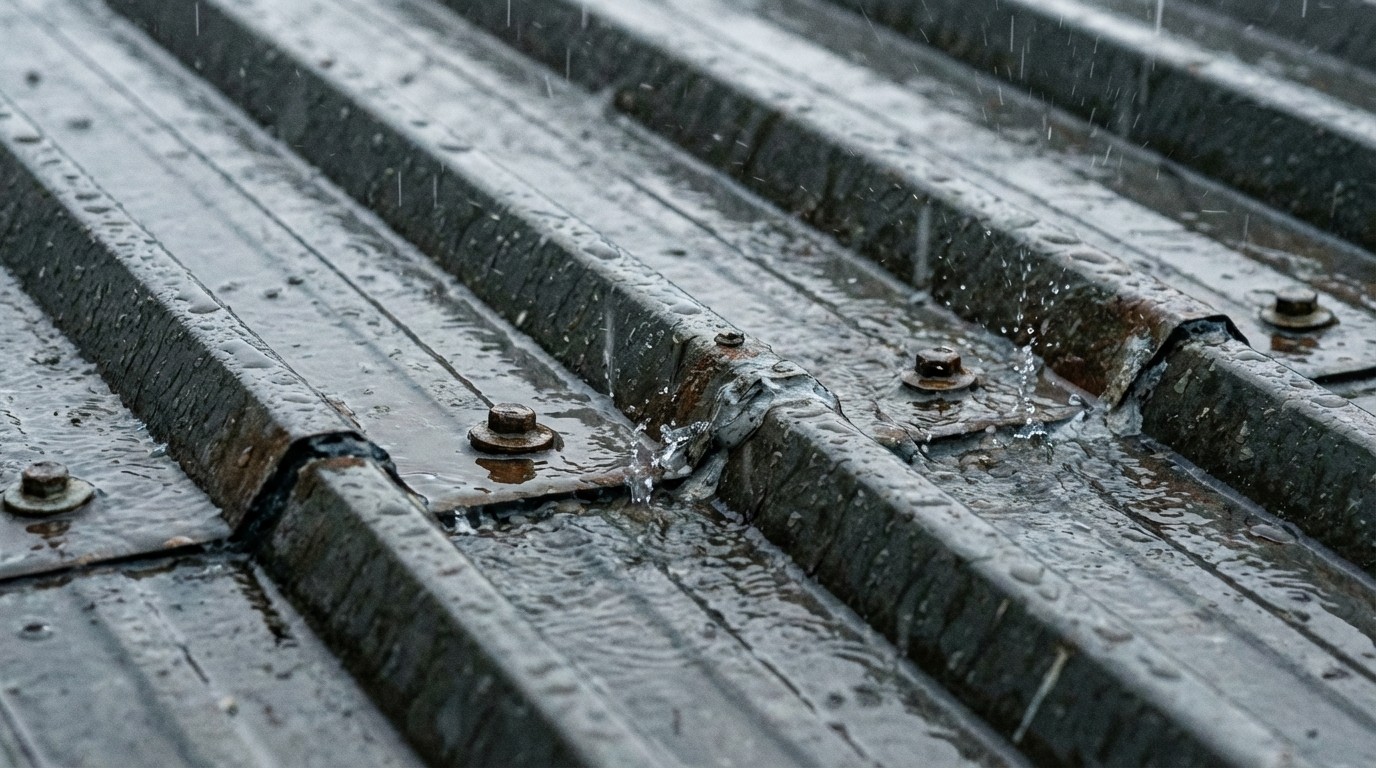
Metal roofs are known for durability and longevity, but they're not immune to leaks, especially during heavy rain. When water starts dripping through your ceiling after a storm, it's usually not the metal panels themselves failing. The problem typically lies in the seams, fasteners, or flashing where water can sneak through.
This guide explains why metal roofs leak during heavy rain, where the water is getting in, and how to fix and prevent these leaks. You'll learn the common causes, warning signs to watch for, and practical solutions to keep your home dry.
Why Metal Roofs Leak During Heavy Rain
Metal roofs don't leak because the panels rust through or fail. They leak because water finds its way through joints, seams, and penetrations when rain hits hard and fast. Heavy rain creates conditions that expose weak spots in the roof system.
When rain falls heavily, water moves across the roof faster than normal. This increases water volume at vulnerable points like seams and valleys. If fasteners have loosened, sealant has dried out, or flashing wasn't installed correctly, water will work its way underneath.
Wind-driven rain makes this worse. Wind pushes water sideways and upward, forcing it into gaps that would normally stay dry. Metal roofs with low slopes are especially vulnerable because water doesn't run off quickly enough during heavy downpours.
Metal roofs expand and contract with temperature changes. Over years, this movement can loosen fasteners, crack sealant, and open small gaps at seams. These issues don't show up during light rain but become obvious when a storm dumps water on your roof.
Common Causes of Metal Roof Leaks in Heavy Rain
Understanding where and why leaks occur helps you prevent them and know what to look for during inspections. Most metal roof leaks trace back to five main causes.
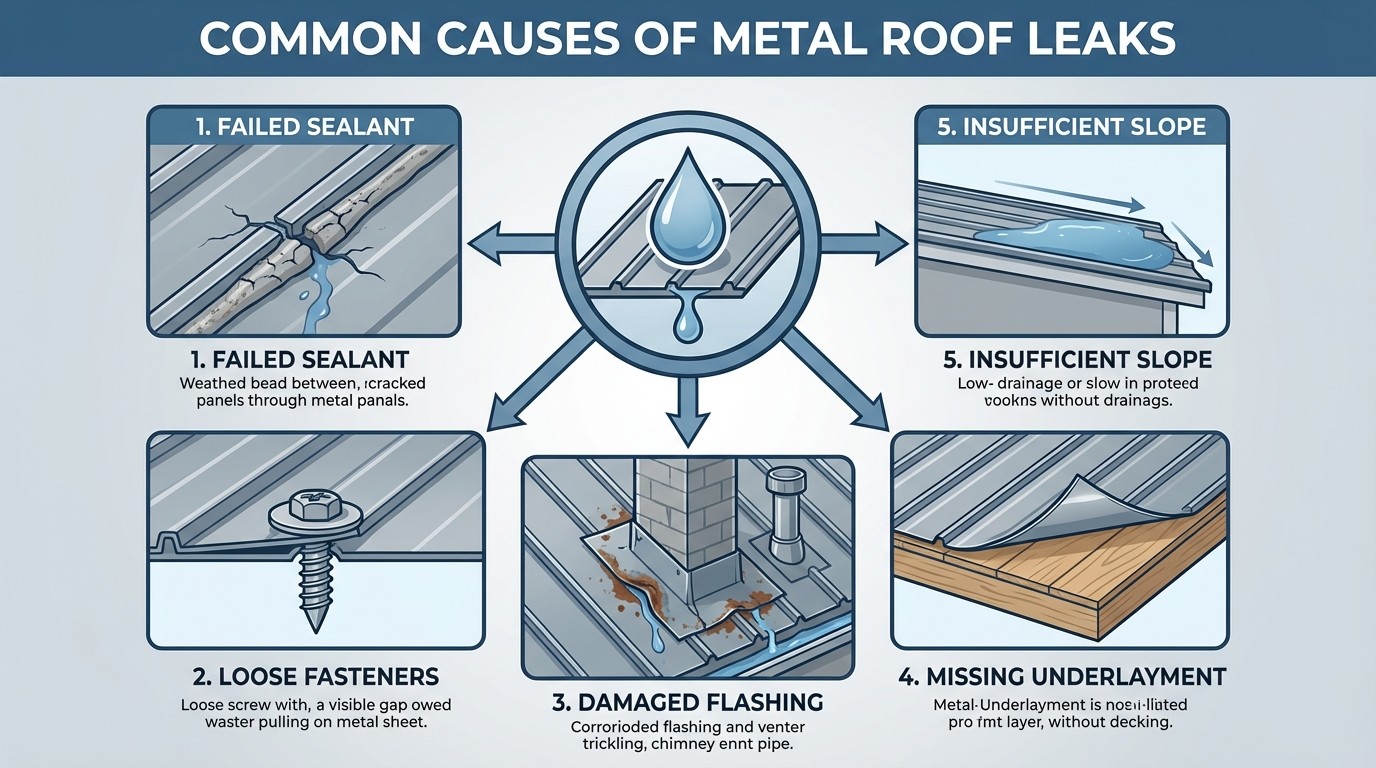
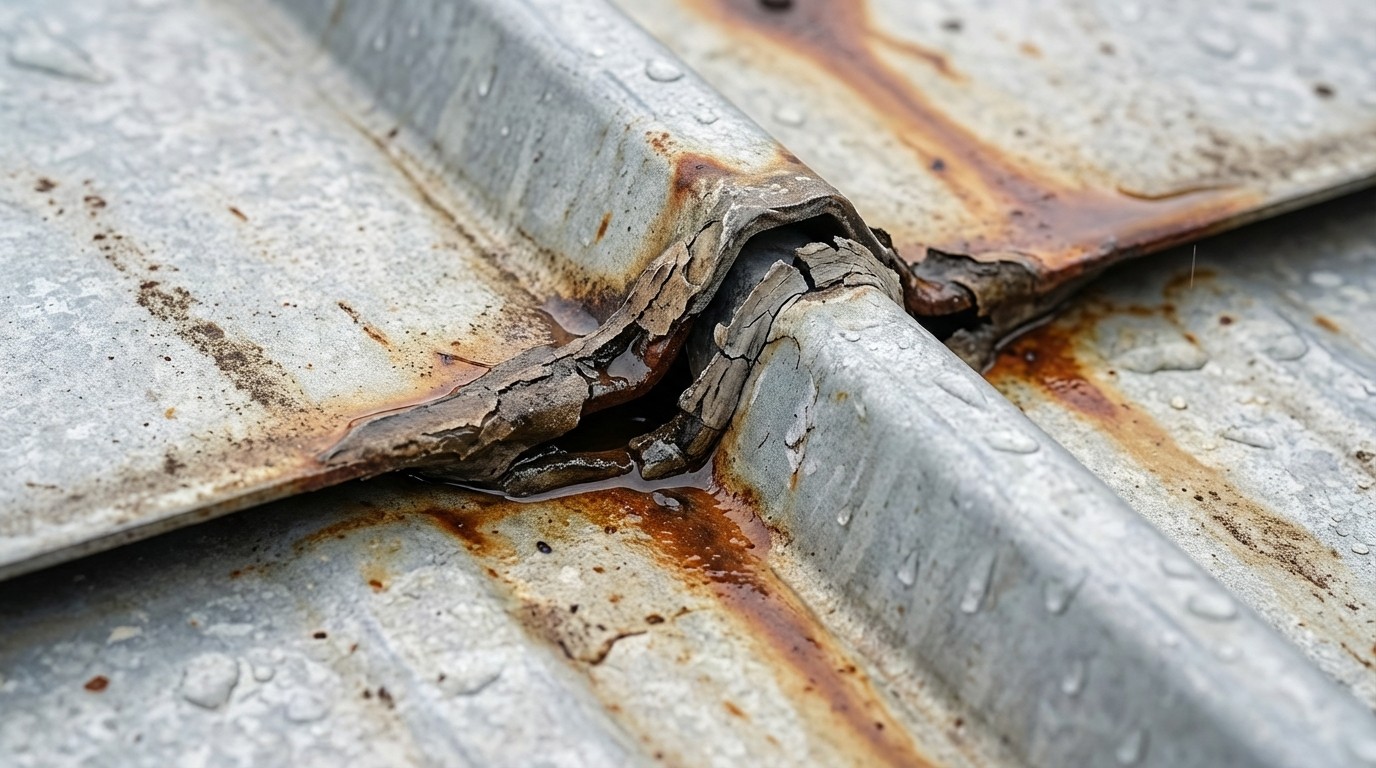
Failed Sealant at Seams and Overlaps
Metal panels overlap where they meet, and sealant fills the gap to keep water out. When sealant ages, dries out, or cracks, water seeps through during heavy rain. You'll see this most often at panel overlaps and ridge caps.
Cheap or improperly applied sealant fails faster. If the installer skimped on sealant or didn't clean the surface first, it won't bond properly. Once sealant separates from the metal, even a small gap lets water in.
Quality sealant applied correctly should last 10 to 15 years minimum, according to industry testing standards. However, exposure to direct sunlight, extreme temperature swings, and constant expansion and contraction gradually break down even the best products. Ridge caps and valleys experience the harshest conditions and need attention first.
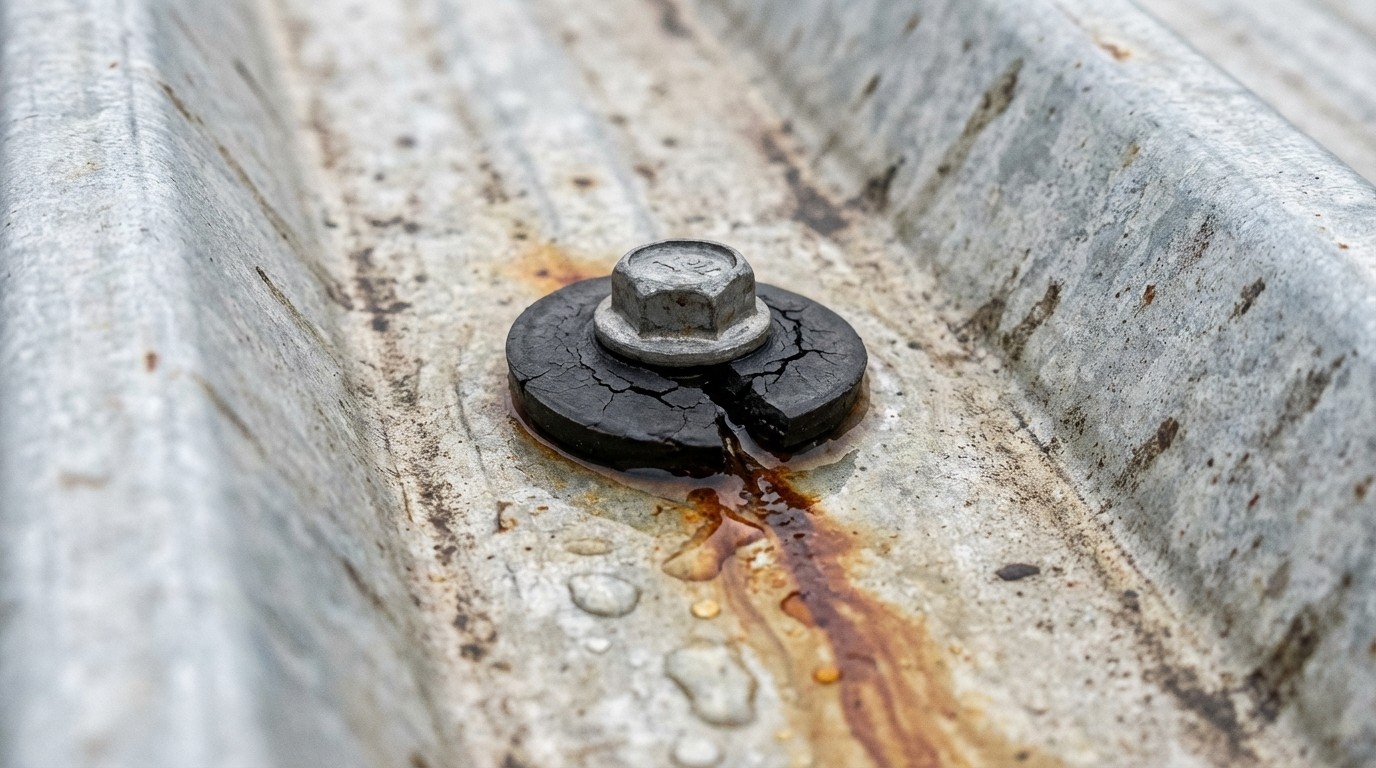
Loose or Missing Fasteners
Metal panels attach to the roof deck with screws that have rubber washers underneath. These washers create a watertight seal around each screw. When fasteners loosen or washers deteriorate, water flows through the screw holes directly into your home.
Fasteners loosen over time from thermal expansion and contraction. Metal heats up in summer sun and cools at night, causing panels to shift slightly. This constant movement works screws loose, especially if they weren't driven to the correct depth during installation.
Missing screws are another problem. Wind can rip out improperly secured panels, leaving holes that allow massive water intrusion during the next storm.
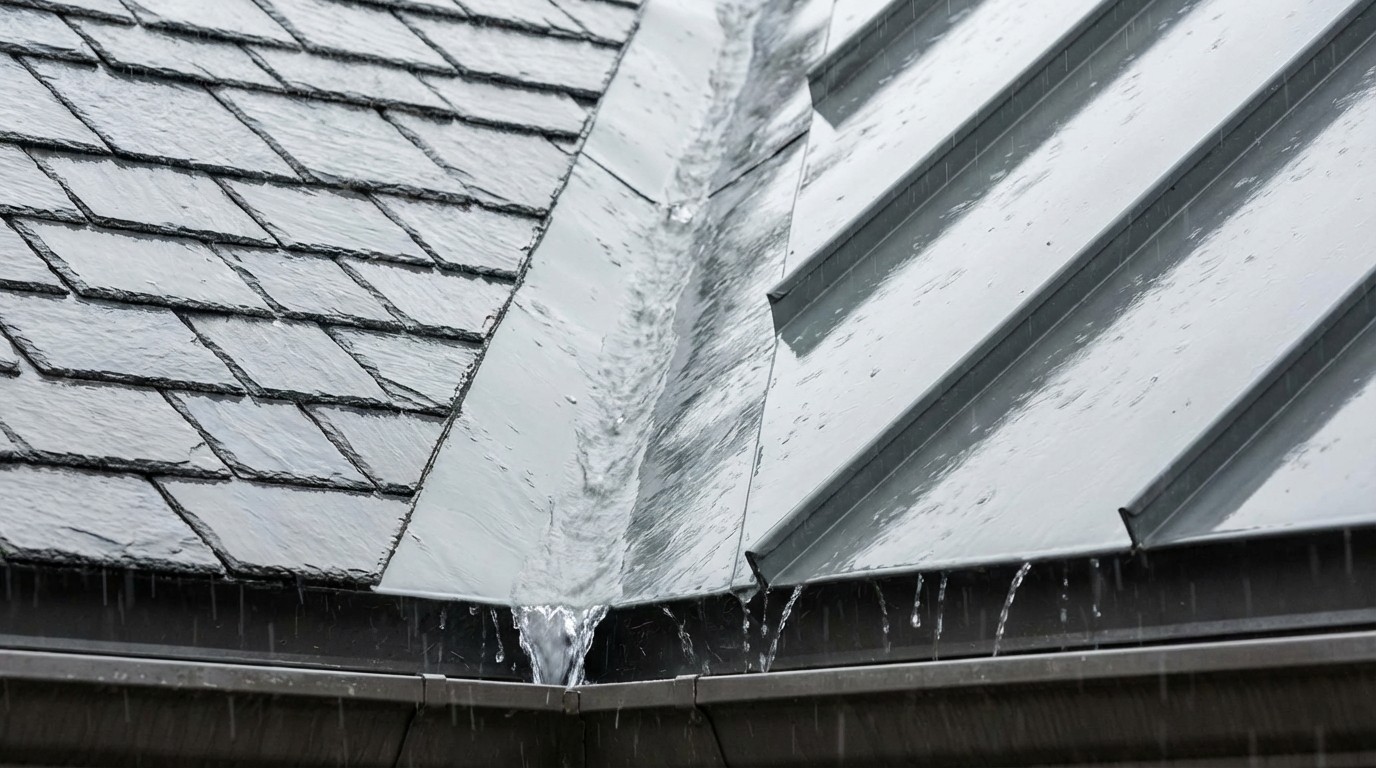
Damaged or Missing Flashing
Flashing seals transitions where your roof meets walls, chimneys, vents, and skylights. Metal roof flashing is typically bent metal pieces that create a water barrier at these vulnerable spots. When flashing is missing, bent, or improperly installed, heavy rain finds its way through.
Flashing around chimneys takes the most abuse. The metal expands and contracts at different rates than masonry, eventually creating gaps. Caulk or sealant used to fill these gaps doesn't last forever. When it fails, water runs down the chimney and into your attic.
Valley flashing handles high water volume where two roof planes meet. If valley flashing is undersized, improperly lapped, or installed without the correct slope, water backs up and leaks through during heavy rain.
Improperly Installed Underlayment
Underlayment goes on the roof deck before metal panels are installed. It's your last line of defense if water gets past the metal. If underlayment is missing, incorrectly lapped, or damaged, any water that penetrates the metal goes straight into your home.
Some installers skip underlayment on metal roofs, thinking the panels alone are waterproof. This is a mistake. Even well-installed metal roofs can leak at seams or fasteners. Without underlayment, you have no backup protection.
Insufficient Roof Slope
Metal roofs need adequate pitch to shed water. When installed on slopes lower than manufacturer recommendations, water doesn't drain fast enough. It pools at seams and low spots, eventually finding a way through.
Standing water accelerates sealant failure and corrosion. Even though metal doesn't rot like wood, constant moisture breaks down protective coatings and creates rust at cut edges and fastener holes.
How to Spot a Metal Roof Leak During Heavy Rain
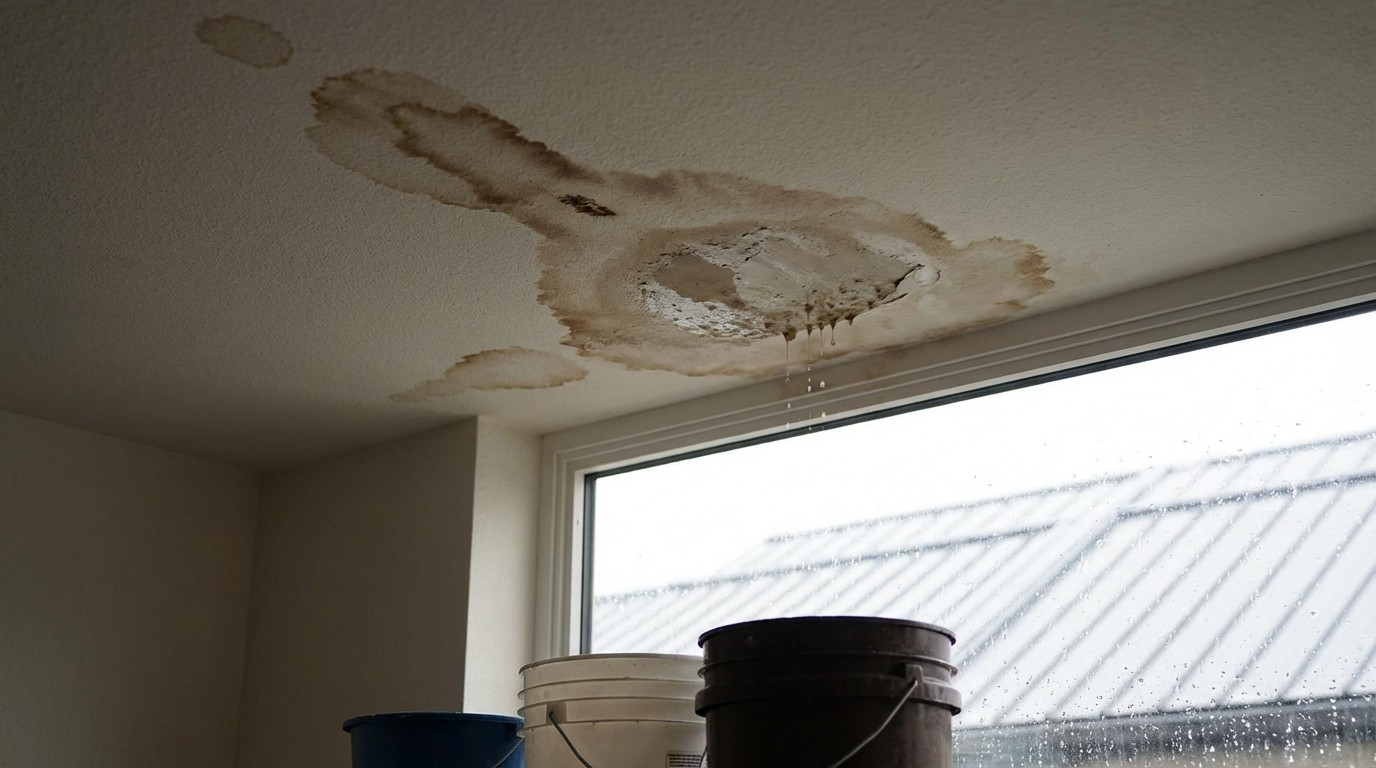
Interior Water Stains on Ceilings and Walls
Look for brown or yellow stains on your ceiling after heavy rain. Fresh leaks leave wet spots that darken drywall or plaster. Older leaks show up as discolored rings or patches.
Water doesn't always drip straight down. It can travel along rafters or through insulation before appearing inside. If you see stains near walls or in corners, the leak might be several feet away from where water shows up.
Dripping or Pooling Water in Your Attic
Go into your attic during or right after heavy rain. Look for active drips, wet insulation, or water pooling on the attic floor. Bring a flashlight and check around chimneys, vents, and where roof planes intersect.
Wet or compressed insulation is a clue. If insulation looks matted down or darker than surrounding areas, water has been soaking it. This means you have a leak that's been active for a while.
Rust Stains on Metal Panels or Fasteners
Rust streaks running down metal panels indicate water is getting in somewhere above. Rusty screw heads mean water is flowing through fastener holes. Check the uphill side of any rust stain to find the source.
Visible Gaps or Cracks in Sealant
Walk around your property and look up at roof edges, ridges, and valleys. Use binoculars if needed. If you see gaps in sealant at panel overlaps or separations at flashing, you've found likely leak sources.
Dried, cracked sealant means it's lost flexibility and isn't sealing anymore. Fresh sealant is pliable. Old sealant is hard and brittle. If you can see daylight through a seam, water is definitely getting through during heavy rain.
What to Do When You Find a Leak During Heavy Rain
Contain the Water Damage Inside
Place buckets under active drips. Move furniture and electronics away from wet areas. If water is soaking into drywall, use towels to soak up as much as possible. The faster you act, the less damage water does to your interior.
If you have a severe leak, you may need to punch a small hole in the ceiling at the lowest point where water is pooling. This controls where water drains rather than letting it spread through the ceiling.
Tarp the Roof If Possible
If it's safe and you can reach the area, cover the leak with a heavy-duty tarp. Extend the tarp past the leak source and weigh it down with boards or sandbags. This is a temporary fix until weather improves and a contractor can make permanent repairs.
Don't walk on a wet metal roof. It's extremely slippery and dangerous. If you're not comfortable or the weather is bad, wait for professional help.
Document the Damage for Insurance
Take photos and videos of interior damage, water stains, and visible roof issues. Document the date and time, and note recent weather events. If you're filing an insurance claim, this evidence supports your case.
Keep damaged items until the insurance adjuster inspects them. Don't throw away water-damaged materials until the claim is processed.
Call a Professional Roofer
Contact a licensed roofing contractor experienced with metal roofs. Explain the leak location and when it occurs. Most roofers can schedule an inspection once weather clears. A professional roof inspection identifies all problem areas, not just the obvious leak.
If you need help comparing quotes from vetted local roofers, roofquotes.com connects you with licensed professionals who can assess and repair metal roof leaks. You can get multiple detailed estimates and see exactly what repairs are needed.
Repair Options for Metal Roof Leaks
The right repair depends on the leak source and extent of damage. A professional roofer will inspect your roof, identify all problem areas, and recommend the most cost-effective solution.
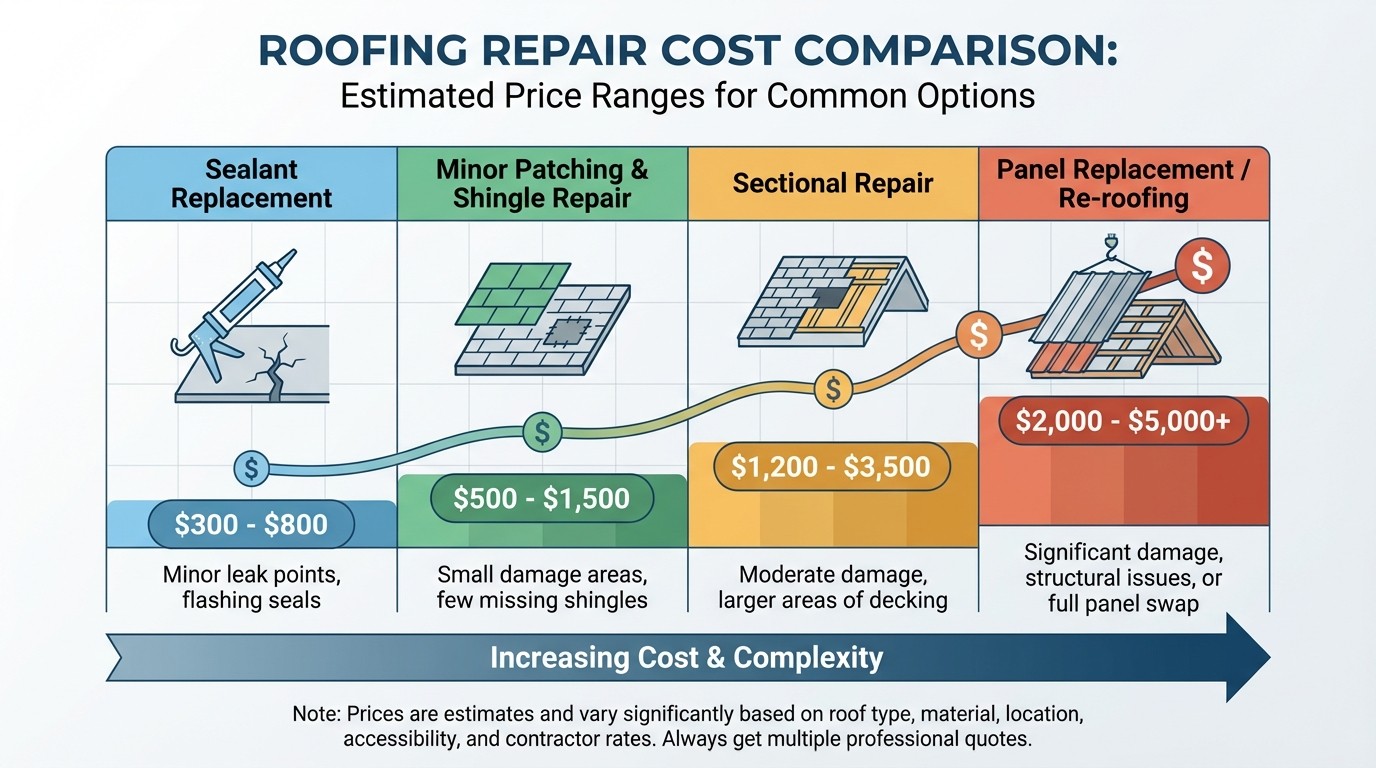
Sealant Replacement
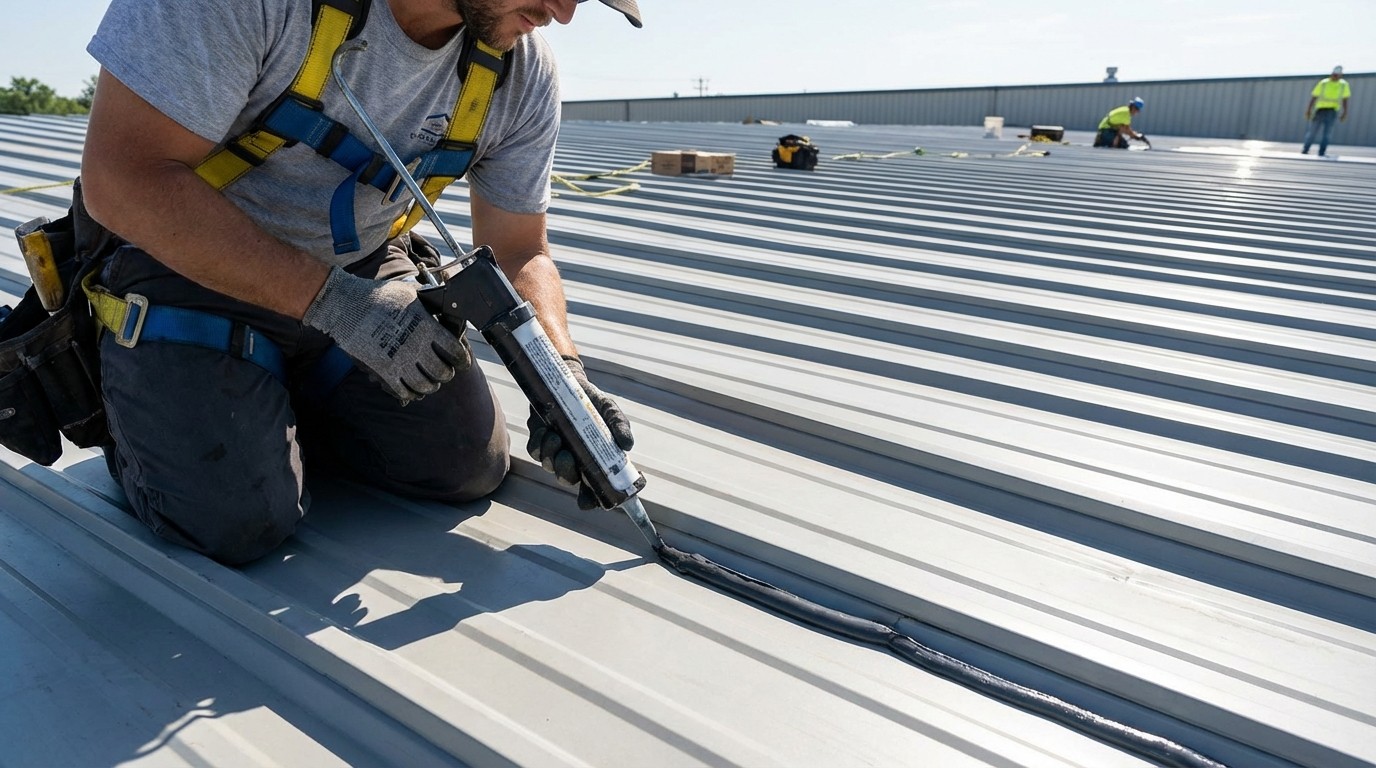
If the leak is caused by failed sealant at seams or ridges, the fix is straightforward. A roofer removes old sealant, cleans the metal surfaces, and applies fresh butyl or polyurethane sealant designed for metal roofs.
This repair works best when caught early. If water has been leaking for months, you may also need to replace corroded fasteners or damaged underlayment underneath.
Surface preparation is critical for sealant to bond properly. The roofer must clean off all old sealant, dirt, and oxidation. The metal needs to be completely dry before new sealant goes on. Applying sealant to wet or dirty metal guarantees early failure.
Fastener Replacement
Loose or missing screws need replacement with new fasteners and fresh rubber washers. The roofer removes the old screw, inspects the hole for rust or enlargement, and installs a slightly larger screw if needed. Proper torque is critical. Overtightening crushes the washer, and undertightening leaves gaps.
For widespread fastener issues, a full roof inspection is smart. If many screws are loose, there's likely a pattern issue with installation or material quality.
Flashing Repair or Replacement
Damaged flashing must be removed and replaced correctly. This often requires removing several rows of metal panels to access and install new flashing properly. Cheap patch jobs with caulk don't last.
Step flashing around chimneys and walls should lap correctly with counter-flashing. Valley flashing needs proper width and slope to handle water volume. A skilled roofer knows how to integrate new flashing with your existing metal roof system.
Roof Coating Application
For older metal roofs with multiple small leaks, a roof coating system can seal the entire surface. Coatings fill minor gaps, cover exposed fasteners, and add a waterproof layer over the entire roof.
Coatings aren't a permanent fix for structural issues or major flashing problems, but they extend the life of aging metal roofs and provide temporary protection while you plan for replacement.
Panel Replacement
If panels are damaged, corroded, or improperly installed, replacement is necessary. This is more common with lower-quality metal roofing or roofs exposed to salt air. A contractor removes damaged panels and installs new ones, matching your existing roof as closely as possible.
Prevention Tips to Stop Metal Roof Leaks
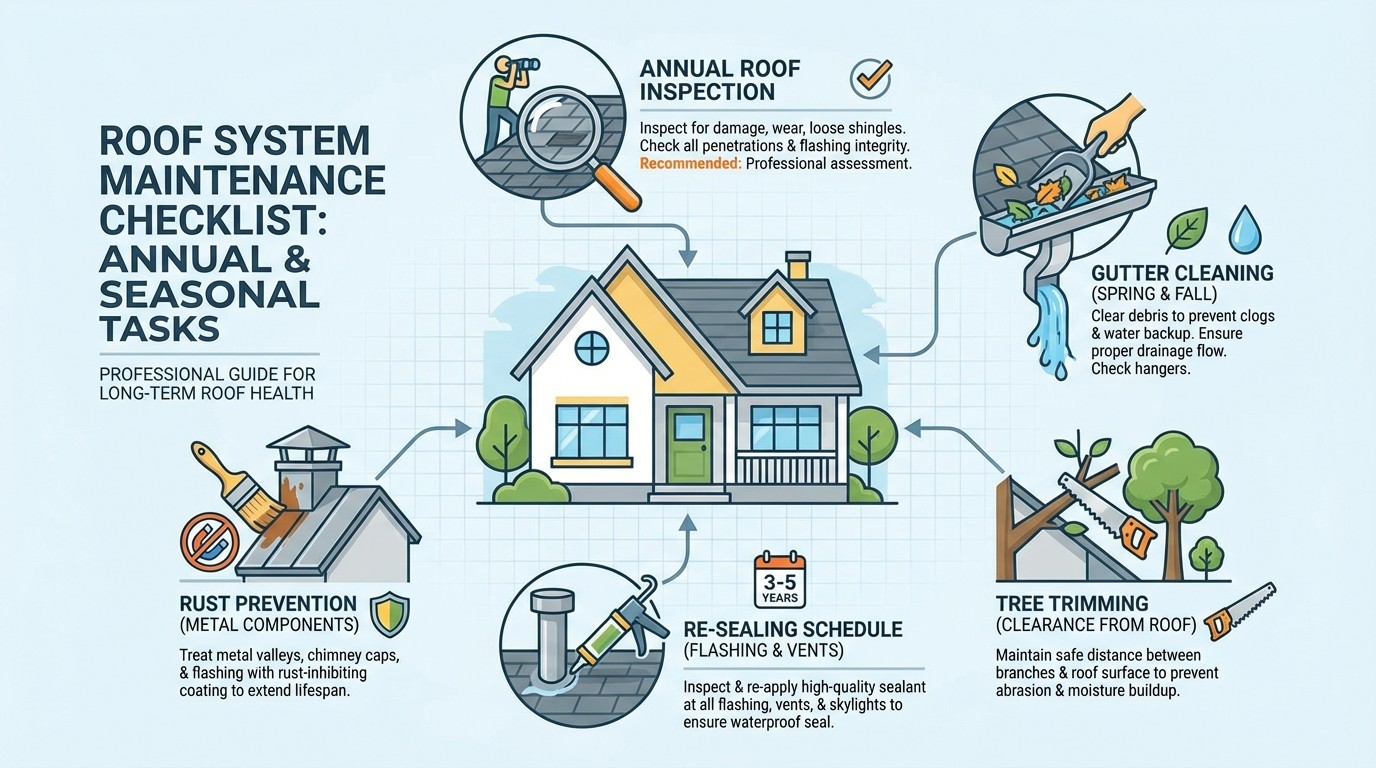
Schedule Annual Roof Inspections
Have a professional inspect your metal roof every year, ideally in spring before storm season. Inspections catch small issues before they become major leaks. A roofer checks sealant condition, fastener tightness, flashing integrity, and panel condition. Regular professional roof inspections are your best defense against unexpected leaks during heavy rain.
Keep Gutters and Valleys Clear
Clogged gutters and valleys force water to back up under metal panels. Clean gutters twice a year and after major storms. Pay special attention to valleys where leaves and debris accumulate.
Trim Overhanging Tree Branches
Branches rubbing against your roof wear through protective coatings and damage panels. Falling branches can puncture metal or damage flashing. Keep trees trimmed back at least six feet from your roofline.
Re-Seal Penetrations Every 5-7 Years
Sealant around vents, chimneys, and skylights doesn't last forever. Plan to re-seal these areas every five to seven years as preventive maintenance. This is far cheaper than repairing water damage after a leak develops.
Address Rust Spots Immediately
Small rust spots indicate water is getting through protective coatings. Clean rust with a wire brush, apply rust converter, and touch up with matching metal roof paint. This prevents rust from spreading and creating holes.
Insurance Coverage for Metal Roof Leaks
Homeowners insurance typically covers sudden storm damage that causes leaks, but not gradual deterioration from poor maintenance, according to the Insurance Information Institute. If heavy rain exposes a pre-existing issue like worn sealant or loose fasteners, your claim may be denied.
To maximize your chances of coverage, document that the leak is new and storm-related. Take photos of the damage immediately after heavy rain. Show the adjuster clear evidence of storm damage like missing fasteners, lifted panels, or debris impact.
If your roof is older, insurance companies may apply depreciation to your claim. They'll pay the actual cash value of repairs, not the full replacement cost. Your deductible also applies, so minor repairs might not exceed your deductible amount.
When to Repair vs. Replace a Leaking Metal Roof
Repair makes sense if your roof is less than 20 years old, the leaks are isolated to specific areas, and the underlying structure is sound. Repairing a few seams or replacing flashing costs far less than a full roof replacement.
Replace the roof if you're dealing with widespread rust, multiple leak sources, failed coatings, or a roof nearing the end of its expected lifespan. According to the Metal Roofing Alliance, metal roofs typically last 40-70 years, but cheaper materials or poor installation can shorten this significantly.
Consider replacement if repair costs approach 30-40% of full replacement cost. At that point, you're better off investing in a new roof with a fresh warranty rather than pouring money into temporary fixes.
If your metal roof is approaching 30 years old and showing multiple problems, replacement might be the smarter long-term investment. A new metal roof eliminates ongoing maintenance headaches and provides decades of reliable protection.