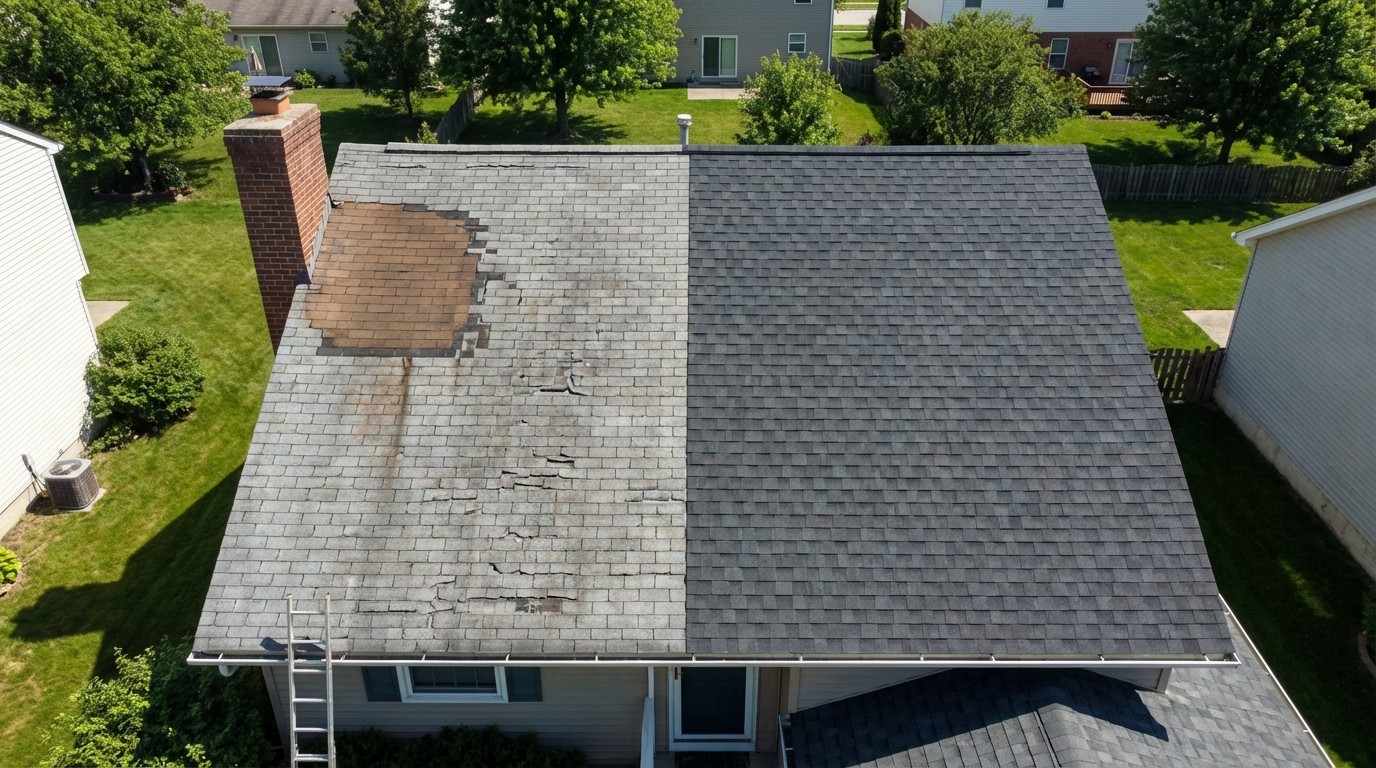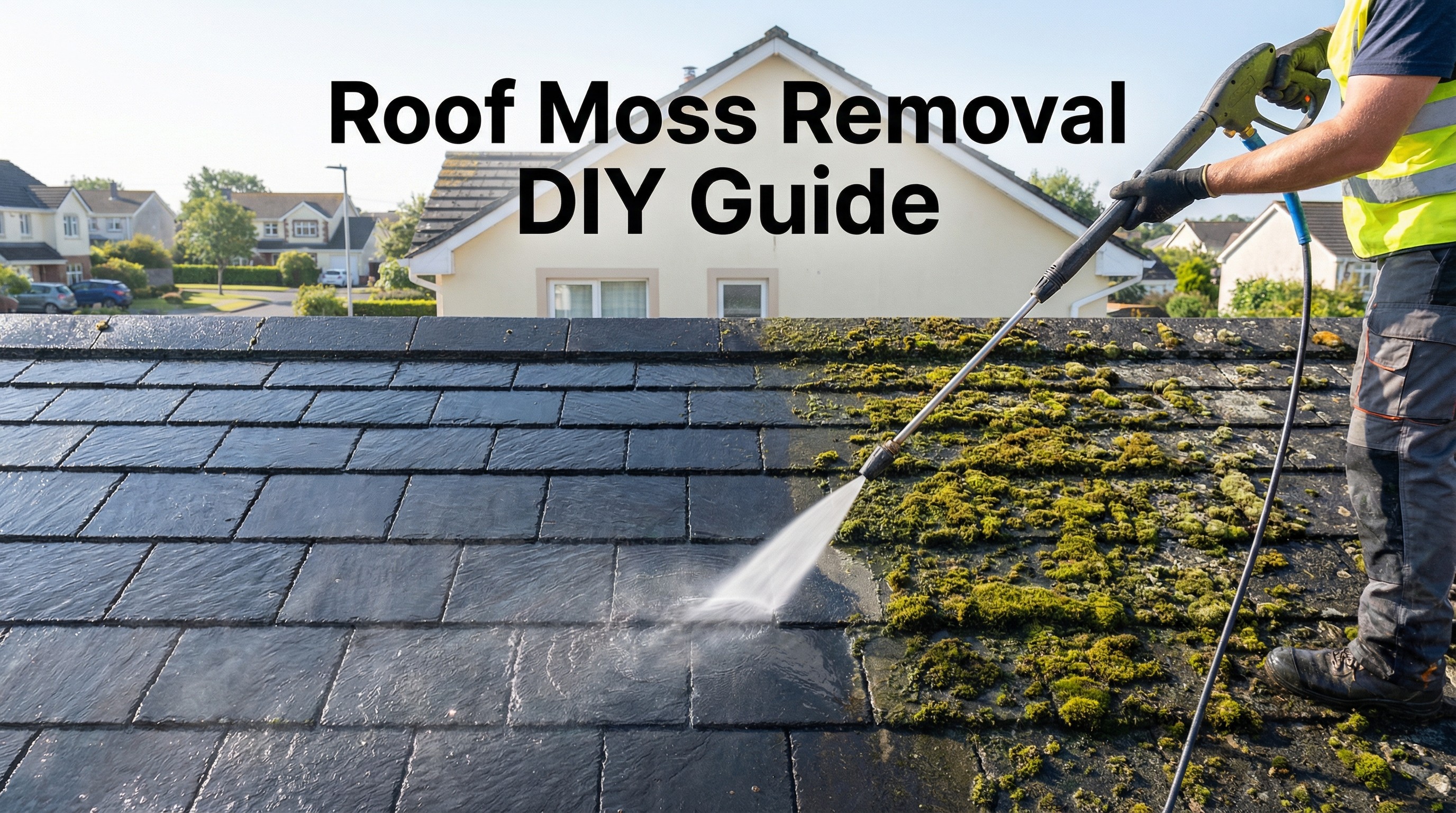
Moss on your roof isn't just unsightly. It's silently lifting your shingles and trapping moisture that leads to leaks and wood rot. Left untreated, moss can shorten your roof's lifespan by 5-10 years and cause interior damage costing thousands in repairs.
Homeowners researching cleaning moss from roof surfaces face conflicting advice. Some recommend bleach, others swear by vinegar, and many warn about pressure washing damage. The wrong approach can damage your shingles or create safety hazards.
This guide provides clear DIY methods for moss removal from roof surfaces, real cost breakdowns comparing DIY ($50-150) to professional services ($300-800), timing strategies for maximum effectiveness, and prevention tactics to keep moss from returning. You'll learn which chemical treatments work best, how to remove moss safely, and when hiring a professional makes more sense than doing it yourself.
Understanding Roof Moss: Why It's a Problem
Moss grows where shade, moisture, and organic debris meet. Once established, it spreads quickly and causes progressive damage.
How Moss Damages Your Roof:
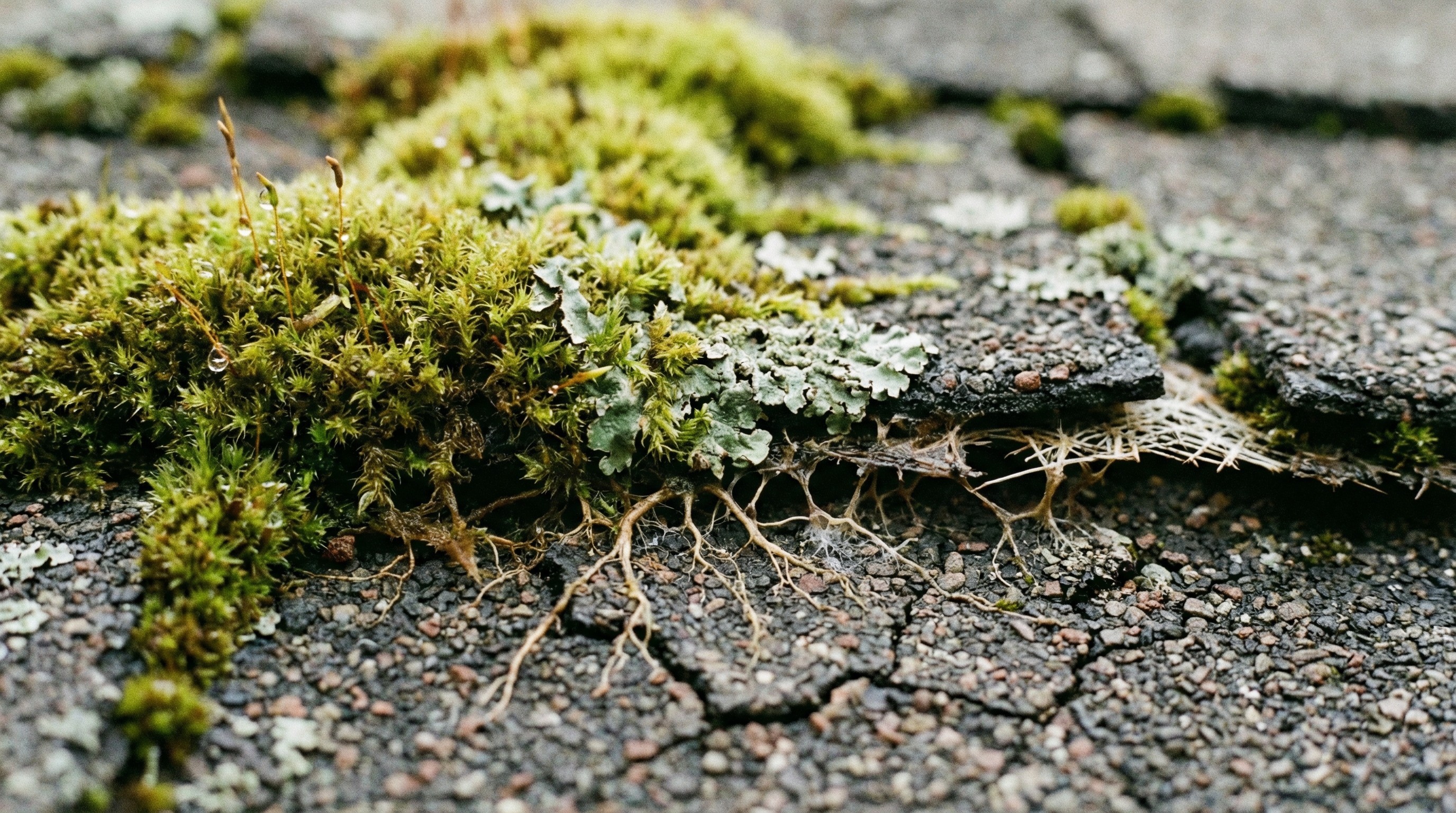
Moss roots burrow under shingle edges, lifting them and creating entry points for water. This process happens gradually but accelerates over time. Within 6-12 months of visible growth, shingles begin lifting. Within 1-2 years, water infiltrates the roof deck, causing wood rot in sheathing and rafters. According to the National Roofing Contractors Association, asphalt shingles with lifted edges from moss growth lose their waterproofing seal, accelerating deterioration.
Asphalt shingles suffer most because their granular texture provides ideal grip for moss roots. Properly cleaning moss from roof surfaces before this damage progresses prevents costly repairs. Tile roofs trap moisture in porous surfaces, encouraging growth. Metal roofs resist moss better but can still develop it in valleys where debris collects.
Damage Timeline:
Months 1-6: Surface moss, cosmetic issue
Months 6-12: Shingle lifting begins, minor water entry
Year 1-2: Wood rot starts, visible interior stains possible
Year 2+: Structural damage, premature roof failure
Insurance Implications:
Most homeowner policies consider moss removal routine maintenance, not covered damage. However, if moss causes a leak that damages your interior, that water damage may be covered. Document moss removal as part of regular maintenance for potential claims.
Prevention costs $100-300 every few years as part of your regular roof maintenance. Roof replacement from moss damage costs $5,000-15,000. The math strongly favors prevention.
Current word count: ~300 words | Target: 500 cumulative | Status: On track ✓
When is the Best Time to Remove Moss From Your Roof?
Timing affects both treatment effectiveness and safety.
Best Seasons by Region:
Pacific Northwest: Late spring to early summer (May-June) when moss is dry enough to treat but still actively growing. Avoid winter when constant rain dilutes treatments.
Southeast: Fall (September-October) before winter rains arrive. Summer heat makes roof work dangerous. Spring works but risks storms washing away treatments.
Northeast: Late spring (May) after final frost. Frozen moss doesn't absorb chemicals, and brittle cold shingles crack easily.
Weather Conditions Required:
Check forecasts for 48 hours of dry weather after treatment. Rain within two days washes chemicals away before they kill moss roots, wasting your time and money.
Ideal temperatures: 50-75°F. Below 50°F, moss goes dormant and resists treatment. Above 80°F, you risk heat exhaustion and shingles become soft.
Before starting any moss cleaning from roof work, consider scheduling a professional roof inspection to assess whether moss has already caused structural damage requiring repair.
DIY Moss Removal Methods Compared
Three main approaches exist, each with different effectiveness, cost, and safety profiles.
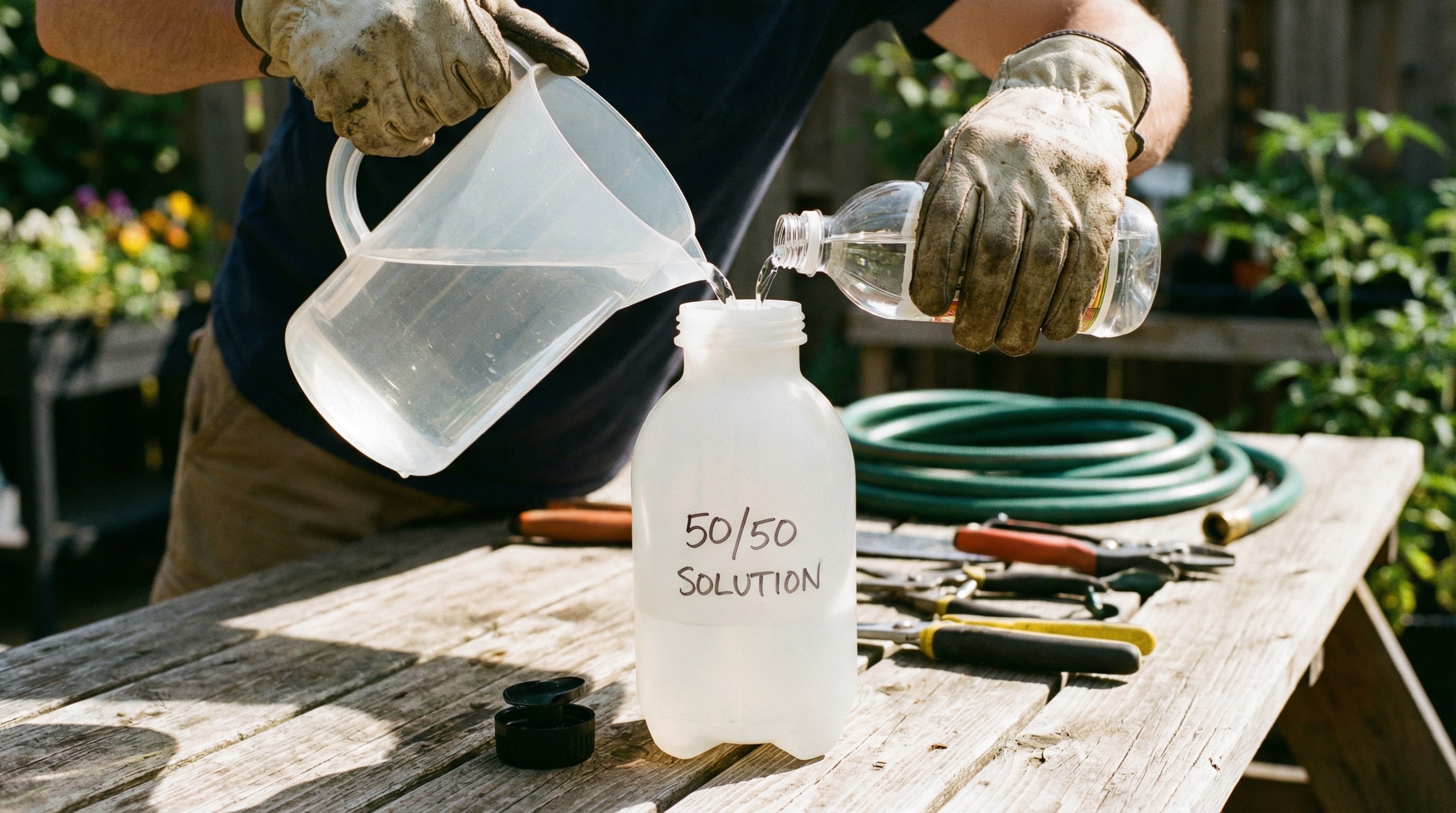
Bleach Method (50/50 Solution)
How It Works: Mix equal parts household bleach and water. Add dish soap to help solution stick to moss.
Effectiveness: ★★★★★ Kills moss in 15-30 minutes, complete death within 24 hours
Cost: $15-25 for initial supplies (bleach $8, sprayer $15-25, brush $15)
Pros: Fast results, thorough kill reaching roots, widely available materials, works on heavy growth
Cons: Harsh on landscaping, corrosive to metal, requires safety gear, strong fumes
Best For: Severe moss growth, quick results needed, situations where speed matters
Vinegar Method (Natural Alternative)
How It Works: Mix white vinegar with water and dish soap. Saturate moss completely.
Effectiveness: ★★★☆☆ Kills moss in 2-4 hours, may require repeat application
Cost: $20-35 for supplies
Pros: Safer for plants, non-toxic, biodegradable, no harsh smell
Cons: Slower action, multiple applications for thick moss, less effective on established growth
Best For: Light-moderate moss, eco-conscious homeowners, when you have time for slower results
Commercial Moss Killers
Products like Wet & Forget and Spray & Forget offer middle-ground options.
Effectiveness: ★★★★☆ Results in 1-2 weeks
Cost: $25-40 per treatment
Pros: No scrubbing, rain-activated, moderate eco-impact
Cons: Slower than bleach, more expensive than homemade, requires patience
Method | Cost | Kill Time | Eco Rating | Effectiveness |
|---|---|---|---|---|
Bleach | $15-25 | 30 min | ★★☆☆☆ | ★★★★★ |
Vinegar | $20-35 | 2-4 hrs | ★★★★★ | ★★★☆☆ |
Commercial | $25-40 | 1-2 weeks | ★★★★☆ | ★★★★☆ |
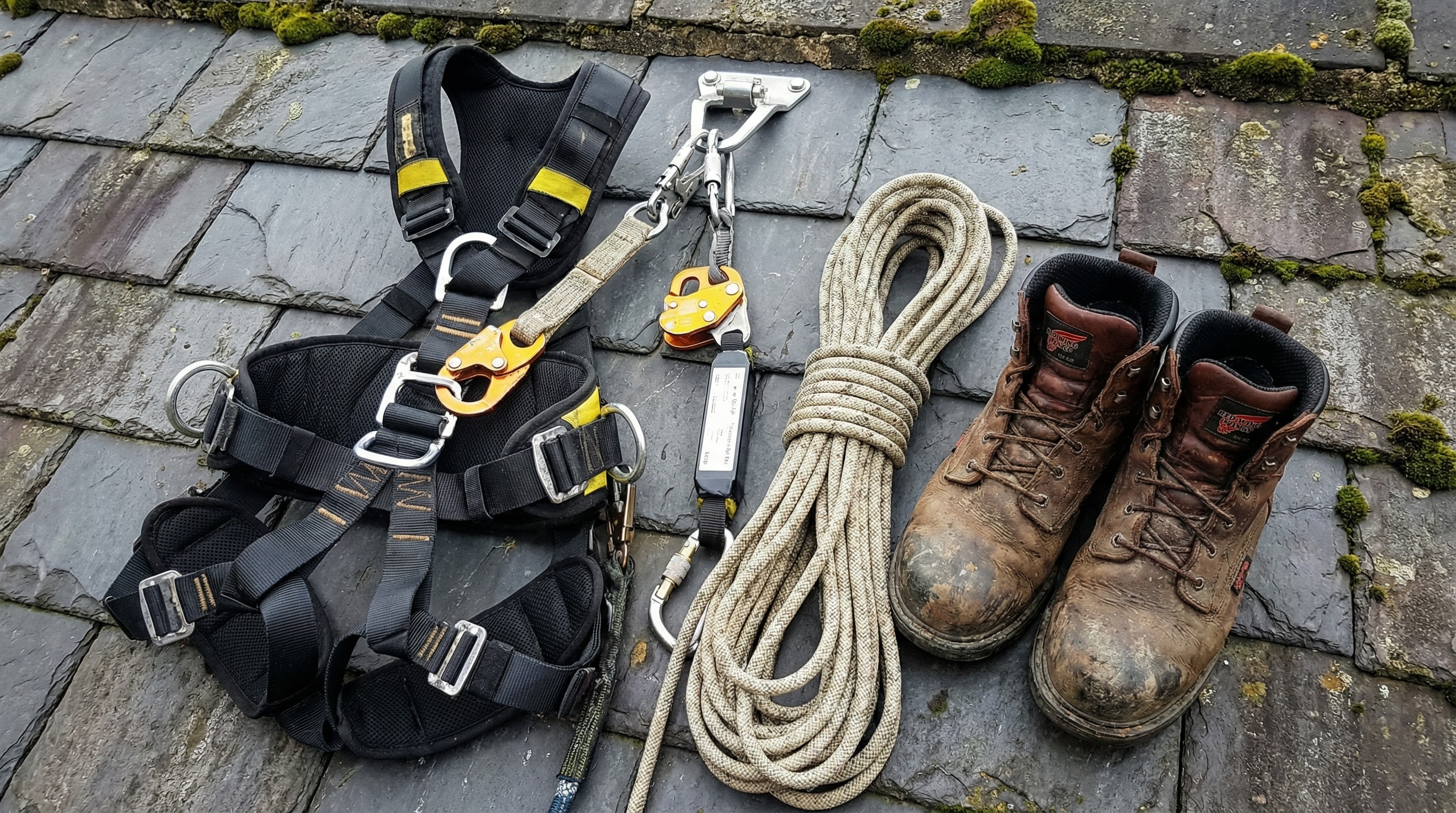
Step-by-Step DIY Moss Removal Process
Follow these steps for safe, effective roof moss removal.
Safety Preparation
Required Equipment:
Non-slip shoes with aggressive tread
Safety harness for steep roofs (6/12 pitch or steeper)
Safety glasses and chemical-resistant gloves
Extension ladder (3 feet above roof line)
Soft-bristle broom (never metal)
Garden sprayer and hose
According to the CDC, falls from roofs cause serious injuries annually. Never skip safety equipment.
Application Process
Step 1: Protect landscaping with plastic sheeting. Pre-soak plants with water.
Step 2: Gently brush off bulk moss with soft broom. Work downward following shingle direction.
Step 3: Mix your chosen solution (50/50 bleach/water or vinegar/water). Add 2 tablespoons dish soap.
Step 4: Spray solution generously on all moss-covered areas. Let sit: bleach 30 minutes, vinegar 2-4 hours.
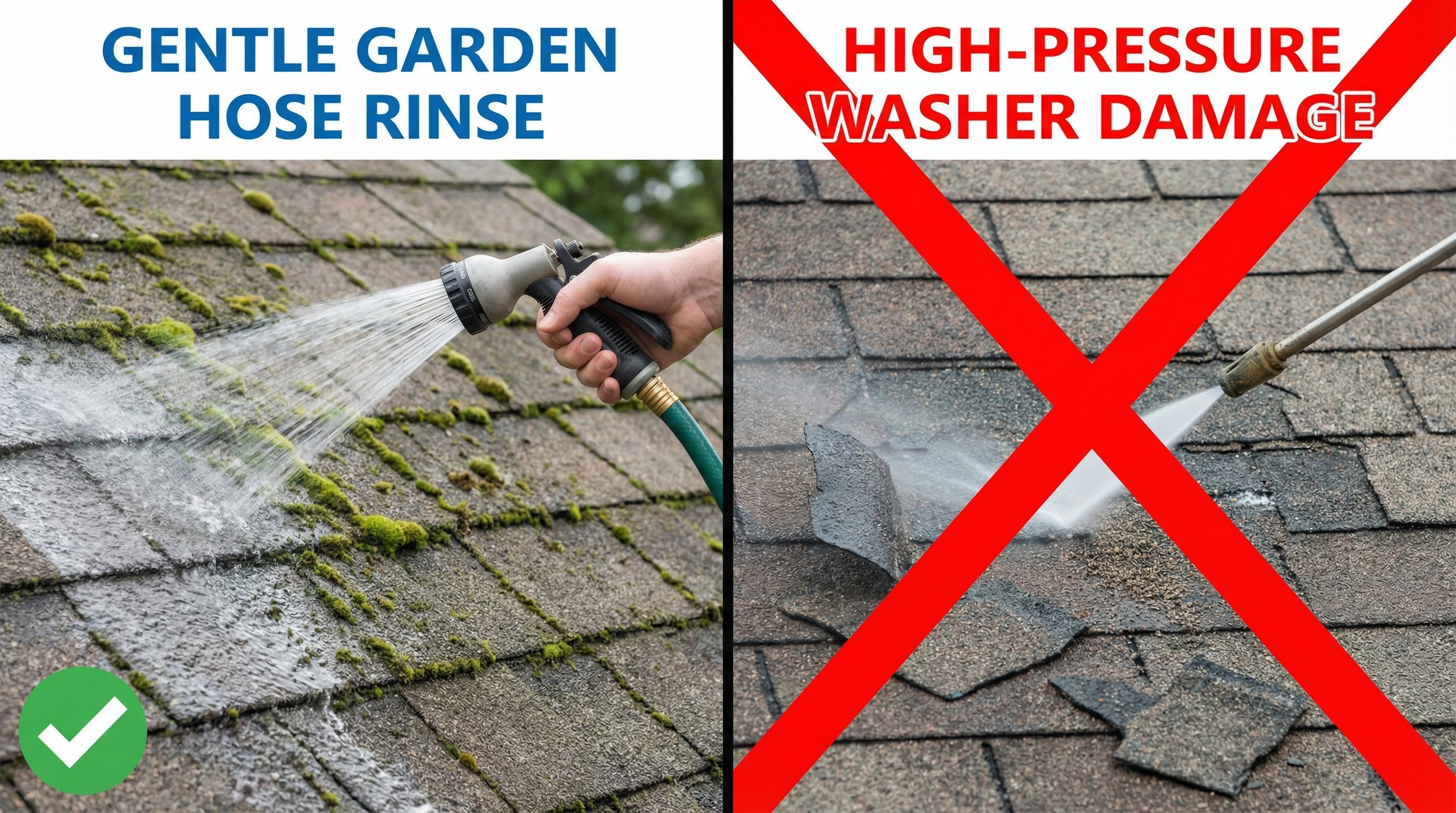
Step 5: Rinse with garden hose (low pressure only). Never use pressure washer.
Cleanup and Post-Treatment
Flush gutters to remove dead moss debris. Rinse all landscaping thoroughly. Inspect for shingle damage revealed by moss removal.
If you discover damaged shingles, repair them promptly to prevent leaks.
WARNING: Pressure washers (1,500+ PSI) strip protective granules from shingles and force water underneath, causing immediate leaks. This mistake costs thousands in premature roof replacement. Always use a garden hose with spray nozzle (40-60 PSI) instead.
How to Prevent Moss From Coming Back
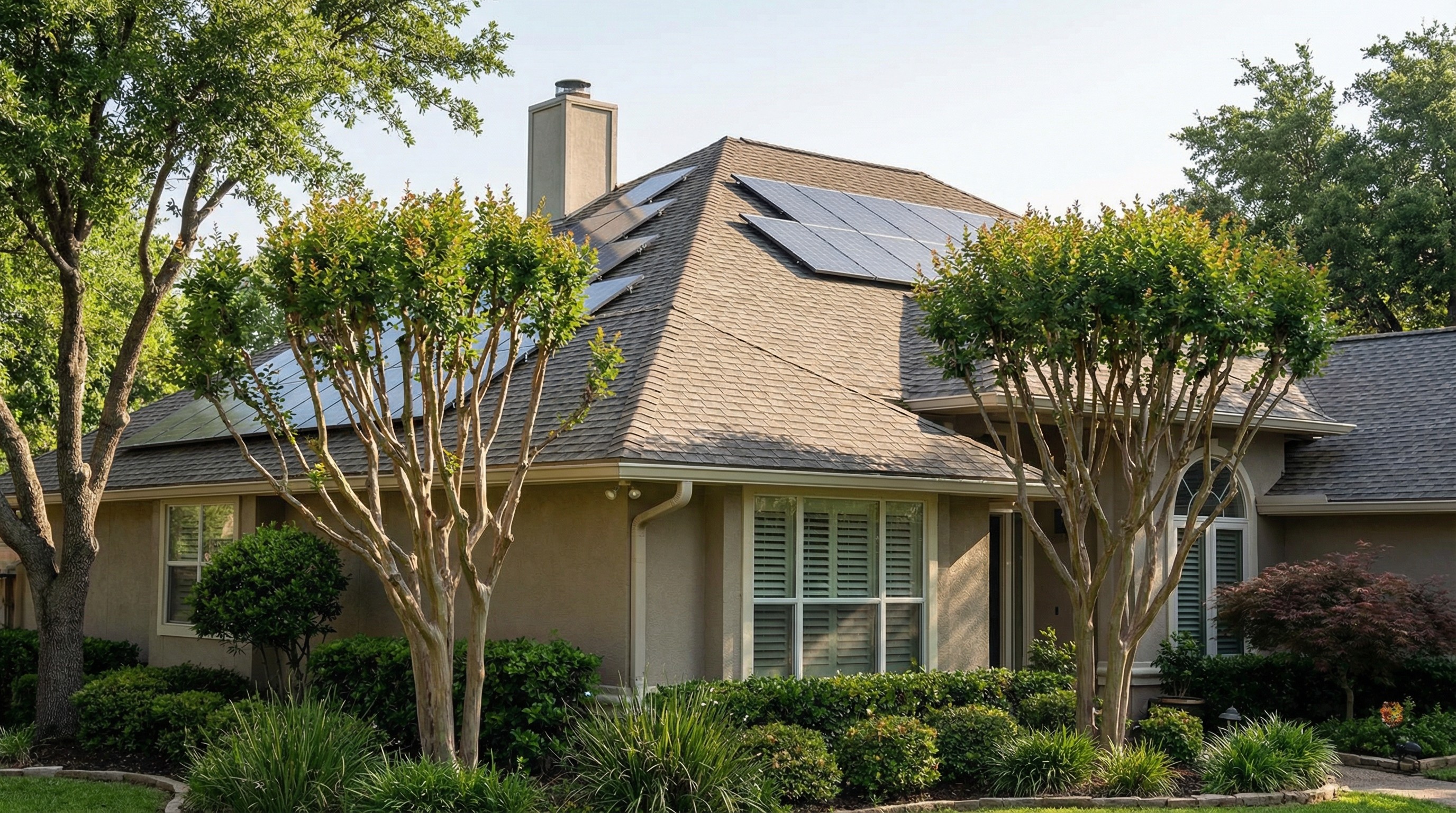
Cleaning moss from roof surfaces solves the immediate problem. Prevention eliminates recurring issues.
Zinc and Copper Strip Installation
Metal strips provide 10-20 years of moss prevention.
How It Works: Rain washes zinc or copper ions down your roof, creating an environment where moss can't survive. Research from Oregon State University Extension confirms that zinc and copper ions effectively inhibit moss growth when properly installed.
Installation: Lift ridge cap shingles and slide 2-4 inch wide strips underneath, leaving 2-3 inches exposed. Secure with galvanized nails.
Cost: $75-150 for DIY materials, $300-600 professionally installed
Tree Management
Reduce shade by trimming branches to maintain 10 feet clearance above roof. Tree management is often overlooked when cleaning moss from roof systems, but shade reduction provides long-term prevention. Consider removing trees that chronically drop debris and create deep shade.
Cost: $200-500 for professional trimming per tree
Gutter Maintenance
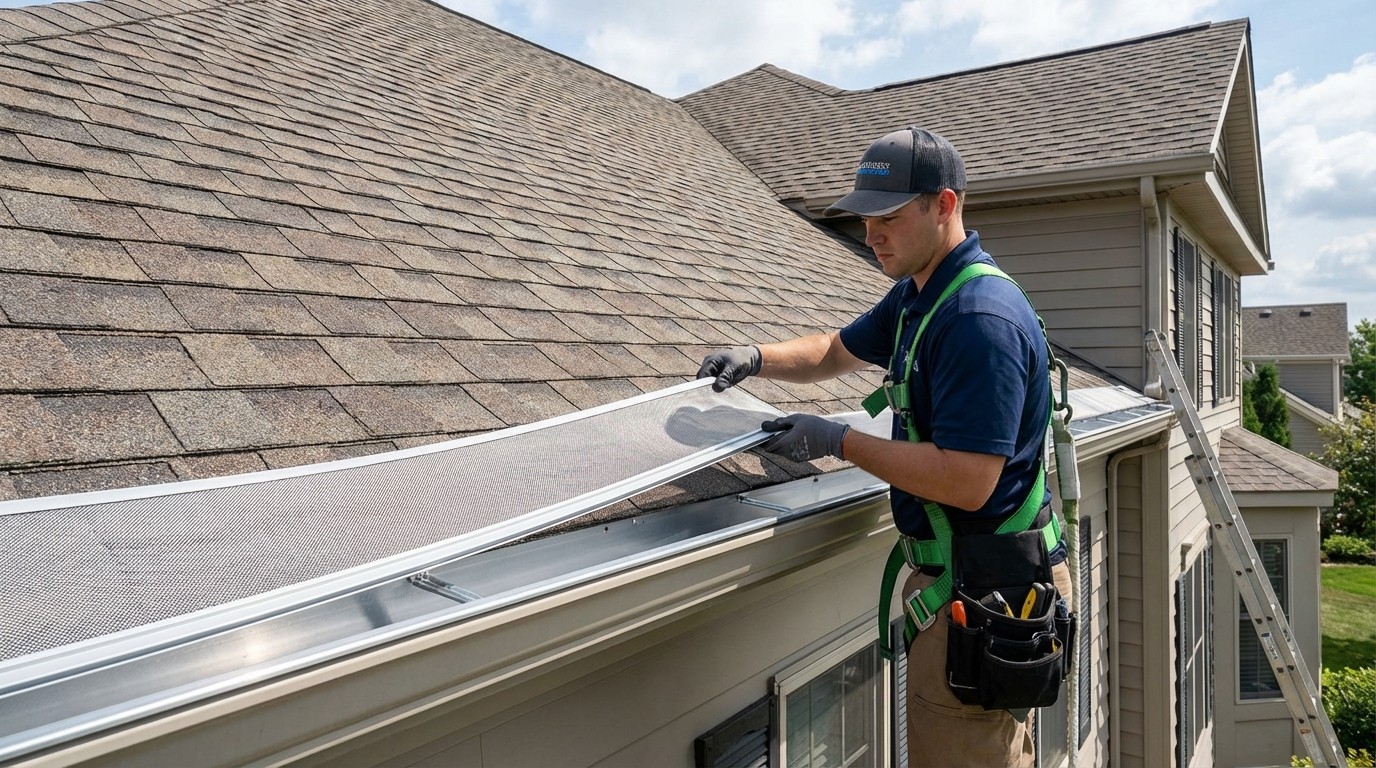
Clean gutters twice yearly (spring and fall) to prevent moisture backup that feeds moss growth. Install gutter guards ($5-10 per linear foot) to reduce cleaning frequency.
Understanding how long different roof materials last helps you decide whether prevention investments make sense for your roof's remaining lifespan.
DIY vs Professional Moss Removal: Cost Analysis
Understanding true costs helps you make informed decisions.
DIY Cost Breakdown
Basic Supplies (First Time):
Household bleach (2 gallons): $8
Pump sprayer: $25-40
Soft-bristle brush: $15
Safety gear (glasses, gloves): $15
Total First Time: $63-78
Repeat Treatments: $8 (just bleach)
With Prevention:
Basic supplies: $63-78
Zinc strips (50 feet): $75-125
Installation materials: $15
Total: $153-218
Professional Service Pricing by Region
National Average: $300-800 for 1,500-2,000 sq ft roof
Regional Variations:
Pacific Northwest: $400-900 (high demand, persistent moss)
Southeast: $300-700
Northeast: $350-750
Midwest: $250-600
Service Type | DIY Cost | Professional Cost | Time Required |
|---|---|---|---|
Basic Removal | $63-78 | $300-800 | DIY: 4-6 hrs, Pro: 1-3 hrs |
With Prevention | $153-218 | $700-1,200 | DIY: 6-8 hrs, Pro: 2-4 hrs |
When to Hire a Professional
Hire a pro if:
Roof pitch exceeds 6/12 (too steep for safe DIY)
You're uncomfortable with heights
Moss covers more than 30% of roof
Shingles are 15+ years old (need assessment)
You see signs of water damage inside
DIY if:
Roof pitch is 4/12 or less (walkable)
Moss coverage is light-moderate
You're comfortable on ladders
You have a weekend available
Compare quotes from local roofers to see actual professional costs in your area. Vetted contractors compete for your business, typically saving you 15-20%.
Common Mistakes to Avoid
Learn from expensive errors others have made.
Pressure Washing When Cleaning Moss: High pressure (1,500+ PSI) strips protective granules and forces water under shingles. Professional roofers see pressure-washed roofs fail 5-10 years early. Always use garden hose only.
Wrong Concentrations: Too weak (10% vinegar) won't kill moss. Too strong (full bleach) kills everything and corrodes metal. Follow 50/50 ratios exactly.
Timing Errors: Removing moss in winter wastes effort (frozen moss doesn't absorb chemicals). Removing before rain washes treatment away. Removing in peak summer heat risks exhaustion.
Safety Violations: Walking on wet moss causes dangerous falls. Working without harness on steep roofs (6/12+) risks serious injury. Using damaged ladders creates instability.
Proper safety equipment and timing prevent these problems. When in doubt about safety, hire a professional.