After a hail storm, you walk outside to find dented gutters, cracked siding, and neighbors scrambling to get their roofs inspected. You look up at your own roof and wonder: is there damage you can't see?
Hail roof damage can be hard to spot from the ground, but left unaddressed, it can void your insurance coverage, cause leaks, and reduce your roof's lifespan. With storm chasers knocking on doors and insurance adjusters on tight timelines, you need to act fast but smart.
This guide will show you how to identify hail roof damage, understand your insurance options, and find trustworthy local contractors. You'll learn when repair is enough versus when replacement is needed, what insurance actually covers, and how to get fair quotes.
What Does Hail Roof Damage Look Like?
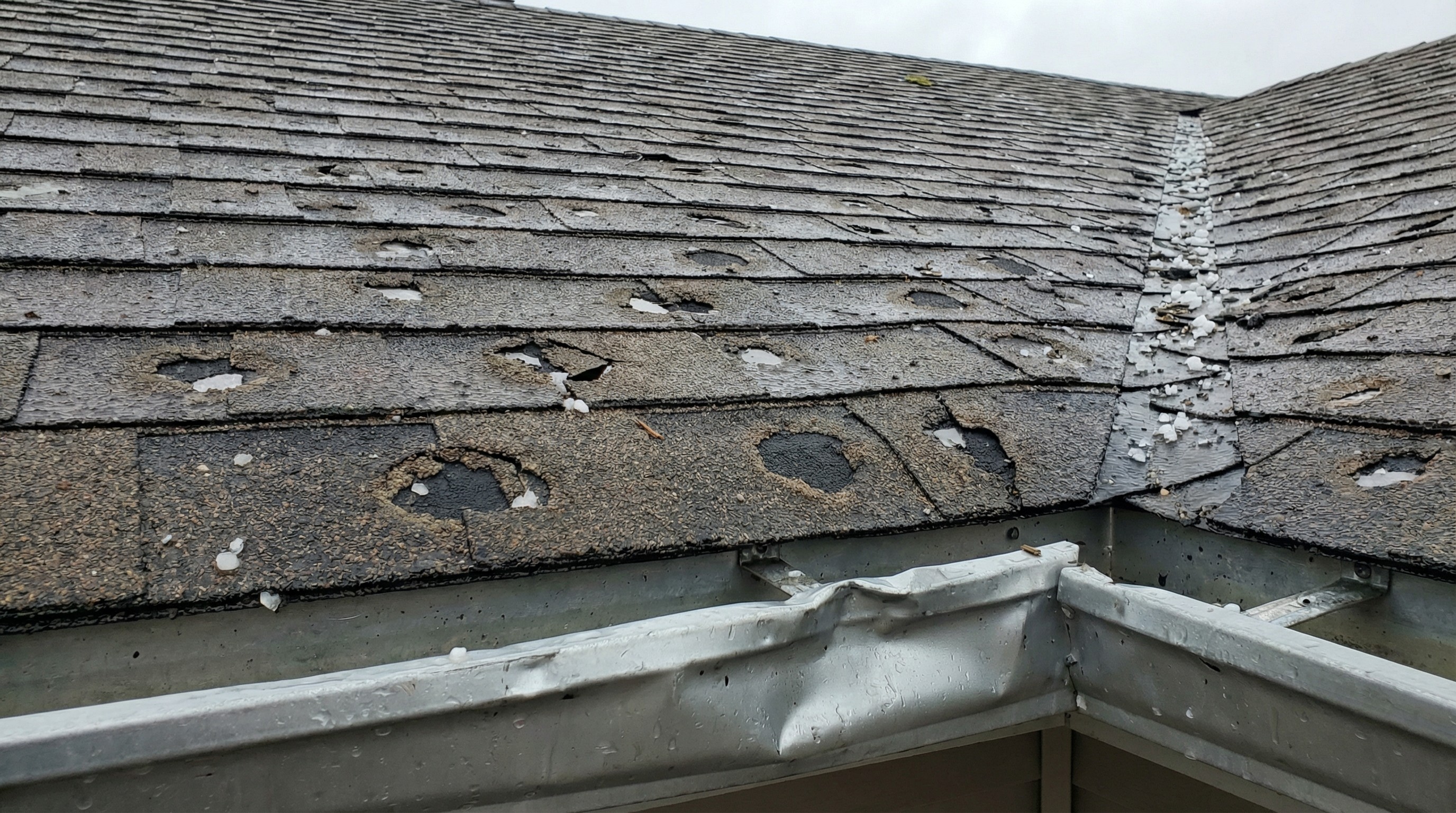
Hail roof damage appears as circular dents or bruises on shingles with missing granules, cracks in the shingle mat, or exposed black asphalt. On metal roofs, look for visible dents or dings. Damage severity depends on hail size, wind speed, roof age, and material type. Professional inspection is recommended for accurate assessment.
According to NOAA's National Weather Service, hail causes over $1 billion in property damage annually across the United States, with roofs being the most commonly affected structures.
The challenge is that serious hail roof damage often isn't visible from the ground. You need to get on the roof or use binoculars to spot the telltale signs of hail damage.
Asphalt Shingles (Most Common)
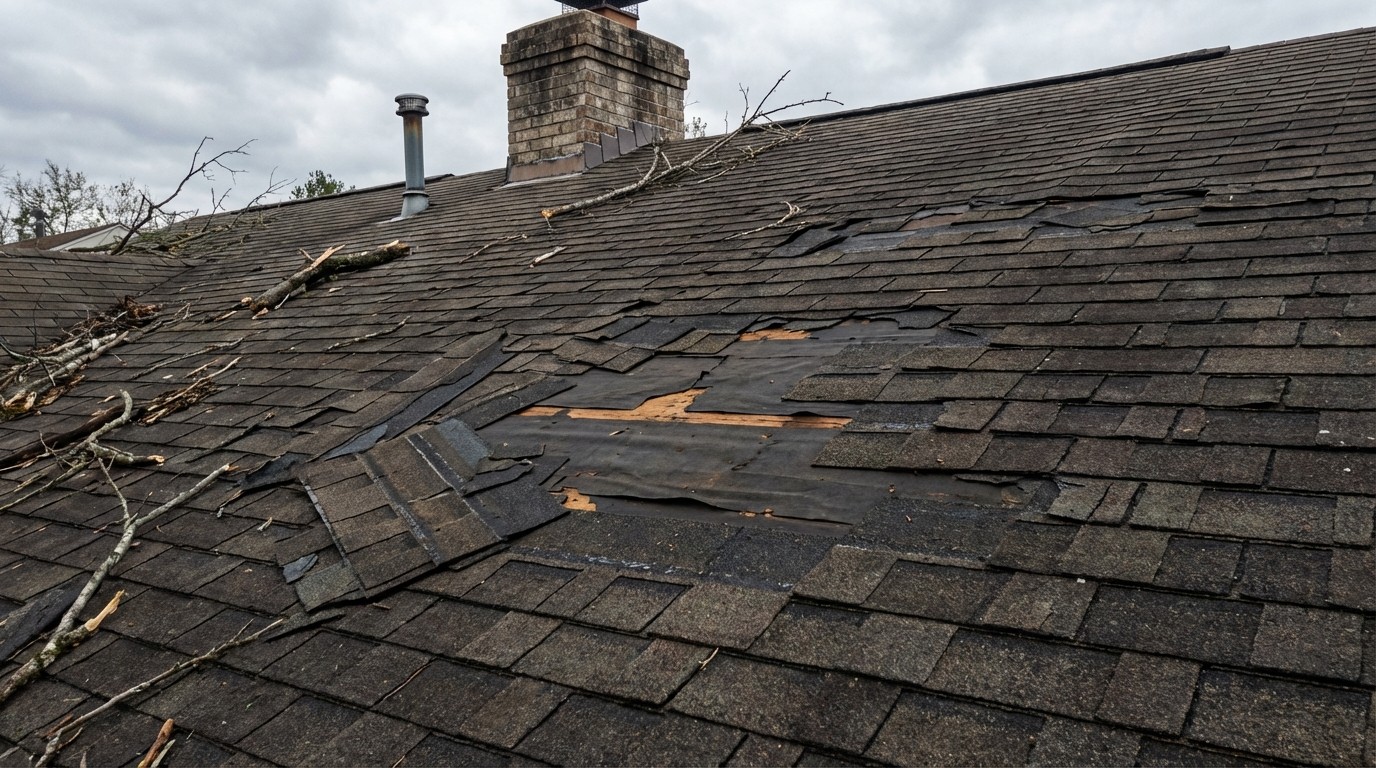
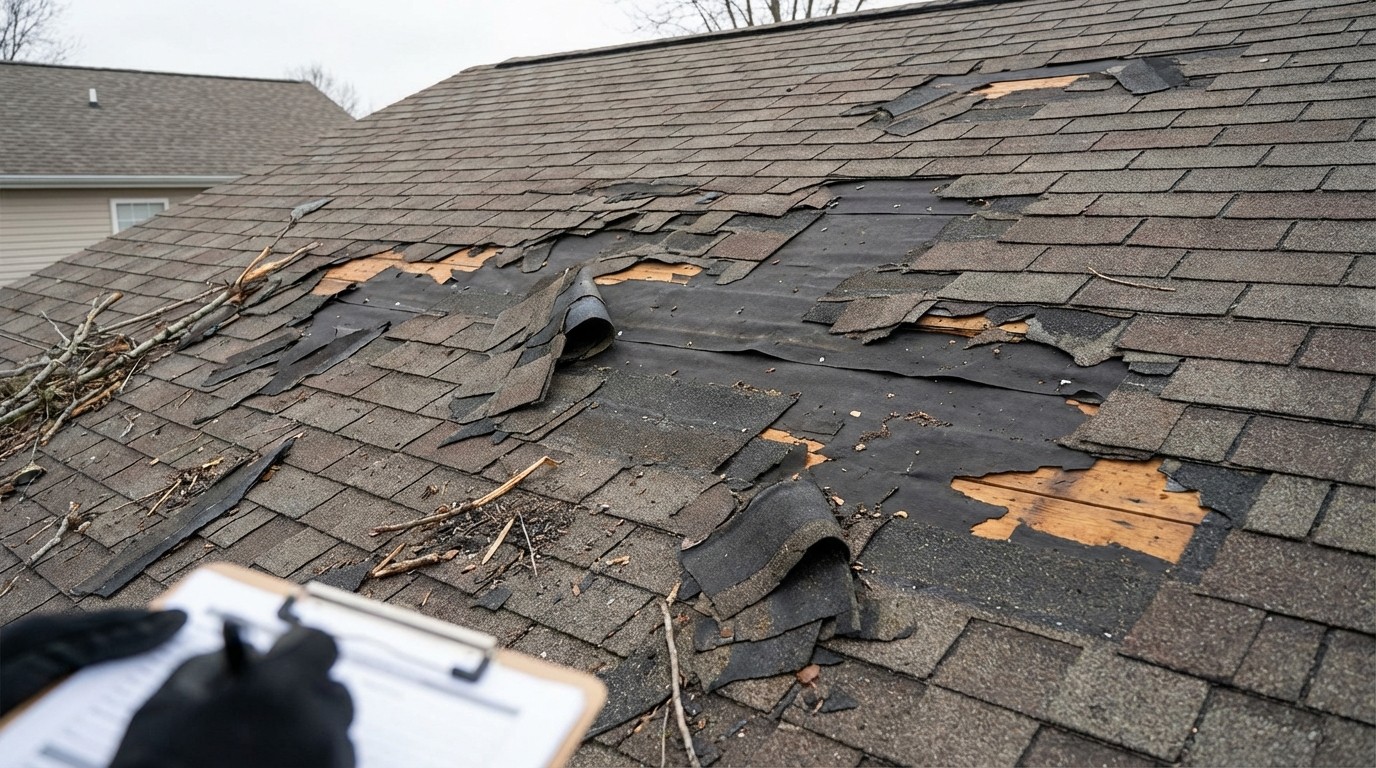
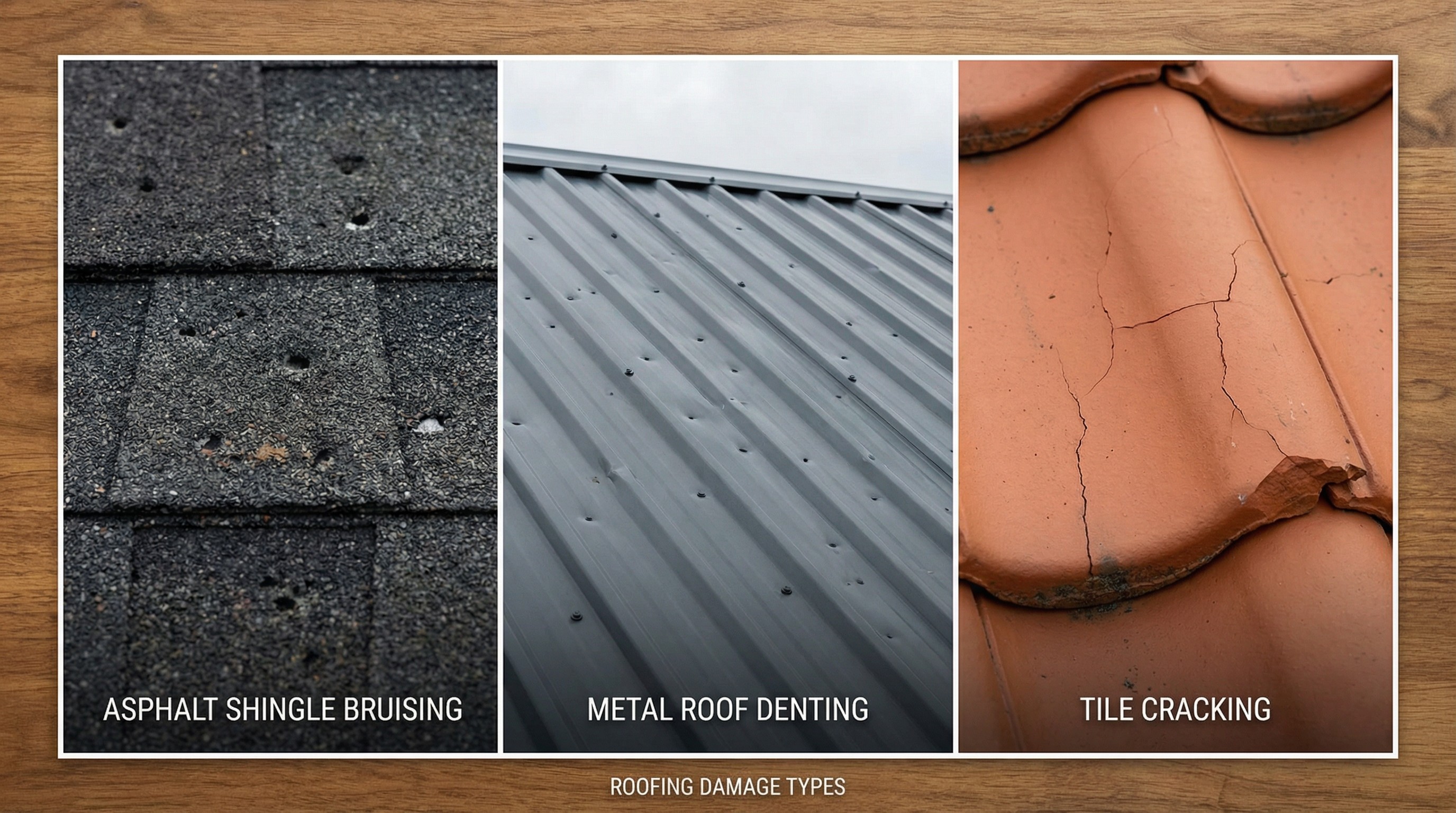
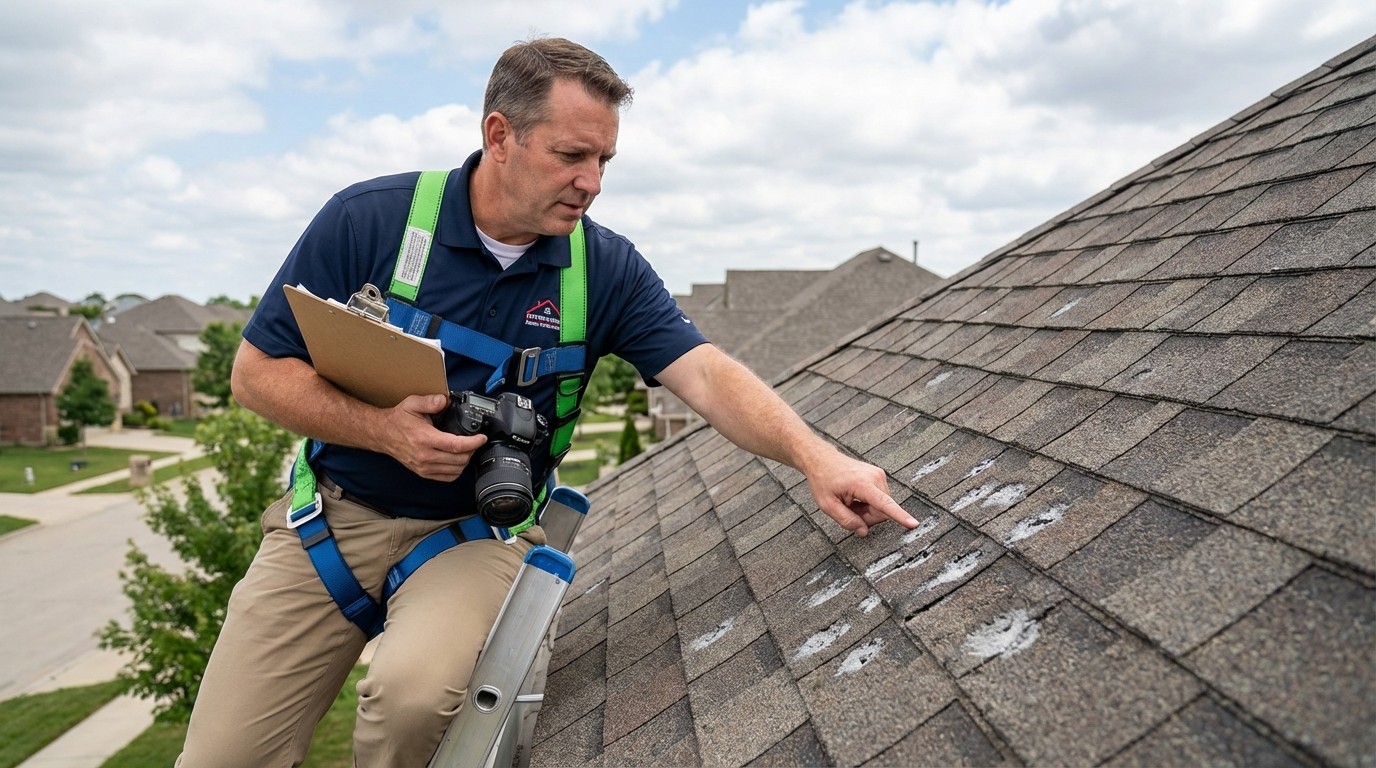
Asphalt shingles show hail roof damage through circular areas where granules are missing, exposing black asphalt underneath. These impact points feel soft when pressed. You may also see cracks through the shingle fibers or tears at edges.
The pattern differs from normal wear: hail creates random circular marks, while aging causes uniform granule loss in streaks. Older shingles (10+ years) are more vulnerable because the asphalt becomes brittle.
Metal Roofing
Metal roofs handle hail better than asphalt but aren't invincible. Small hail (under 1 inch) typically creates cosmetic damage that doesn't affect function. Larger hail (1.5+ inches) can dent panels and compromise the protective coating.
Check for scratches, chips, or bare metal exposure where rust will start. Inspect seams on standing seam roofs—hail impacts near fasteners can loosen panels or create water entry gaps.
Tile and Slate Roofs
Clay and concrete tile roofs show hail damage through cracks, chips, or complete breaks in individual tiles. Because tile is brittle, even moderate hail can shatter tiles, exposing the underlayment beneath.
Slate roofs are incredibly durable but can crack or puncture when hit by large hail (2+ inches). Broken slate pieces fall into gutters or onto the ground. Replacing individual slate or tile pieces is expensive, and finding matching materials can be challenging for older roofs.
Flat Roofs (TPO/EPDM)
Flat roofing membranes show hail damage as punctures, tears, or cracks in the membrane surface. Large hail combined with high winds can penetrate the membrane or crack it at the seams.
The hidden concern is damage to the insulation layer beneath the membrane. Hail can compress insulation without visibly damaging the surface, creating low spots where water pools. Over time, this standing water breaks down the membrane from below.
How Hail Affects Different Roofing Materials
Understanding how your specific roofing material responds to hail roof damage helps you assess damage severity and make informed repair decisions.
Asphalt shingles are the most vulnerable to hail roof damage. When hail strikes an asphalt shingle, it crushes the granules that protect the underlying asphalt layer. These granules shield shingles from UV damage and weathering. Once granules are gone, the exposed asphalt deteriorates rapidly from sun exposure.
The shingle fibers may crack under the impact, creating weak points where water can seep through. Older shingles suffer more hail roof damage because they've already lost some flexibility.
Metal roofing offers superior hail resistance. Aluminum, steel, and copper roofs can withstand hail up to 2 inches in diameter with only cosmetic denting. The dents don't usually affect the roof's waterproofing ability unless the protective coating cracks.
Class 4 impact-resistant shingles use modified asphalt formulas and reinforced mats to better absorb hail impacts. These specialty shingles can reduce insurance premiums by 10-30% in hail-prone areas. According to UL 2218 testing standards, Class 4 shingles withstand impacts from 2-inch steel balls without cracking.
Here's how common materials compare for hail resistance and durability:
Material | Hail Resistance | Typical Damage | Repair Cost | Replacement Threshold |
|---|---|---|---|---|
Asphalt Shingles | Low-Medium | Granule loss, bruising | $300-$800 | >25% damaged area |
Metal Roofing | High | Denting (cosmetic) | $500-$1,500 | Structural damage only |
Tile | Medium-High | Cracks, breaks | $400-$1,200 | Individual tiles |
Slate | Very High | Rare punctures | $800-$2,000 | Cracks or breaks |
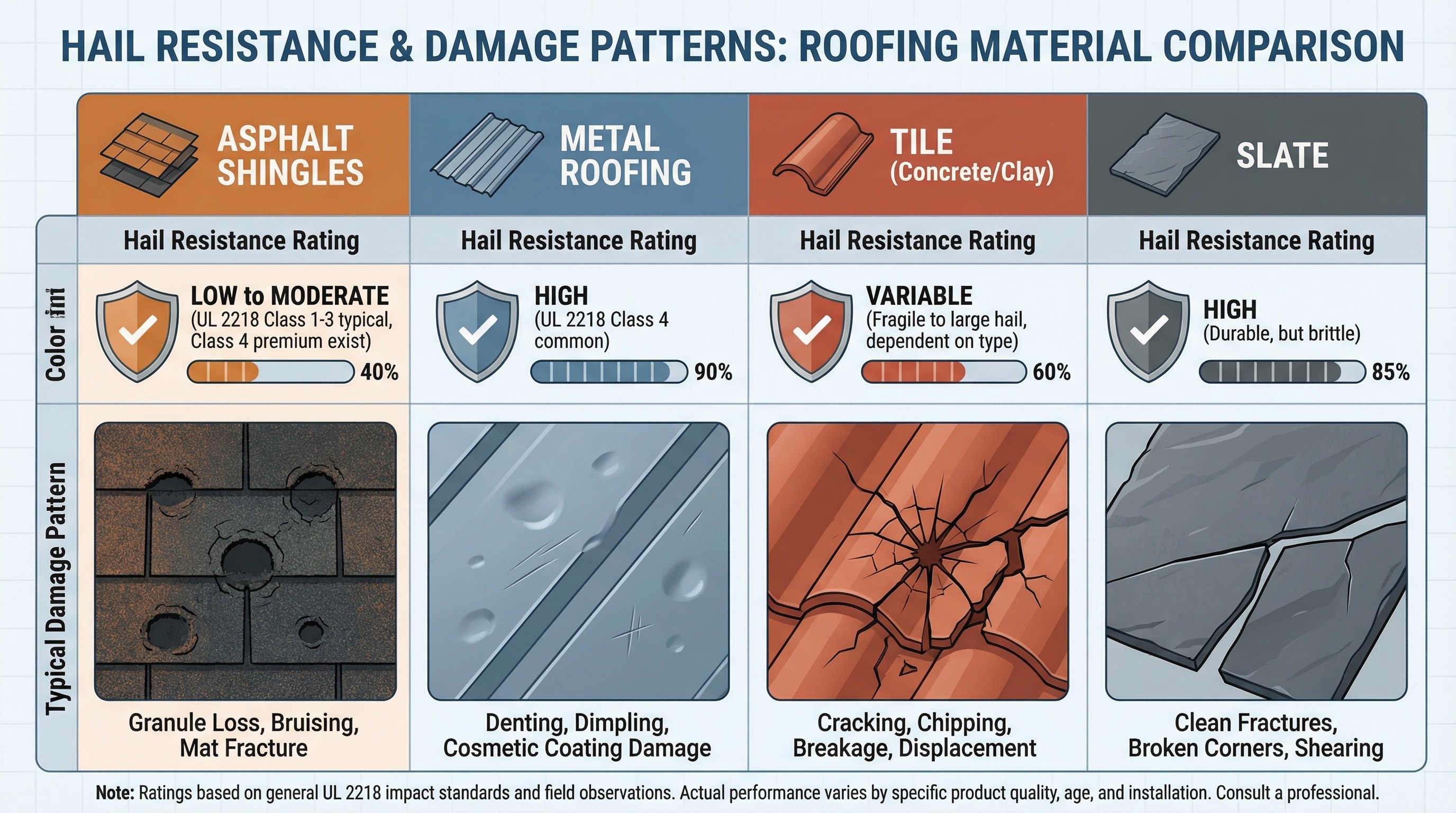
Tile roofs resist hail well due to their hardness, but when they do break, repairs get expensive. Slate is one of the most hail-resistant materials available. It takes very large hail (2+ inches) combined with high winds to crack quality slate.
When to Repair vs Replace Your Hail-Damaged Roof
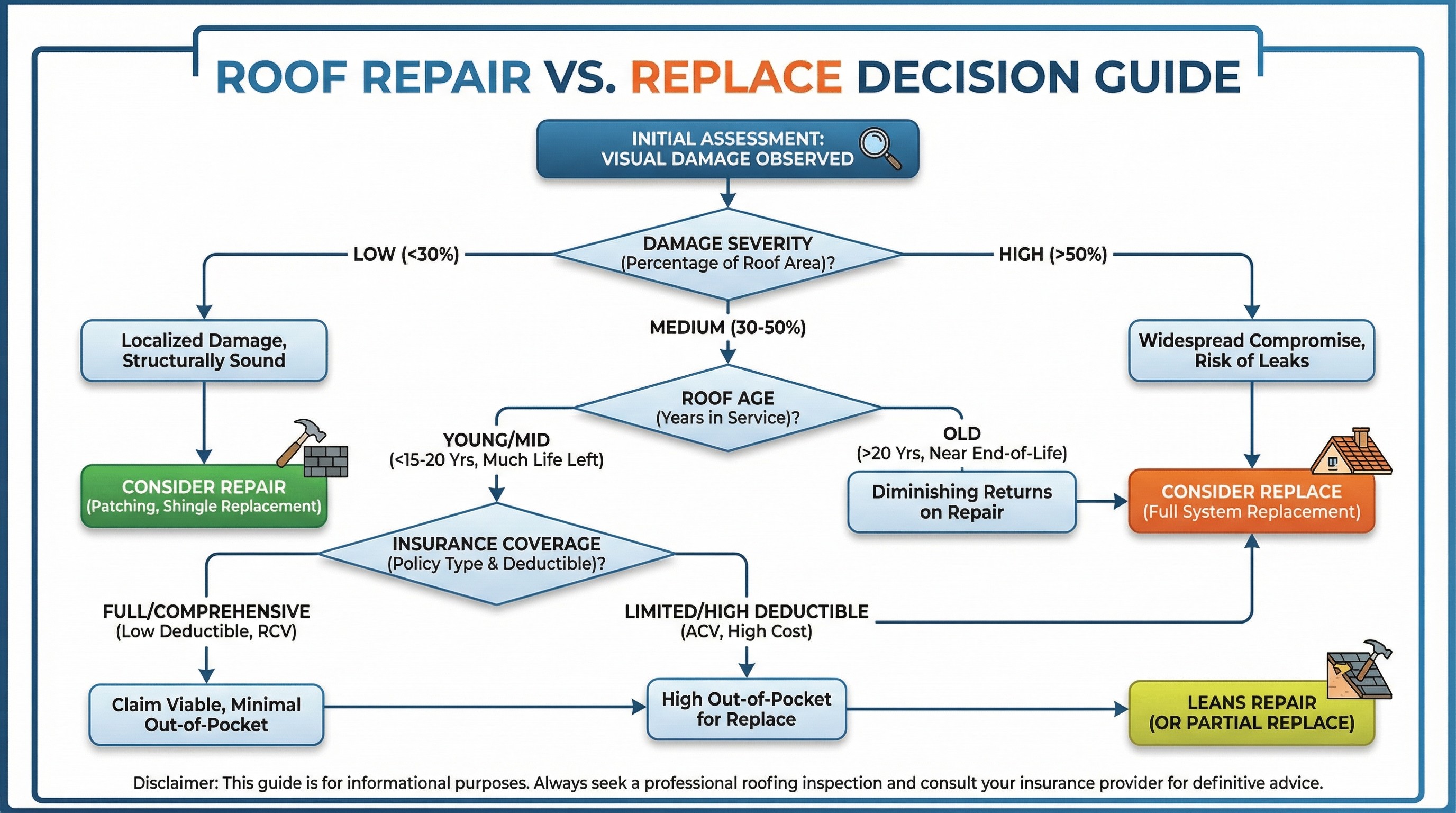
The decision to repair or replace hail roof damage depends on damage extent, roof age, insurance coverage, and long-term cost-benefit analysis.
Repair makes sense when:
Hail roof damage covers less than 25% of your roof surface
Only cosmetic damage exists (like metal roof dents that don't affect function)
Shingles are available to match your existing roof
Your roof is under 10 years old with plenty of life left
Repair costs are under 40% of full replacement cost
Typical hail roof damage repair costs range from $800-$2,500 depending on damage extent and roof accessibility.
Replacement makes sense when:
Hail roof damage covers more than 25-30% of the roof surface
Multiple layers are damaged (shingles plus underlying decking)
Your roof is already 15+ years old and nearing end of expected lifespan
Your insurance company "totals" the roof
Structural issues exist (sagging, wood rot, compromised framing)
Replacement costs typically run $8,000-$25,000 depending on roof size and material choice. Most homeowners pay $12,000-$15,000 for a standard 2,000 square foot asphalt shingle roof.
Most insurance policies require replacement if more than 30% of a roof "slope" (one section) shows hail roof damage. This threshold exists because extensive patching rarely lasts as long as full replacement.
The age-plus-damage formula:
If your roof is 15+ years old and shows 15% or more hail damage, lean toward replacement. If your roof is less than 8 years old and shows less than 20% damage, repair is usually the better choice. You can estimate your roof replacement cost to compare repair vs replacement economics.
Navigating Insurance Claims for Hail Roof Damage
Yes, most homeowners insurance policies cover hail roof damage under the dwelling coverage portion of your policy. However, you'll pay your deductible (typically $1,000-$2,500), and coverage depends on filing within the policy's time limit (often 1 year) and proving the damage was caused by a hailstorm.
What's Covered
Standard homeowners insurance covers sudden, accidental hail roof damage. This includes full replacement if damage exceeds 25-30% of surface area, temporary repairs to prevent further damage, and matching shingles for partial repairs when available. Insurance pays to restore your roof to pre-storm condition using similar quality materials.
What's NOT Covered
Insurance won't cover pre-existing damage or normal wear and tear. If your roof showed signs of aging before the storm, the adjuster may depreciate the claim or deny damage attributed to age. Some policies exclude purely cosmetic damage that doesn't affect function. You won't get coverage for upgrades beyond your original materials.
Filing Timeline and Process
Report claims within days to weeks after discovering damage, though most policies allow up to 1 year from the storm date. Earlier filing preserves evidence as damage becomes less obvious over time. File separate claims for each significant hail event—insurance covers specific storm events.
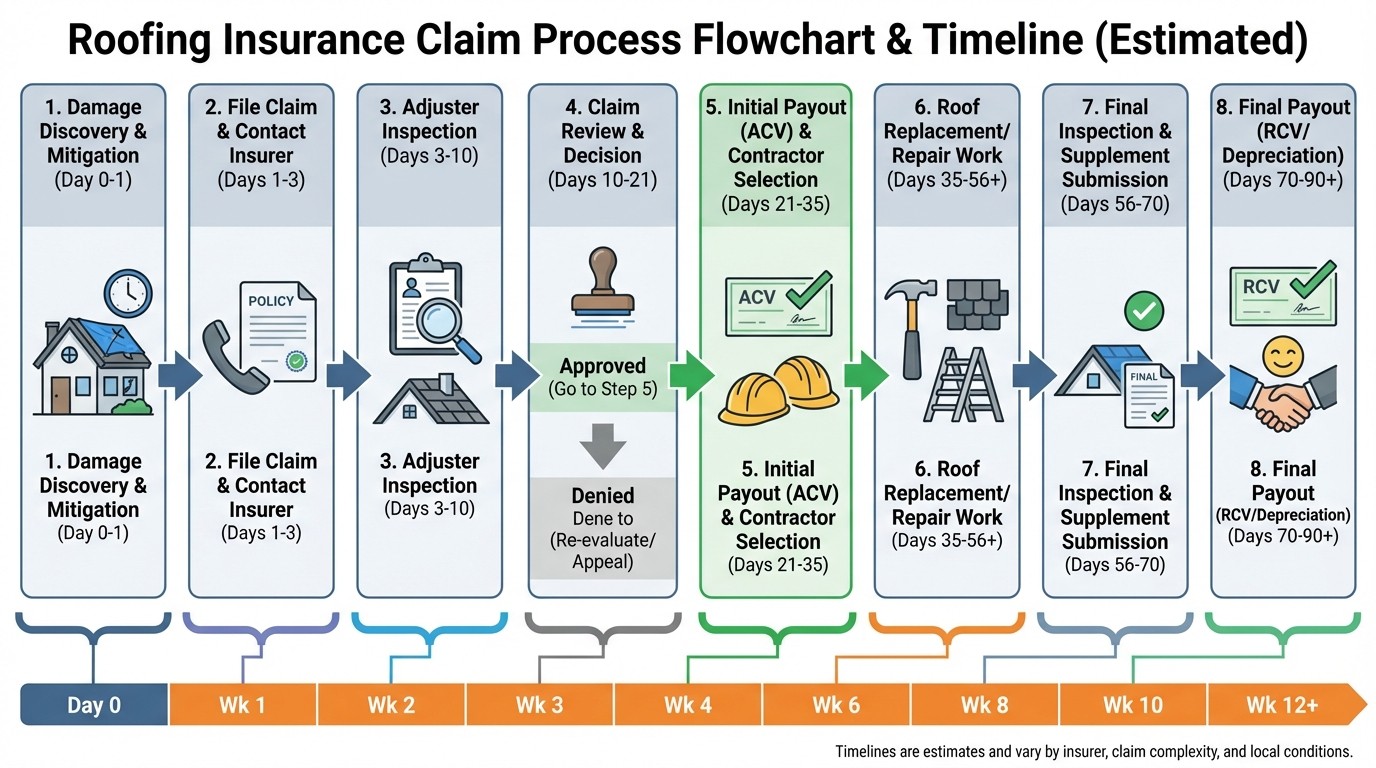
The claims process typically follows these steps:
Document damage immediately with photos and videos showing extent
Get professional inspection report ($200-400) before contacting insurance
Contact insurance company to file claim with storm date
Schedule adjuster inspection (within 7-14 days)
Review adjuster's estimate and compare against your independent inspection
Hire licensed contractor who works with insurance companies
Pay deductible to contractor at project start or completion
Receive insurance payout (ACV upfront, RCV after completion)
Complete repairs meeting manufacturer specifications
Submit final invoice for any supplement claims
RCV vs ACV Explained
Replacement Cost Value (RCV) is the full replacement cost at current prices minus your deductible. Actual Cash Value (ACV) is RCV minus depreciation based on roof age. Most insurers pay ACV initially, then pay the depreciation holdback after repairs are complete and final invoices submitted.
According to the Insurance Information Institute, the average hail damage insurance claim is $11,000-$14,000 nationally. The typical claims process takes 30-60 days from filing to completion. For detailed guidance on maximizing your insurance payout, see our complete guide to getting insurance to pay for roof replacement.
Common Insurance Mistakes
Never sign agreements where contractors "waive" your deductible—this is insurance fraud that can result in claim denial and policy cancellation. Get your own inspection before accepting the adjuster's estimate to maintain negotiation leverage.
File within 30-60 days when damage is fresh and clearly attributable to the specific hail event. Don't let storm chasers pressure you into immediate contract signing.
Why Professional Roof Inspection Matters
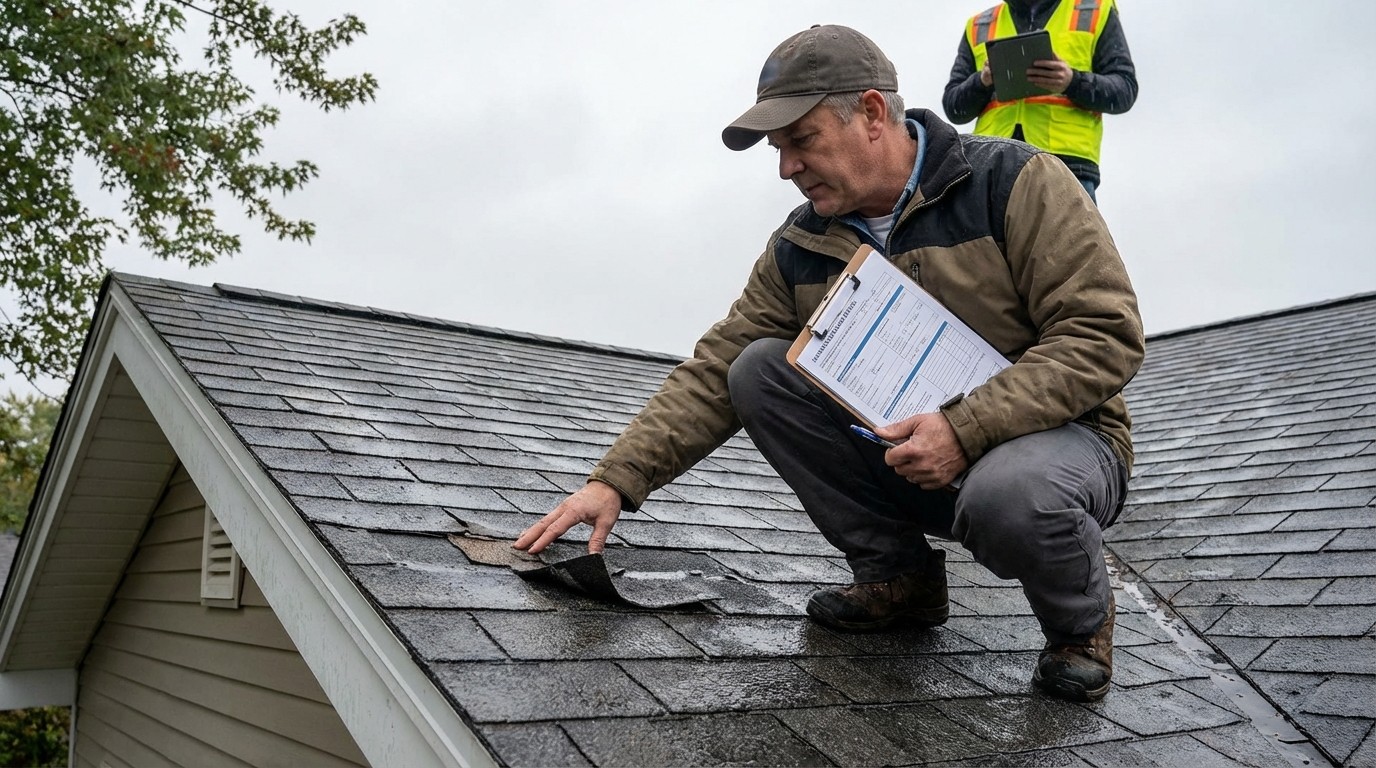
You cannot accurately assess hail roof damage from the ground, and walking on a damaged roof can cause additional harm. Professional inspectors have the training, equipment, and experience to identify all hail roof damage and provide documentation that insurance companies respect.
Hail damage often appears minor from ground level but reveals significant problems up close. Granule loss, soft spots, and hairline cracks aren't visible from 20+ feet away. Inspectors know where to look and what patterns indicate hail versus normal aging.
Walking on an already-damaged roof can crack weakened shingles, creating new damage. If your insurance adjuster later determines you caused damage by walking on the roof, they may deny portions of your hail roof damage claim.
Types of Inspections
Free contractor inspections are offered by roofing companies looking for work. These can be helpful but are often sales-focused. Some contractors exaggerate damage to secure a job or encourage filing insurance claims for minor damage.
Independent inspections cost $200-$400 and provide unbiased, detailed reports with professional documentation. These inspectors aren't trying to sell you anything. This upfront investment often pays for itself by strengthening insurance negotiations and helping you avoid unnecessary repairs.
Insurance adjuster inspections are free and required for filing claims. However, adjusters work for the insurance company, not you. Their goal is accurate assessment, but they may interpret borderline hail roof damage conservatively.
Get an independent inspection before the adjuster visits. This gives you detailed documentation to reference during the adjuster's inspection. Professional roof inspection costs $200-$400 for a thorough evaluation. You can schedule a professional roof inspection to document hail damage before filing your insurance claim.
Finding a Qualified Contractor (Not a Storm Chaser)
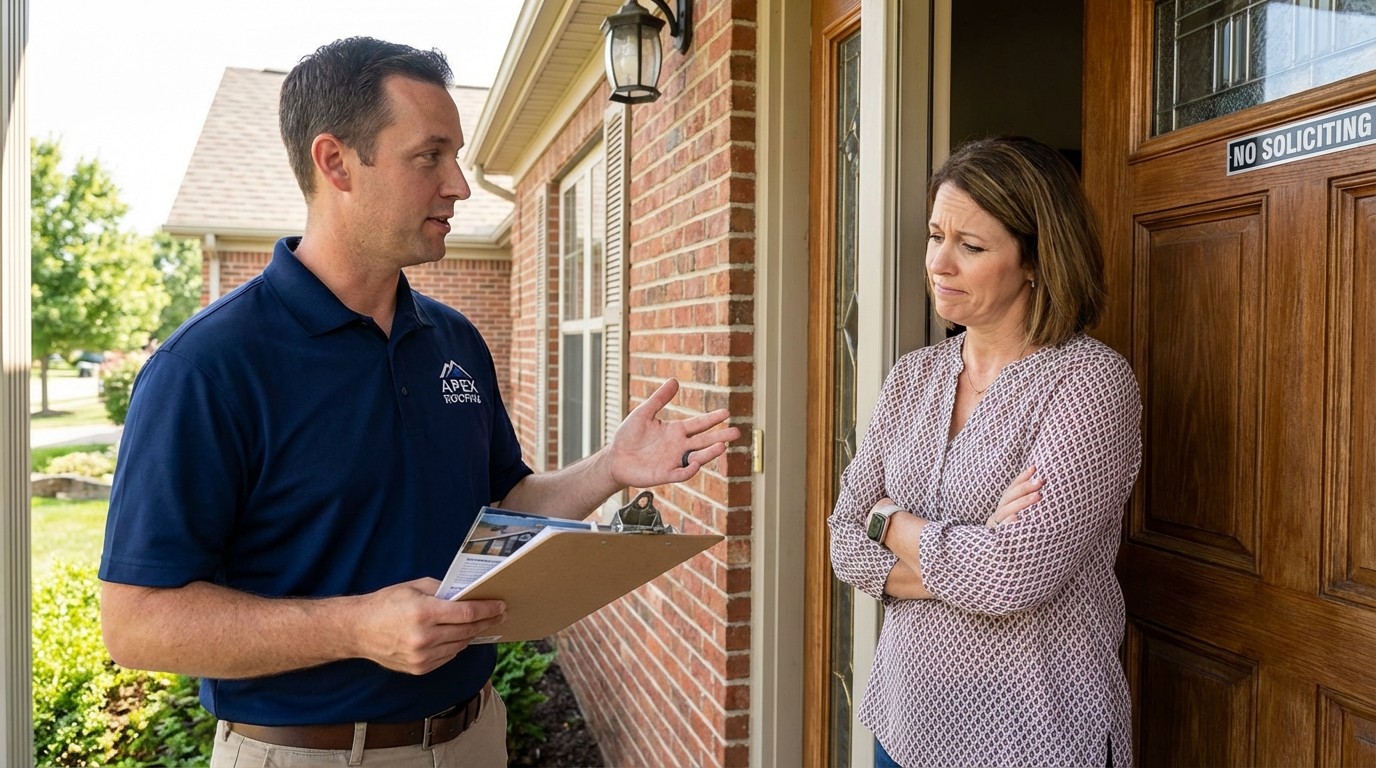
After major hail storms, out-of-state contractors descend on affected areas looking for quick jobs. These "storm chasers" often do shoddy work, demand upfront payment, and disappear before warranty issues surface.
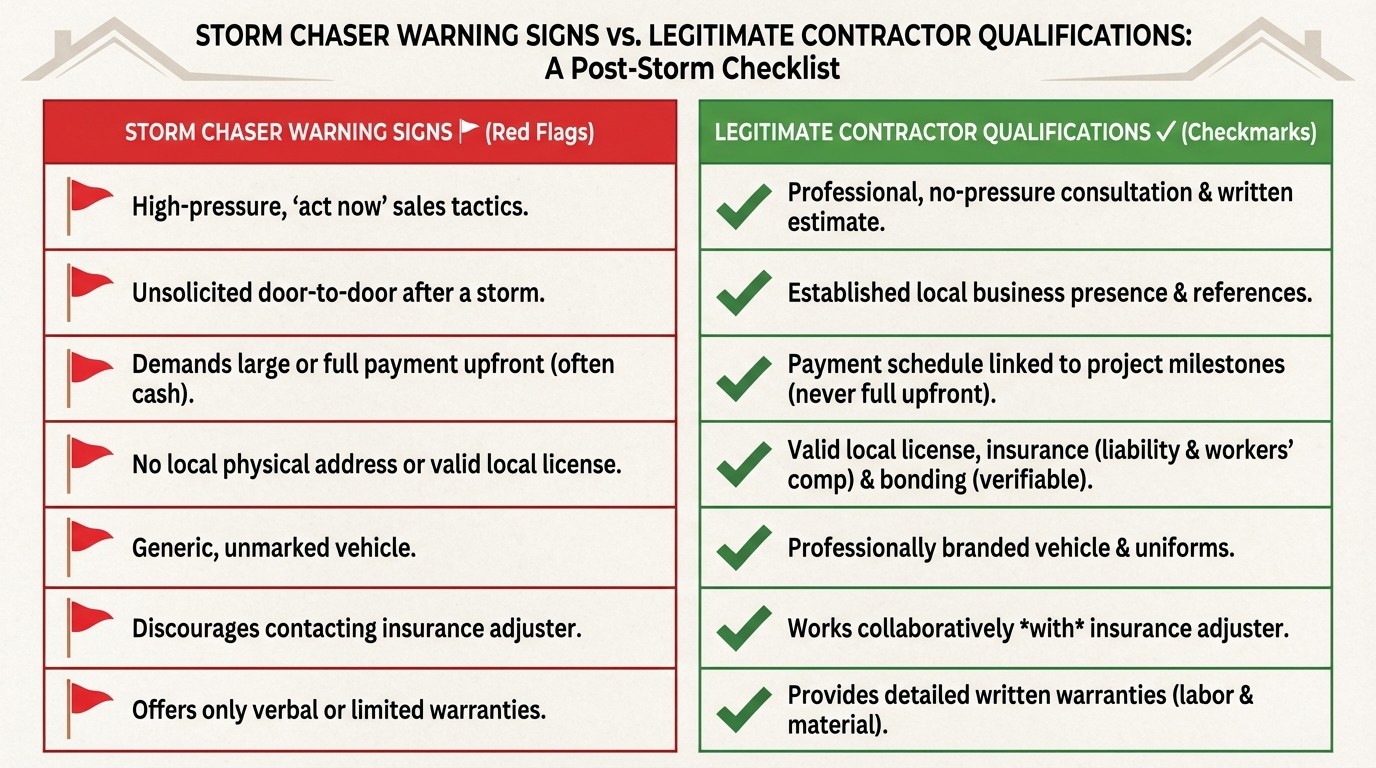
Storm chaser red flags:
Out-of-state license plates and no local address
"We'll waive your deductible" offers (insurance fraud)
Pressure to sign same-day contracts
Upfront payment demanded before work starts
No verifiable local references
Storm chasers account for 30-40% of roofing fraud complaints filed with state attorney general offices. The Better Business Bureau reports homeowners lose an average of $8,000-$15,000 when storm chasers abandon jobs.
What to look for:
Local business with 5+ years of history
State contractor license and insurance (verify directly)
Manufacturer certifications (GAF Master Elite, Owens Corning Platinum Preferred)
Verifiable local references from recent projects
Clear written contract and warranty
Physical office or showroom location
Payment schedule tied to milestones (10-15% deposit, 30-40% at material delivery, remaining at completion)
Questions to ask contractors:
How long have you been in business locally? (Look for 5+ years)
Are you licensed and insured? (Get license numbers to verify)
Will you provide a detailed written estimate?
What's your payment schedule?
Do you handle insurance paperwork and supplements?
What warranty do you offer on workmanship?
Can I see 3 local references from the past year?
Will you be here next year if I need warranty work?
Comparing 3-5 quotes reveals the true market rate for hail roof damage repairs and helps you identify outliers. Prices typically vary 10-20% between legitimate contractors. A quote significantly below others (30%+ cheaper) raises red flags. Homeowners who get 3 or more quotes save 15-20% on average.
Before hiring, check if your home was hit by hail to verify the storm affected your area and strengthen your insurance claim documentation.
Hail Damage Repair & Replacement Costs
Replacing a hail-damaged roof costs $8,000-$25,000 depending on roof size, material choice, and project complexity. Most homeowners pay $12,000-$15,000 for a 2,000 square foot asphalt shingle roof. Insurance typically covers the full replacement cost minus your deductible ($1,000-$2,500).
Repair Costs
Minor repairs addressing small damaged sections of hail roof damage cost $500-$1,500. Moderate repairs covering multiple areas run $1,500-$3,500. Extensive repairs affecting more than 20% of your roof cost $3,500-$6,000 or more.
When repair costs exceed 40-50% of full replacement cost, replacement becomes the smarter financial decision. You get a complete warranty reset and uniform appearance rather than patchwork repairs.
Replacement Costs by Material
Asphalt shingles cost $8,000-$15,000 installed for a typical 2,000 square foot roof. This includes tear-off of existing materials, underlayment, new shingles, and basic flashing. Premium architectural shingles add $2,000-$4,000.
Metal roofing runs $15,000-$30,000 for the same sized roof. Metal's higher upfront cost is offset by 40-70 year lifespan and minimal maintenance requirements.
Tile roofing costs $18,000-$35,000 installed. Tile requires stronger structural support and specialized installation expertise.
Slate roofing represents the premium option at $25,000-$50,000 or more. Slate is extremely hail-resistant but expensive to repair when damage does occur.

Cost Factors
Roof size is measured in "squares" (100 square feet each). Most contractors charge $400-$750 per square installed depending on material and complexity.
Pitch and slope affect labor costs. Steep roofs (7/12 pitch or greater) require additional safety equipment, increasing labor costs 20-40% over low-slope roofs.
Geographic location creates significant price variations. Urban areas with higher labor costs charge more than rural regions. Hail-prone areas like Texas and Oklahoma may see 10-15% higher prices during peak storm season due to high demand.
After insurance, most homeowners pay $1,500-$3,000 total out-of-pocket for hail roof damage repair or replacement. This includes your deductible plus any upgrades beyond insurance-covered scope.