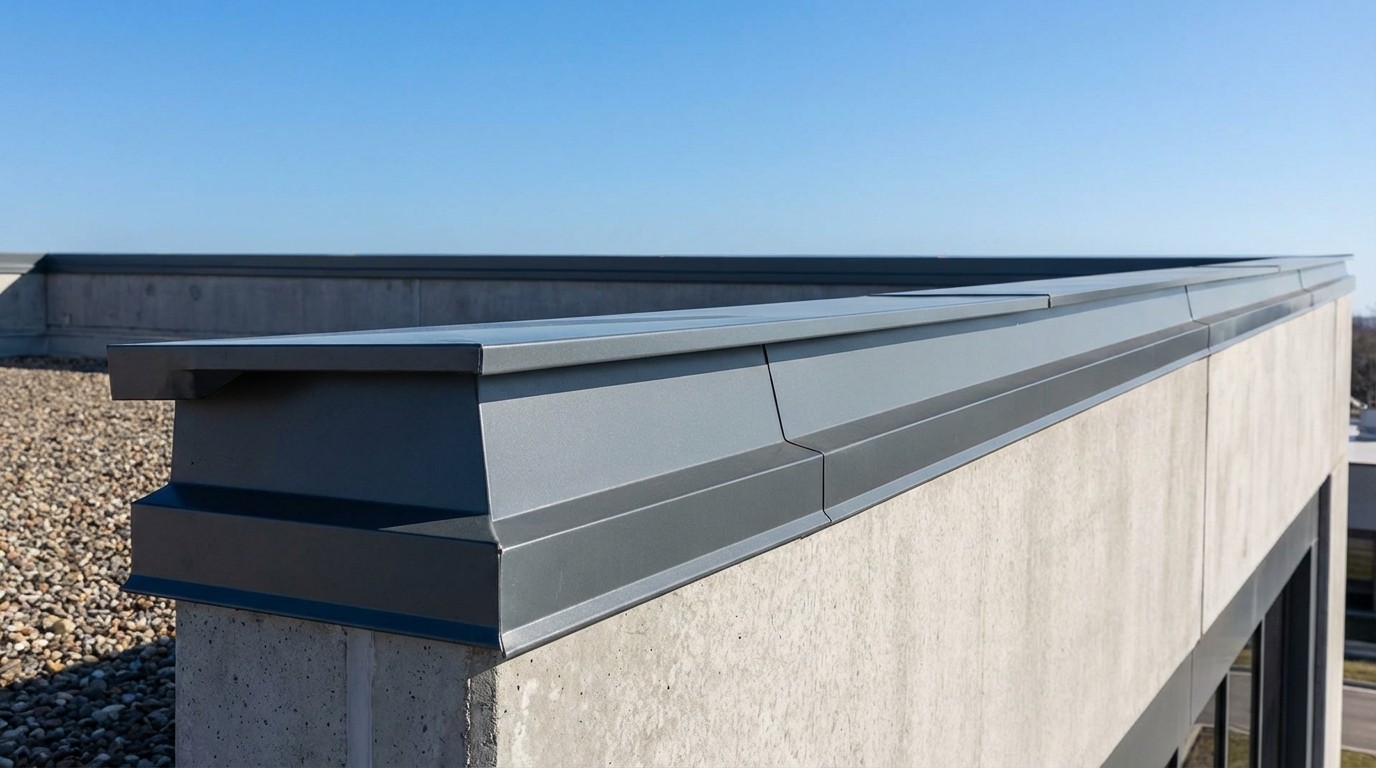
A roofing cop is a waterproof cap that sits on top of your roof's walls to keep water out.
This guide explains what roofing cops are, the different materials available, how much they cost, and how to choose the right option for your home. You'll also learn how to spot signs that your coping needs replacement and what questions to ask your roofer before moving forward.
What Is a Roofing Cop?
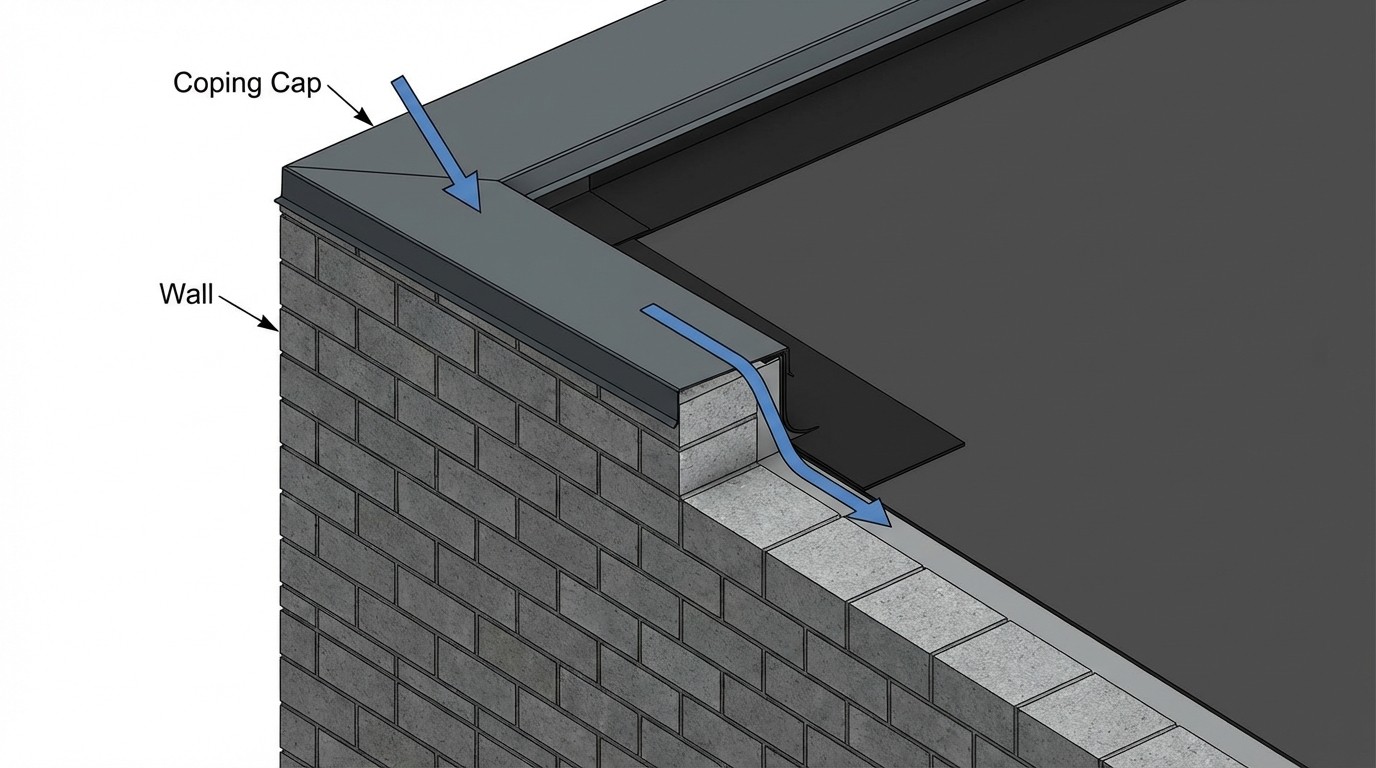
A roofing cop is a prefabricated cover or cap installed on top of parapet walls and roof edges to keep water from seeping into vulnerable joints and transitions. The term "cop" is short for "coping," which refers to the protective covering that caps horizontal surfaces like the tops of walls. You'll find coping most often on flat roofs and commercial buildings, though some residential homes with parapet walls use it too.
Coping does three main jobs:
Protects vulnerable edges: It covers the top of walls where the roof membrane meets vertical surfaces, creating a waterproof barrier.
Directs water away: Properly installed coping slopes slightly outward, guiding rainwater and snowmelt toward drains instead of letting it pool.
Extends roof life: By keeping water out of the most vulnerable spots, coping prevents the kind of slow damage that leads to expensive repairs.
Think of coping as a protective cap that sits on top of your roof's walls, similar to how a lid keeps water out of a container. Without it, water works its way into the seams and joints, causing leaks, rot, and structural damage over time.
Types of Roofing Cop Materials
Different materials work better for different roof types, climates, and budgets. Here are the most common options and what you need to know about each.
Metal Coping
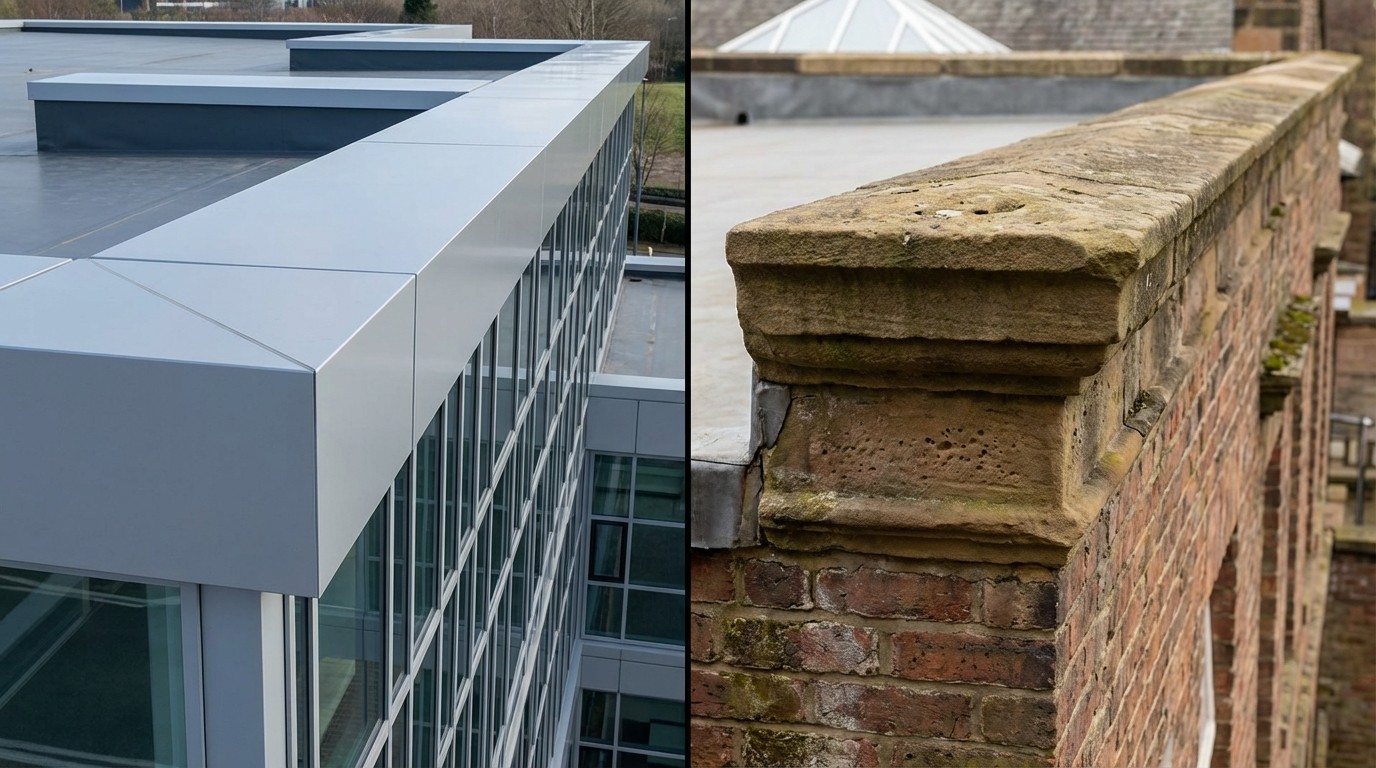
Metal coping, typically made from galvanized steel or copper, is the most durable and widely used choice. It handles extreme weather well and can last as long as your roof when installed correctly. The tradeoff is a higher upfront cost compared to other materials, and some metals like steel can rust over time if the protective coating wears away.
Aluminum Coping
Aluminum offers a lighter, rust-resistant alternative that works especially well in humid or coastal climates. It costs less than steel or copper but still provides solid protection against the elements. The main downside is that aluminum can dent more easily than heavier metals, though this rarely affects performance.
Stone and Concrete Coping
Stone and concrete coping give buildings a traditional, finished look and are incredibly durable when properly supported. The important consideration is weight: stone and concrete require strong structural support, and repairs can be more complex and expensive than with metal options.
PVC and Composite Coping
PVC and composite materials are modern, budget-friendly options that pair well with TPO and other similar membranes. TPO is a bright white material used on flat or low-slope roofs to reflect heat and help lower energy costs.
Here's how materials compare:
Material | Best For | Durability | Maintenance |
|---|---|---|---|
Metal | Long-term protection | High | Low |
Aluminum | Humid climates | Moderate-High | Low |
Stone/Concrete | Masonry buildings | High | Moderate |
PVC/Composite | Budget-conscious, flat roofs | Moderate | Low |
Benefits of Installing a Roofing Cop
While coping appears to be a small detail, it plays a major role in protecting your roof and your home.
Prevents Water Infiltration at Roof Edges
Even a gap as small as a quarter-inch can let water in. Once inside, water can rot wood framing and damage insulation for 6-12 months before you see stains on your ceiling.
Protects Parapet Walls from Weather Damage
Without coping, the top of your parapet walls faces direct exposure to rain, snow, UV rays, and freeze-thaw cycles. Over time, this exposure breaks down masonry, cracks concrete, and degrades roof membranes. Coping acts like a shield, taking the beating from the weather so your walls and roof don't have to.
Improves Roof Drainage and Runoff
Properly sloped coping guides water toward drains or gutters instead of letting it sit on horizontal surfaces. On flat roofs, even small amounts of standing water can accelerate wear and lead to leaks. Better drainage means a longer-lasting roof.
Extends the Life of Your Roof System
Coping is a relatively small investment that prevents much larger problems. By keeping water out of the most vulnerable areas, it protects the roof membrane, underlying structure, and interior walls from damage. This translates to fewer repairs and a roof that lasts closer to its full expected lifespan.
Where Roofing Cops Are Used
Understanding where coping goes on a roof helps you know what to look for and what to ask your roofer about.
Parapet Wall Caps
Parapet walls are the short walls that extend above the roofline on flat or low-slope roofs. Coping caps the top of parapet walls, creating a finished edge that keeps water from soaking into the masonry or membrane below. This is the most common application you'll see.
Flat Roof Perimeters
On flat roofs, coping seals the entire perimeter where the roof membrane meets the wall. This creates a continuous waterproof barrier around the edges of your roof, which is where most flat roof leaks start if the installation isn't done right.
Roof-to-Wall Transitions
Any point where a roof meets a vertical surface needs protection from water entry. Coping covers transitions like where a flat roof meets an exterior wall or where a lower roof section meets a higher wall on a multi-level home.
How to Choose the Right Roofing Cop for Your Roof
Picking the right coping involves more than just choosing the cheapest option.
Match the Material to Your Roof Type
Different roofing systems work better with certain coping materials. For example, PVC coping pairs naturally with TPO roofs because they're designed to work together, while metal coping works with almost any roof type. Ask your roofer what's compatible with your existing roof system before making a decision.
Consider Your Local Climate
Climate plays a big role in how long coping lasts. In humid or coastal areas, rust-resistant materials like aluminum or PVC make more sense than steel. In cold climates, you'll want materials that can handle repeated freeze-thaw cycles without cracking, like quality metal or composite options.
Factor in Long-Term Maintenance
Some materials need periodic attention. Metal coping might need resealing or repainting every few years, while stone and concrete may require occasional repairs to mortar joints. PVC and aluminum, on the other hand, are mostly install-and-forget. Think about how much ongoing maintenance you're willing to handle.
Compare Line-Item Quotes from Multiple Contractors
Getting detailed quotes from multiple contractors helps you see exactly what you're paying for, so you can spot hidden fees or missing line items.
Roofing Cop vs Flashing and Drip Edge
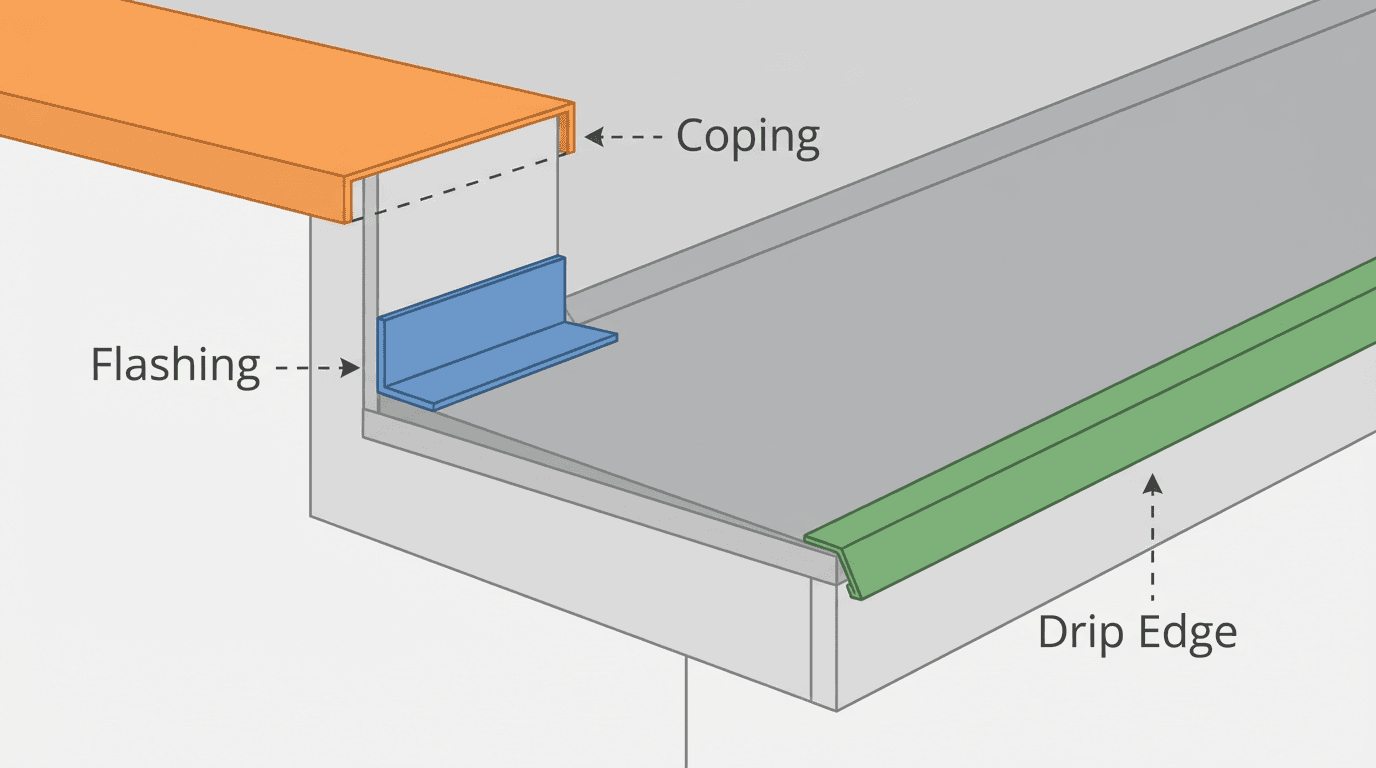
Homeowners often confuse coping with flashing and drip edge because they all help keep water out. Here's how they differ:
Roofing cop (coping): Covers the top of parapet walls and roof edges; acts as a horizontal cap
Flashing: Thin metal pieces that seal joints and transitions where two surfaces meet; works alongside coping to direct water
Drip edge: Installed along sloped roof edges to direct water into gutters; serves a different purpose than coping
All three components work together to create a watertight roof system, but coping specifically protects horizontal wall tops while flashing seals vertical joints and drip edge handles sloped edges.
Signs Your Roofing Cop Needs Replacement
Catching coping problems early can save you from bigger repairs later. Here's what to watch for during a visual inspection.
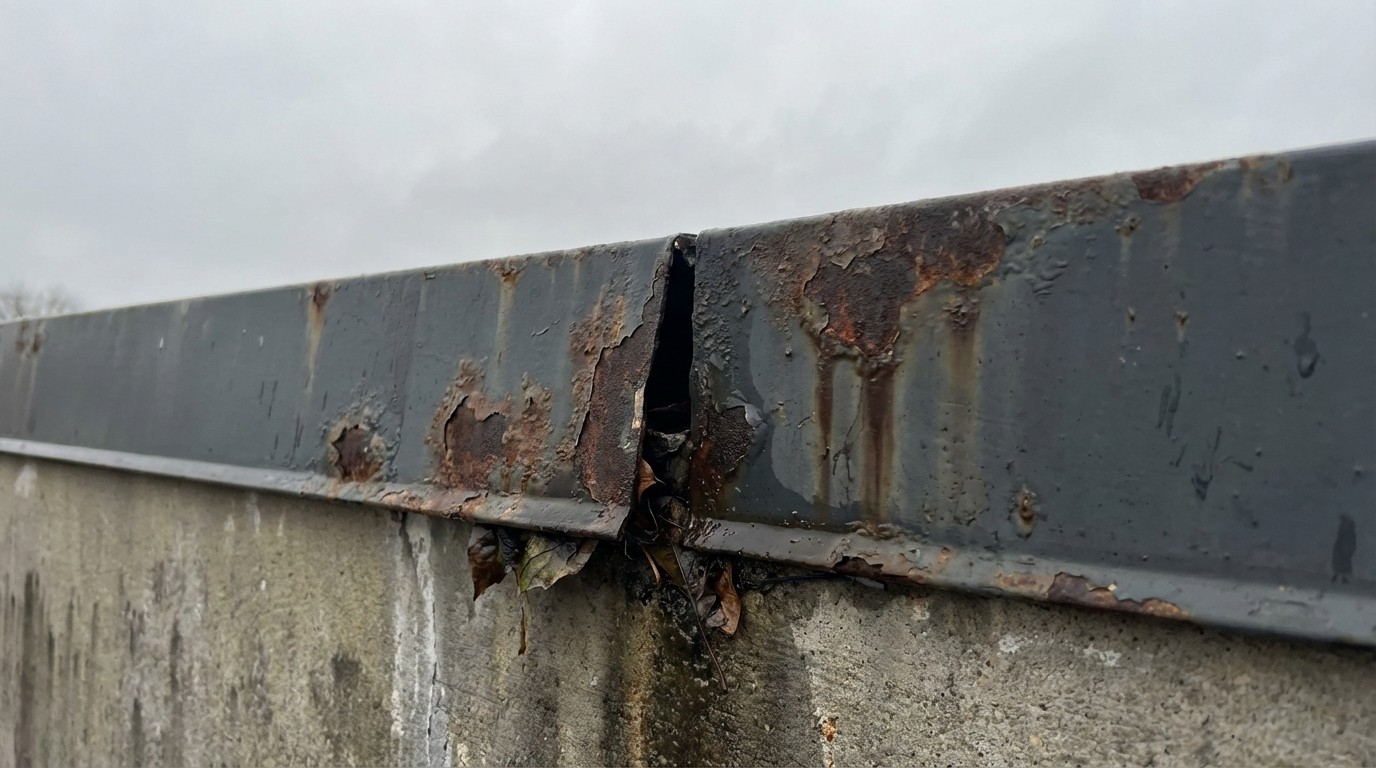
Visible Rust or Corrosion
If you see rust spots or corrosion on metal coping, water can start seeping through weak points. Surface rust might just need cleaning and resealing, but deep corrosion usually means it's time for replacement.
Gaps or Loose Sections Along the Edge
Wind and thermal expansion can pull coping away from the wall over time. Even small gaps let water in, so loose or separated sections need attention before they cause leaks.
Water Stains Near Parapet Walls
Interior water stains on ceilings or walls near the roofline often trace back to failed coping. If you notice discoloration, peeling paint, or damp spots, have a roofer inspect the coping and flashing in that area.
Cracking or Warping in the Material
Stone, concrete, and plastic coping can crack from age, weather exposure, or settling. Warped metal coping loses its ability to shed water properly. Either issue compromises the protective function and typically requires replacement.
How Much Does a Roofing Cop Cost
Coping costs depend on several factors, so it's hard to give a single number. However, understanding what drives the price helps you evaluate quotes more confidently.
Material Cost Factors
Material choice is the biggest variable. PVC and aluminum coping cost less per linear foot than copper or stone. Metal coping typically falls in the middle range, while custom stone or copper installations sit at the high end. Your roofer can give you specific pricing based on your roof's dimensions and the material you choose.
Labor and Installation Costs
Complex roof shapes, hard-to-reach areas, and multi-story homes increase labor time and cost. If your existing coping needs removal first, that adds another layer of expense. Straightforward installations on single-story buildings with simple rooflines cost less than complicated jobs.
Why Prices Vary Between Contractors
Some contractors include coping in the overall roof replacement quote, while others list it as a separate line item. This makes comparing quotes tricky if you don't know what you're looking at. Always ask for line-item breakdowns so you can see exactly what each contractor is charging for materials, labor, and removal. At roofquotes.com, we help you get transparent, itemized quotes from multiple local roofers so you can compare apples to apples and feel confident you're getting fair pricing.
Questions to Ask Your Roofer Before Installing a Roofing Cop
Asking the right questions helps you evaluate contractors more effectively and ensures you get the information needed to make confident decisions.
What Material Do You Recommend for My Roof
A qualified roofer will explain why one material fits your situation better than another based on your roof type, climate, and budget. Clear explanations of their recommendations demonstrate expertise and help you make informed decisions.
Is Coping Included in My Roof Replacement Quote
Some contractors bundle coping into the total roof replacement cost, while others charge separately. Clarify this upfront so you're not surprised by additional charges later. Ask to see the line-item breakdown.
What Warranty Covers This Work
Coping installation falls under the workmanship warranty, but coverage length and what's included can vary. Ask how long the warranty lasts and whether it covers both materials and labor if something goes wrong.