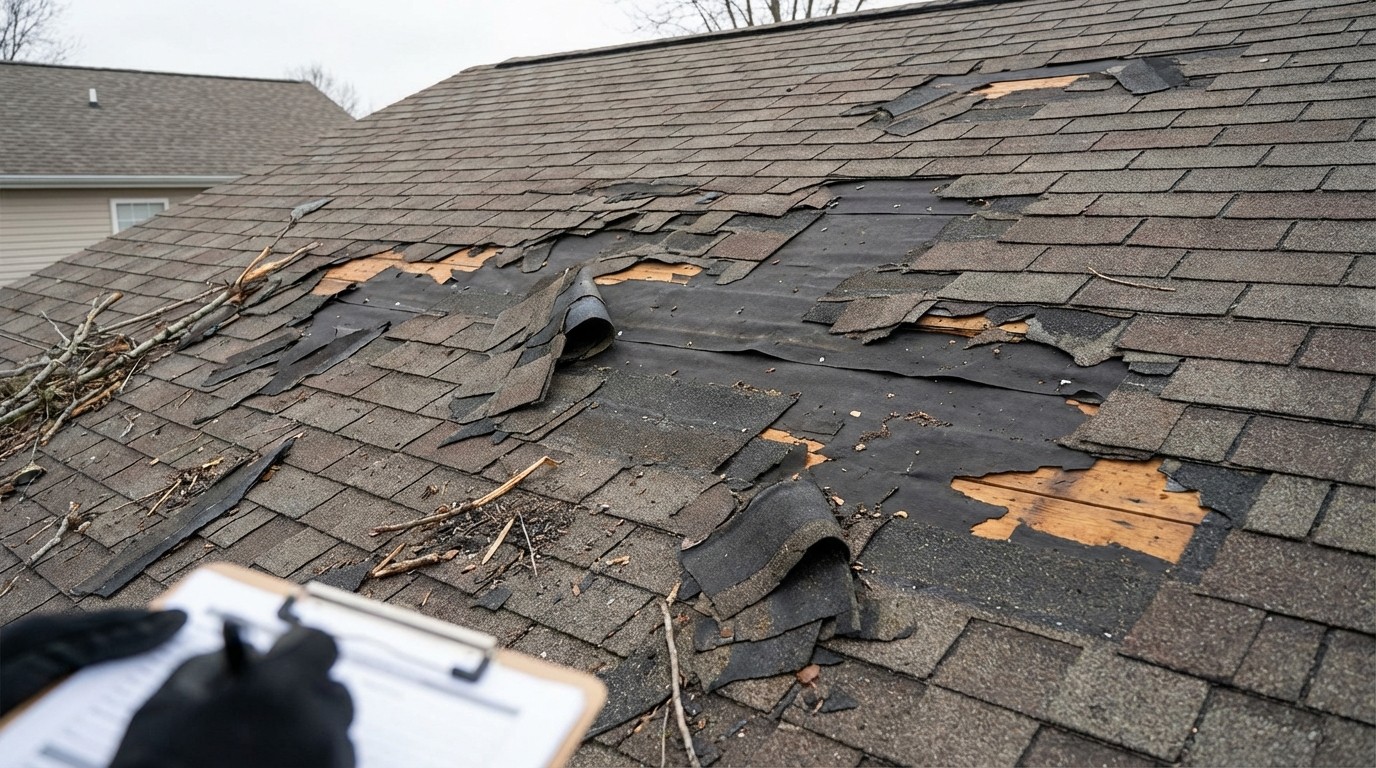
After a windstorm, you notice shingles scattered in your yard and neighbors calling contractors. From the ground, your roof looks fine, but is there damage you can't see?
Wind damage to roof often hides in plain sight. Missed wind damage to roof leads to leaks, insurance coverage denial, and costly structural repairs. With storm chasers pressuring you to sign contracts and insurance adjusters working on tight timelines, you need accurate information fast.
This guide shows you exactly how to identify wind damage to roof, what wind speeds cause roof damage, how to navigate insurance claims, and what wind damage to roof repairs actually cost. You'll learn which damage signs require immediate action versus monitoring, and how to find reliable contractors who won't disappear after taking your money.
What Wind Speed Causes Roof Damage?
Wind speeds of 45-54 mph can cause slight roof damage including loose shingles and lifted edges. Speeds of 58-74 mph cause severe damage with missing shingles and structural concerns. Winds above 75 mph create widespread catastrophic damage where roof sections can tear off completely. Damage severity depends on roof age, material type, installation quality, and roof pitch.
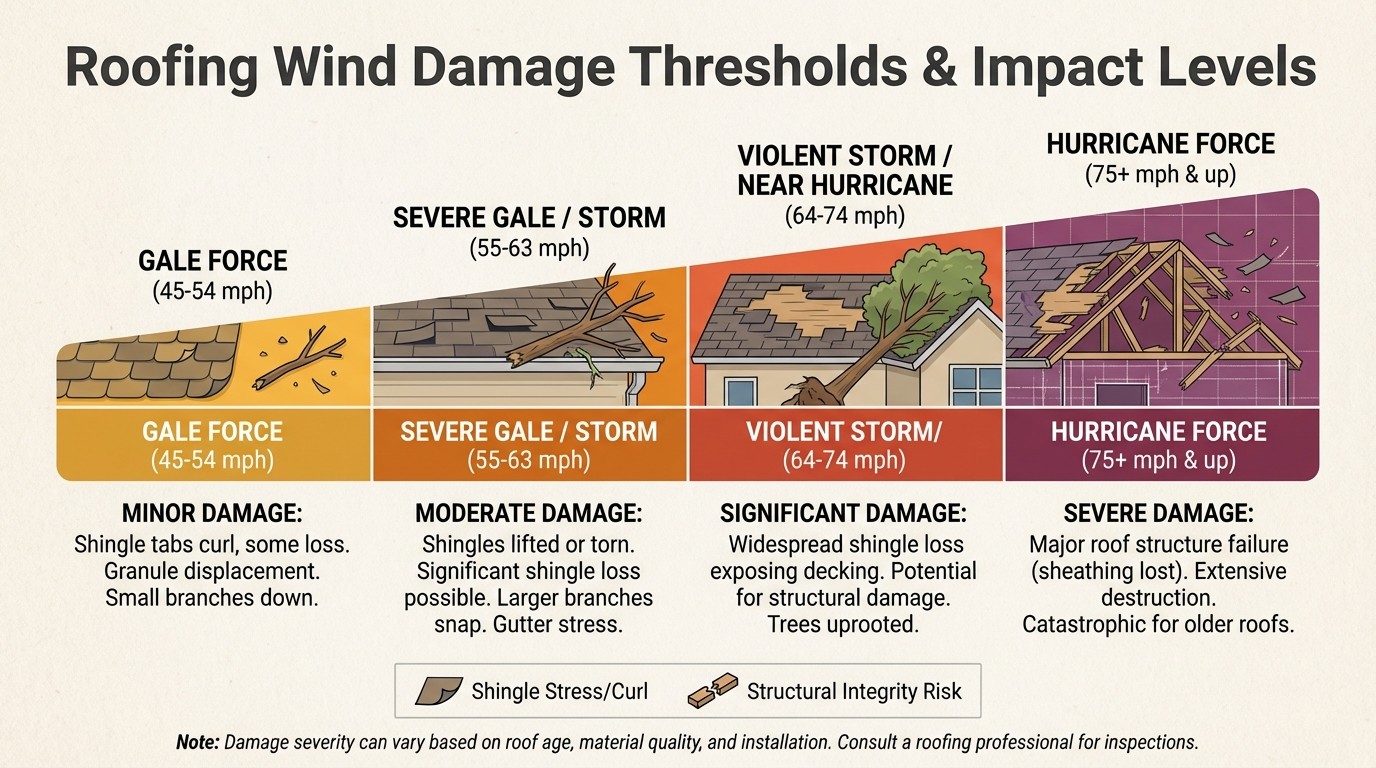
According to NOAA's National Weather Service, damaging winds are classified into categories based on their destructive potential.
45-57 mph (Gale Force): Slight damage begins, shingles lift at edges, tab adhesive fails, granules loosen. Older roofs (15+ years) are particularly vulnerable.
58-74 mph (Strong Gale): Severe damage with shingles ripping off, flashing tearing, and structural concerns. Most insurance claims originate here.
75+ mph (Hurricane Force): Catastrophic damage, roof sections tear off, exposing underlayment and decking.
Roof age impacts resistance. A 5-year roof withstands 70 mph while a 20-year roof fails at 50 mph. Installation quality matters, six nails per shingle doubles wind resistance over standard four-nail installation. Roof pitch affects wind forces, low slopes experience more uplift, steep roofs face direct pressure.
8 Signs of Wind Damage to Your Roof
Identifying wind damage to roof early prevents leaks and insurance complications.
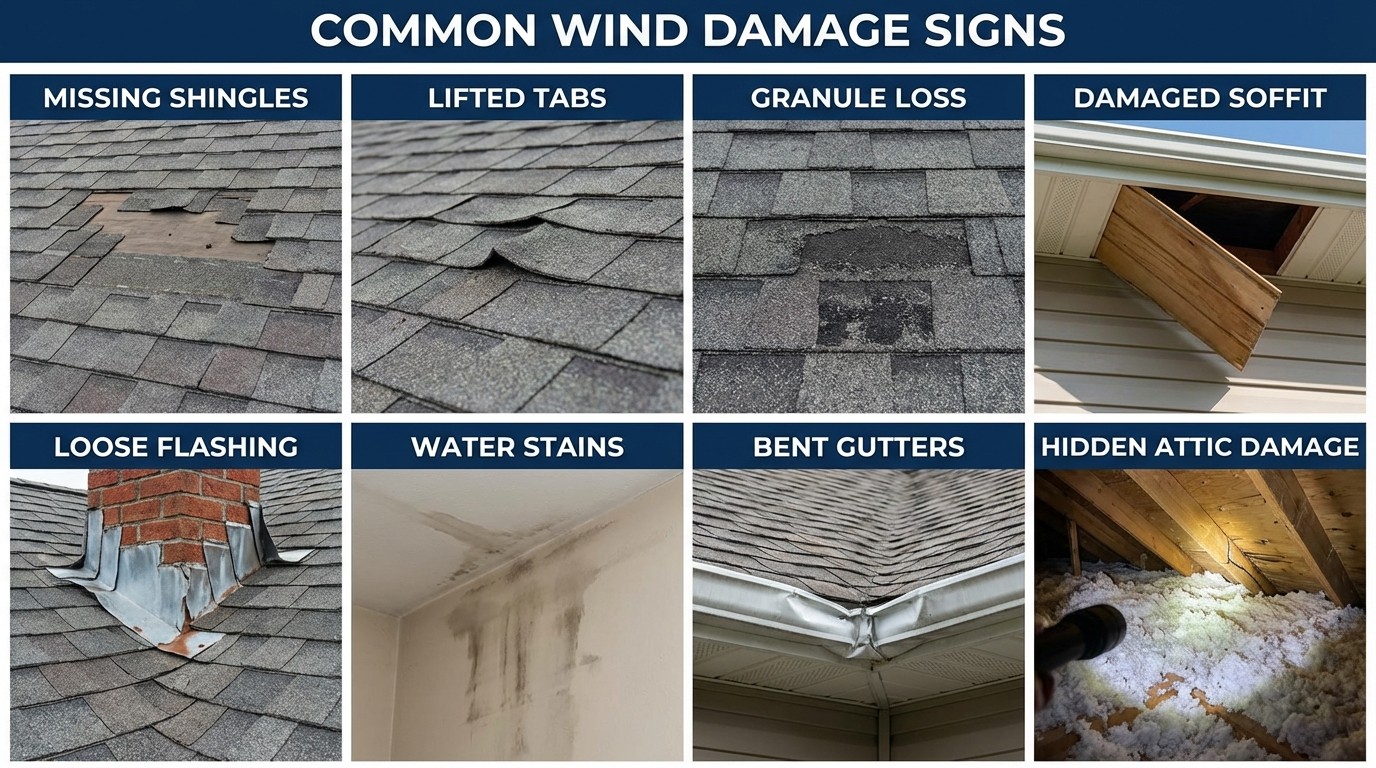
Exterior Signs
1. Missing Shingles or Tabs
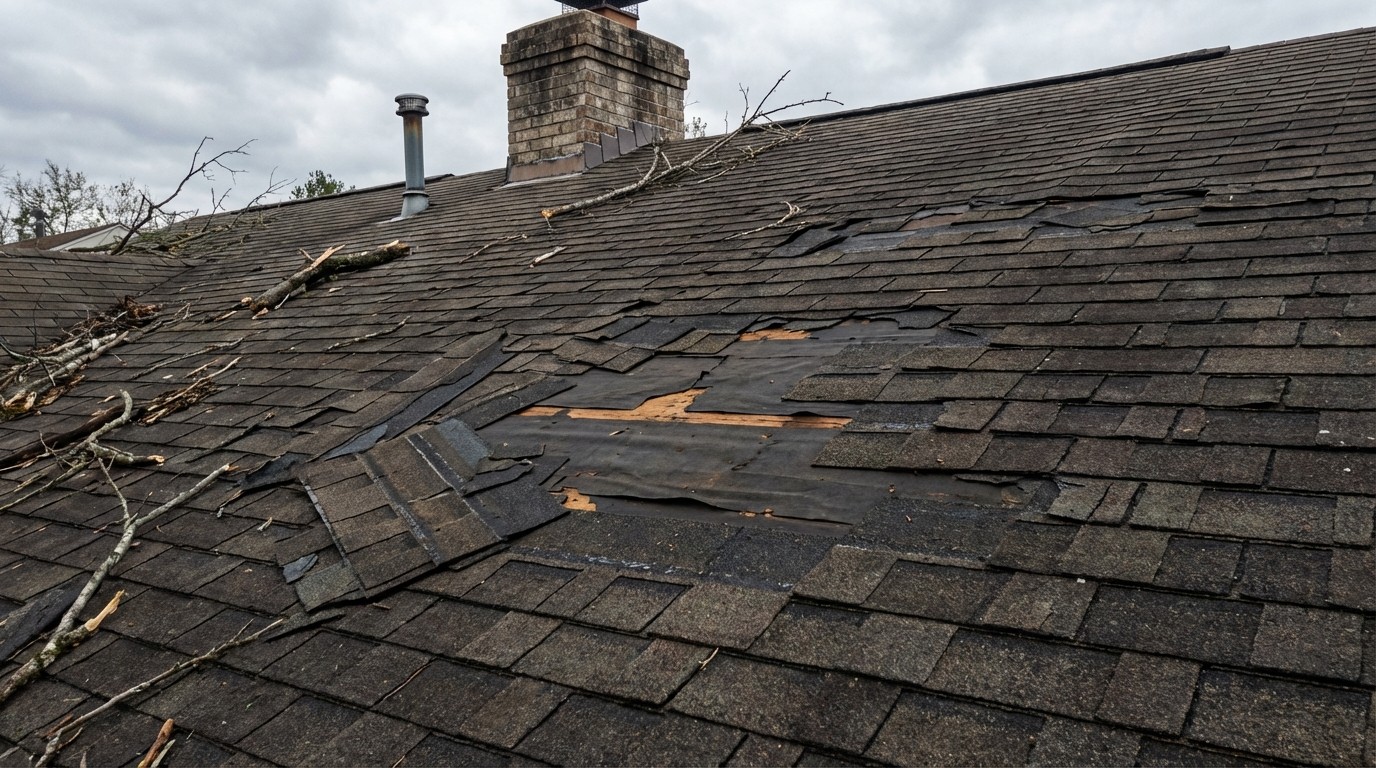
Missing shingles create the most obvious evidence of wind damage to roof. You'll see gaps in the shingle pattern where black felt underlayment shows through. Individual tabs might tear off while the rest of the shingle remains attached, creating irregular patterns across your roof surface.
This matters because exposed underlayment deteriorates rapidly under direct sun and rain exposure. Water can penetrate through underlayment within just a few days, reaching your roof decking and potentially damaging attic insulation. Missing shingles require immediate repair to prevent cascading water damage to interior structures.
Urgency: IMMEDIATE (repair within 24-48 hours)
2. Lifted or Curled Shingles
Wind gets underneath shingle edges and breaks the adhesive seal that holds tabs flat against the roof. You'll notice tabs lifting up instead of lying flush. Curled edges indicate the shingle mat has weakened and lost its ability to seal properly against weather.
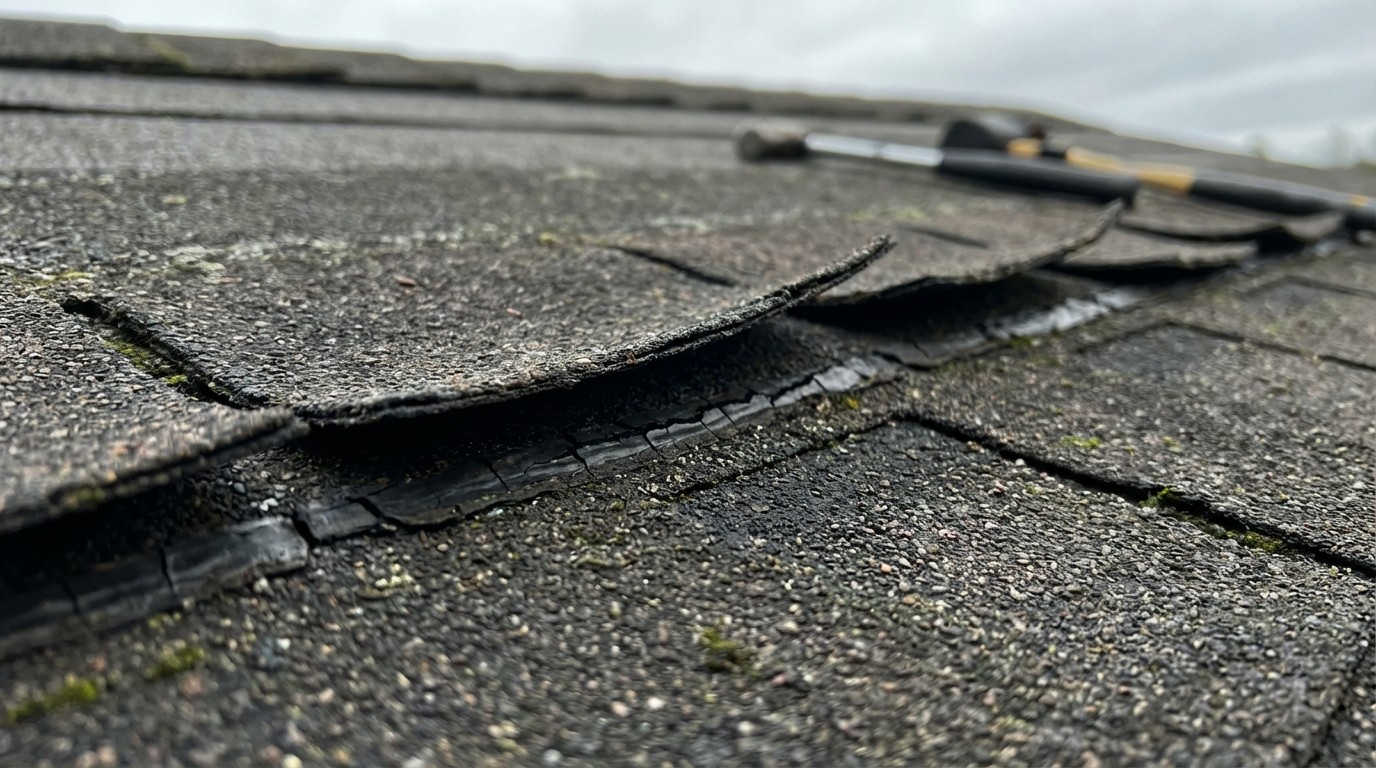
Lifted shingles create vulnerability during the next storm. Wind gets underneath more easily, progressively tearing off additional material. Even if they don't blow off immediately, lifted edges accelerate aging by allowing moisture underneath the shingle layer.
Urgency: SOON (repair within 1-2 weeks)
3. Granule Loss in Gutters
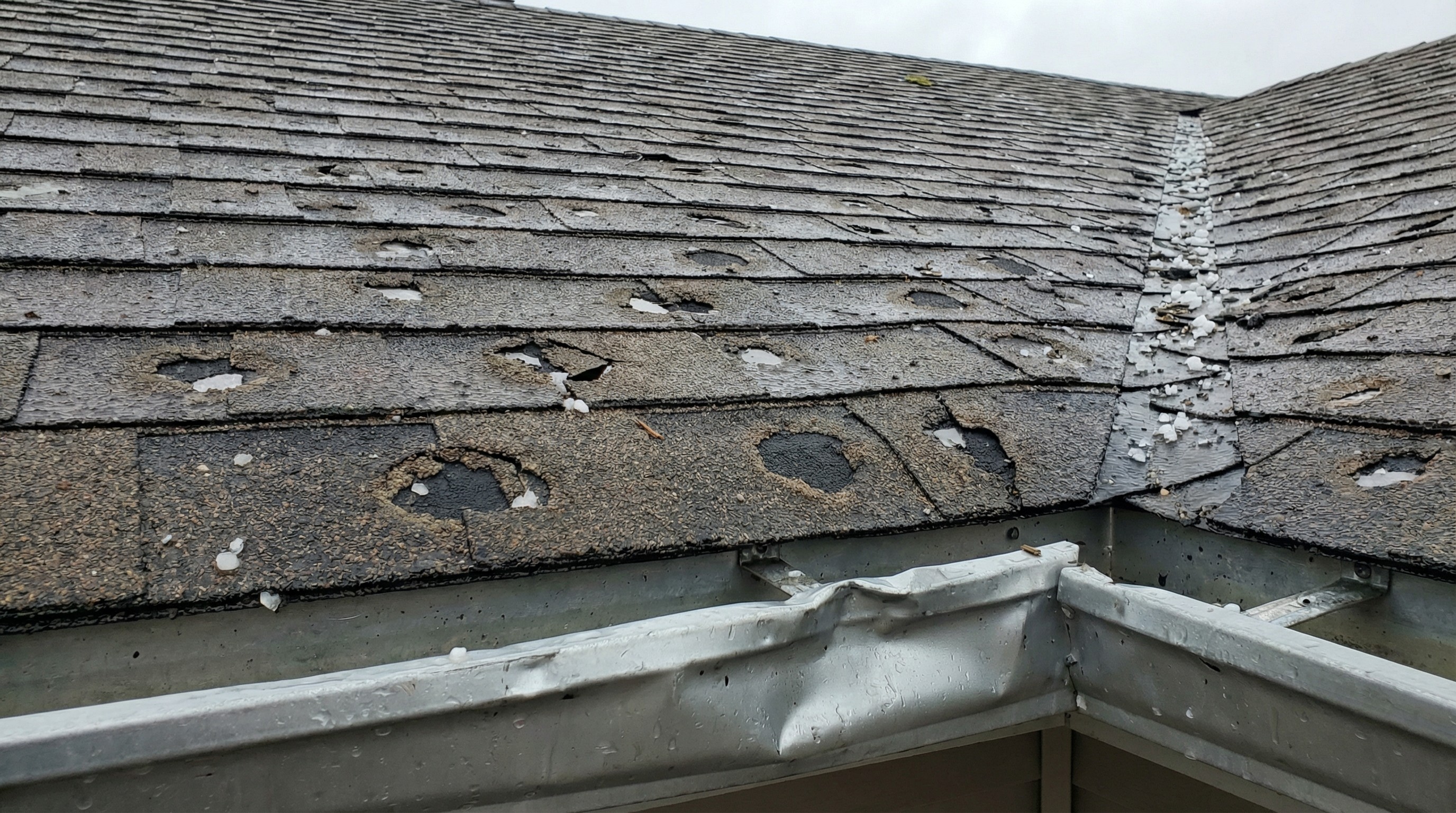
Excessive colored granules in gutters after windstorms indicate impact damage. These granules protect shingles from UV rays. Once gone, exposed asphalt ages 2-3 times faster, leading to accelerated cracking and leaks. Widespread granule loss typically means replacement makes more sense than repair.
Urgency: MONITOR (document for insurance)
4. Damaged Soffit and Fascia
The soffit is the underside of your roof's overhang, and fascia is the vertical trim board running along the roof edge. Wind-driven debris dents, cracks, or tears these boards during severe storms. Separated sections indicate fasteners pulled loose from extreme wind uplift forces.
Damaged soffit and fascia create water entry points behind your gutters and provide pest access to your attic space. Water reaching these areas can rot the underlying wood structure that supports your entire roof edge, leading to expensive structural repairs beyond cosmetic fixes.
Urgency: SOON (repair within 1-2 weeks before water infiltrates)
5. Chimney Damage or Loose Flashing
Wind can shift chimneys, crack mortar, or tear flashing sealing the chimney-to-roof connection. Even small gaps let significant water inside during rain, running down into your attic or living space.
Urgency: IMMEDIATE if leaking, SOON if loose (1 week)
Interior Signs
6. Indoor Leaks and Water Stains
Brown ceiling stains, dripping water, or damp insulation in your attic signal active damage from wind-compromised roof areas. Wind-driven rain enters through gaps and tears that might not leak during calm weather, making these leaks especially unpredictable and severe.
Active leaks mean water is already damaging your interior structure. Wet insulation loses its thermal effectiveness and must be replaced. Wood framing begins rotting within days of sustained moisture exposure. Mold growth starts within 24-48 hours, creating health hazards and expensive remediation costs.
Urgency: IMMEDIATE (arrange emergency tarping and call insurance within 24 hours)
7. Damaged Gutters or Downspouts
Bent gutters, separated sections, or downspouts hanging loose indicate strong wind forces hit your home during the storm. While gutter damage itself may seem minor, it often accompanies roof damage because the same wind forces that bend gutters also tear at roof shingles and flashing.
Damaged gutters can't drain water properly from your roof. This creates pooling along roof edges that accelerates deterioration. Overflowing gutters also cause foundation problems if water accumulates near your home's base instead of draining away through properly functioning downspouts.
Urgency: SOON (repair before next significant rain event)
8. Hidden Damage
This includes underlayment tears visible only from the attic, deck damage beneath intact-looking shingles, nail pops creating future leak points, and membrane separation on flat roofs. You won't see this damage from ground level or even while standing on the roof looking at shingles.
Professional inspectors check attic spaces and use moisture meters to identify hidden damage that compromises your roof's waterproofing integrity even when surface shingles appear mostly intact. Insurance adjusters specifically look for this type of hidden evidence when determining total claim value and whether repairs or full replacement make more sense economically.
Urgency: Requires professional inspection to identify and properly assess extent
How to Inspect Your Roof for Wind Damage Safely
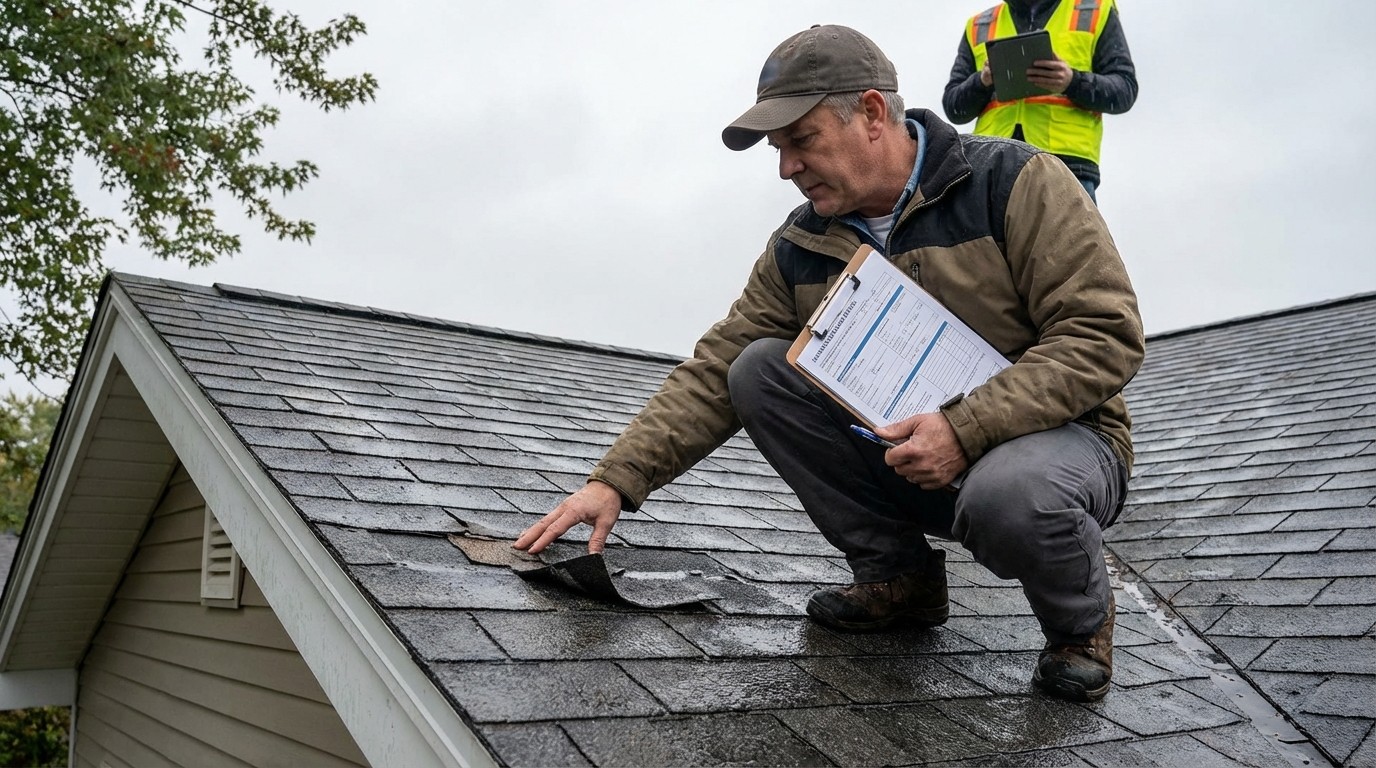
You cannot accurately assess wind damage to roof from the ground alone, but climbing on damaged roofs creates safety risks. Start with safe ground-level inspection, then call professionals.
Ground-Level Inspection
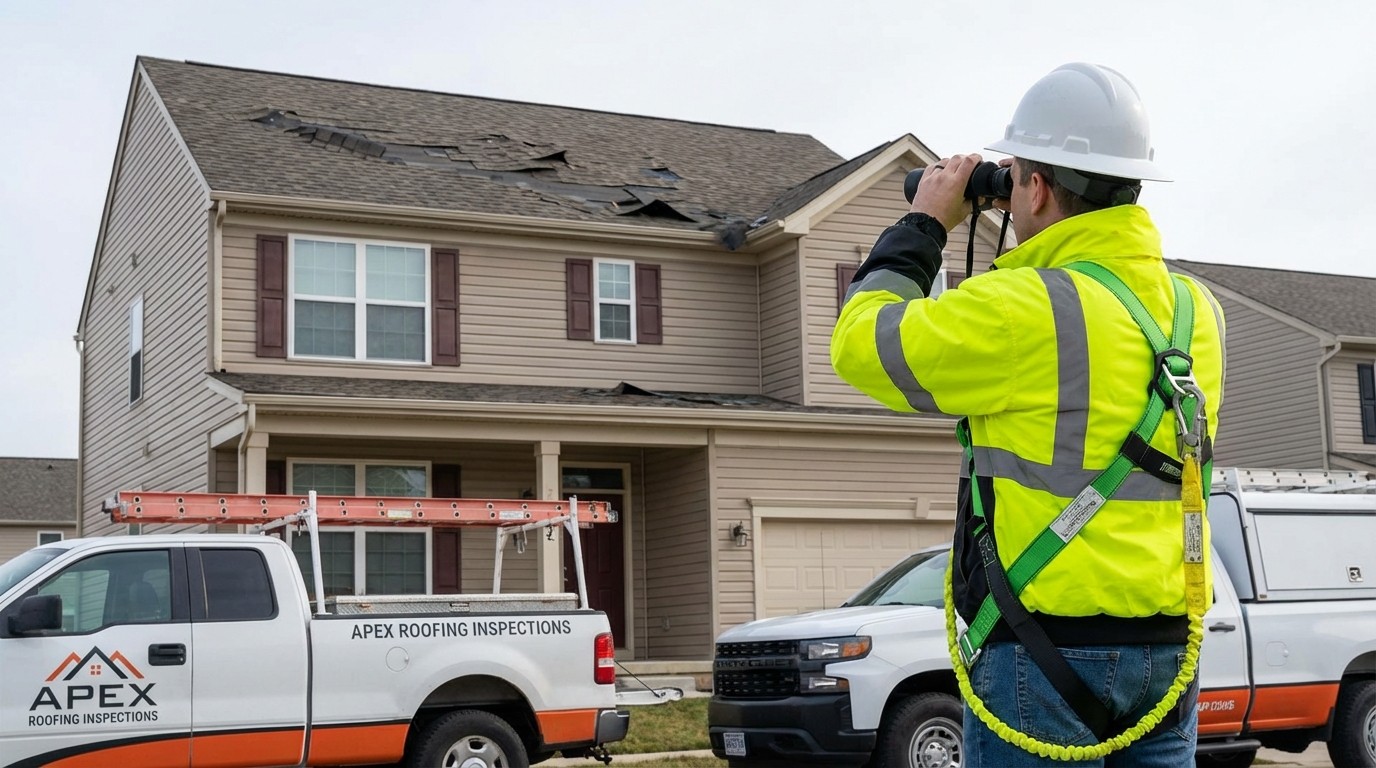
Use binoculars to examine your roof from all four sides of your house. Look for the missing shingles, lifted edges, or visible damage patterns discussed above. Check gutters for excessive granules or shingle pieces that washed down during rain after the storm.
Walk your property perimeter collecting shingle debris. The number and size of pieces in your yard indicates damage extent, a few small pieces suggests minor damage, while many large pieces or whole shingles indicates severe wind damage to roof. Photograph everything you find with timestamps to document when you discovered each piece of evidence.
Interior Inspection
Go into your attic with a flashlight during daylight hours. Look for light coming through the roof deck, which indicates holes or severe cracks allowing daylight penetration. Check insulation for dampness or water stains, squeeze insulation gently to check for moisture. Examine the underside of your roof decking for dark spots or discoloration indicating water penetration through damaged areas.
Inspect ceilings and walls in upper-floor rooms for water stains, bubbling or peeling paint, or soft spots when pressed gently. These interior signs often appear days or even weeks after wind damage occurs as water slowly migrates through roof layers, so check periodically in the weeks following major storms.
Safety Warnings
Never walk on suspected damaged roofs, weakened shingles crack under foot traffic, creating new damage. Adjusters can deny claims for damage you caused. Don't climb in wet conditions, on steep pitches (7/12+), or if uncomfortable with heights. Professional inspection ($150-$250) prevents injury and claim denial.
Documentation for Insurance
Take 20-30 photos: wide shots from multiple angles, close-ups of damage, interior stains, yard debris, and gutter granules. Date stamp all photos. Note storm date and discovery date in writing.
Insurance adjusters need comprehensive evidence. Include photos of debris collected from your yard (proves material loss from your specific roof) and damage to surrounding property. You can schedule a professional roof inspection to document wind damage before filing your insurance claim.
Wind Damage by Roofing Material
Different roofing materials respond to wind forces differently. Understanding your roof type helps assess potential wind damage to roof and make repair decisions.
Asphalt Shingles (Most Common)
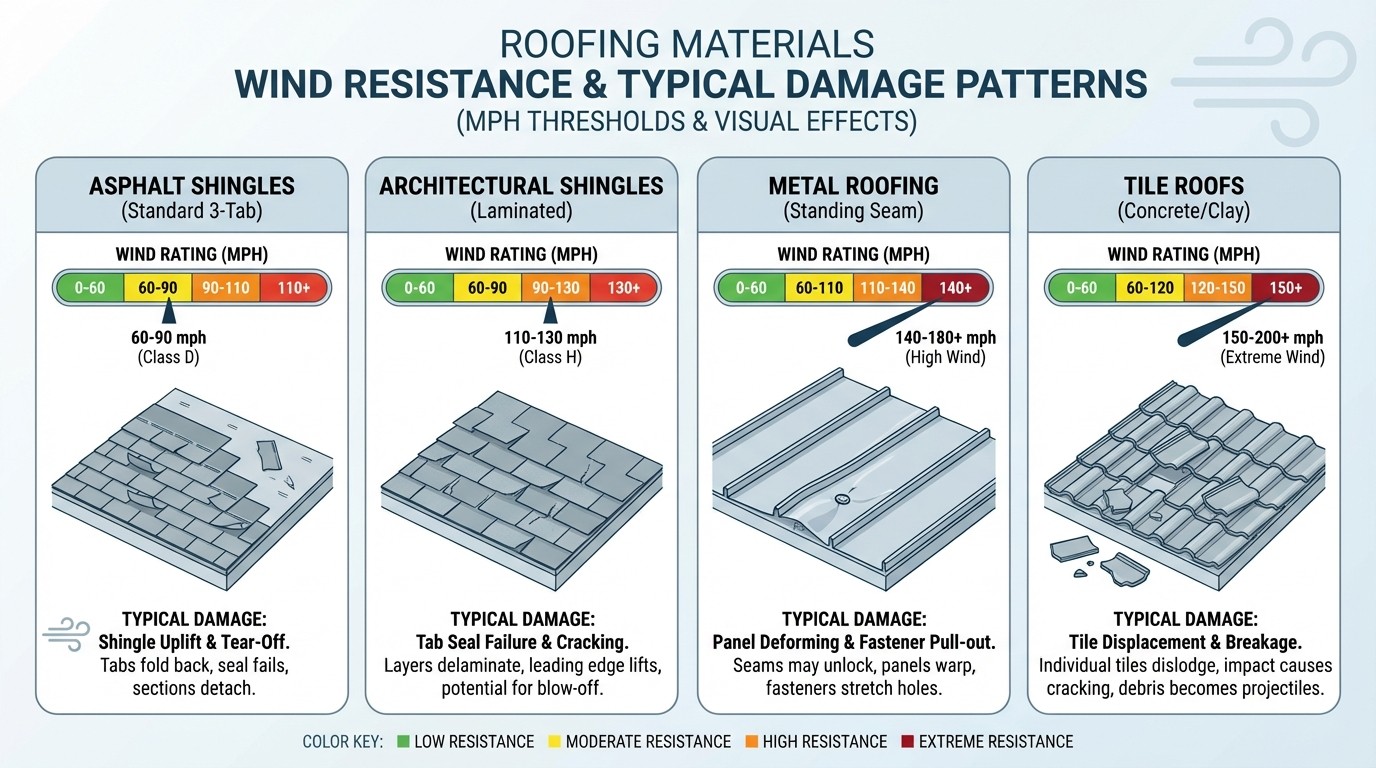
Asphalt shingles are most vulnerable to wind damage to roof because they rely primarily on adhesive strips and nails to stay attached to your roof deck. Wind gets underneath lifted edges and progressively tears tabs off. The three-tab design of basic shingles makes them especially susceptible to wind damage to roof because there's less material and weight holding them securely in place.
Architectural shingles perform significantly better against wind forces. Standard architectural shingles resist winds up to 60-70 mph, while premium Class H architectural shingles handle 110-130 mph when properly installed with correct nailing patterns. The multi-layer laminated construction adds weight and structural integrity that resists wind uplift.
Age dramatically affects wind performance. Shingles over 15 years old can fail at wind speeds 30-40% lower than when new because the asphalt becomes brittle over time, adhesive strips lose their bonding strength, and nails gradually work loose from decades of thermal expansion and contraction cycles.
Metal Roofing
Standing seam metal roofs with concealed fasteners withstand 140+ mph winds. Exposed fastener roofs are vulnerable at screw locations, if screws loosen, wind can peel back panels.
Coastal areas need aluminum or galvanized steel with protective coatings to prevent corrosion at fastening points.
Tile and Flat Roofs
Tiles handle wind well due to weight (8-15 lbs each), but can crack from debris or dislodge if hardware fails. Flat roofs with TPO/EPDM experience damage at seams where wind peels back edges.
Here's how materials compare for wind resistance:
Material | Wind Resistance | Typical Wind Damage | Prevention Cost | Replacement Threshold |
|---|---|---|---|---|
Asphalt Shingles (Standard) | 60-70 mph | Lifted tabs, missing shingles | $0-$500 | >30% damaged |
Architectural Shingles | 110-130 mph | Minimal with proper install | $0-$800 | >30% damaged |
Metal Roofing (Standing Seam) | 140+ mph | Rare, fastener issues | $0 | Structural only |
Tile (Clay/Concrete) | 100-110 mph | Individual cracks | $500-$1,500 | Individual tiles |
Will Insurance Cover Wind Damage to Your Roof?
Yes, most homeowners insurance policies cover wind damage to roof under dwelling coverage. However, you'll pay your deductible first (typically $1,000-$2,500 or 1-5% of home value), and coverage depends on proving damage resulted from a covered wind event, not wear and tear.
What's Covered
Standard HO-3 policies cover sudden wind damage to roof. This includes full roof replacement if wind damage to roof exceeds 25-30% of the surface, emergency tarping to prevent further damage, and matching shingles for partial repairs when available. Insurance pays to restore your roof to pre-storm condition using similar quality materials.
What's NOT Covered
Insurance won't pay for pre-existing damage or normal wear and tear. If your roof showed aging before the storm (curling shingles, widespread granule loss, brittleness), adjusters will depreciate claims or deny portions attributed to age rather than wind.
Cosmetic-only damage that doesn't affect waterproofing may not qualify. Coastal areas within 50 miles of ocean often require separate windstorm insurance because standard policies exclude hurricane damage.
Filing Your Claim
Contact insurance within 24-48 hours of discovering wind damage to roof. Most policies allow 1 year to file, but earlier filing preserves evidence. Wind damage to roof becomes less obvious as weathering blends it with normal aging.
Claims process steps:
1. Document damage with photos/videos
2. Get professional inspection ($150-$250)
3. File claim with storm date
4. Schedule adjuster inspection (3-7 days)
5. Review adjuster's estimate
6. Obtain 3+ contractor quotes
7. Negotiate supplements if needed
8. Pay deductible and complete repairs
9. Submit final documentation
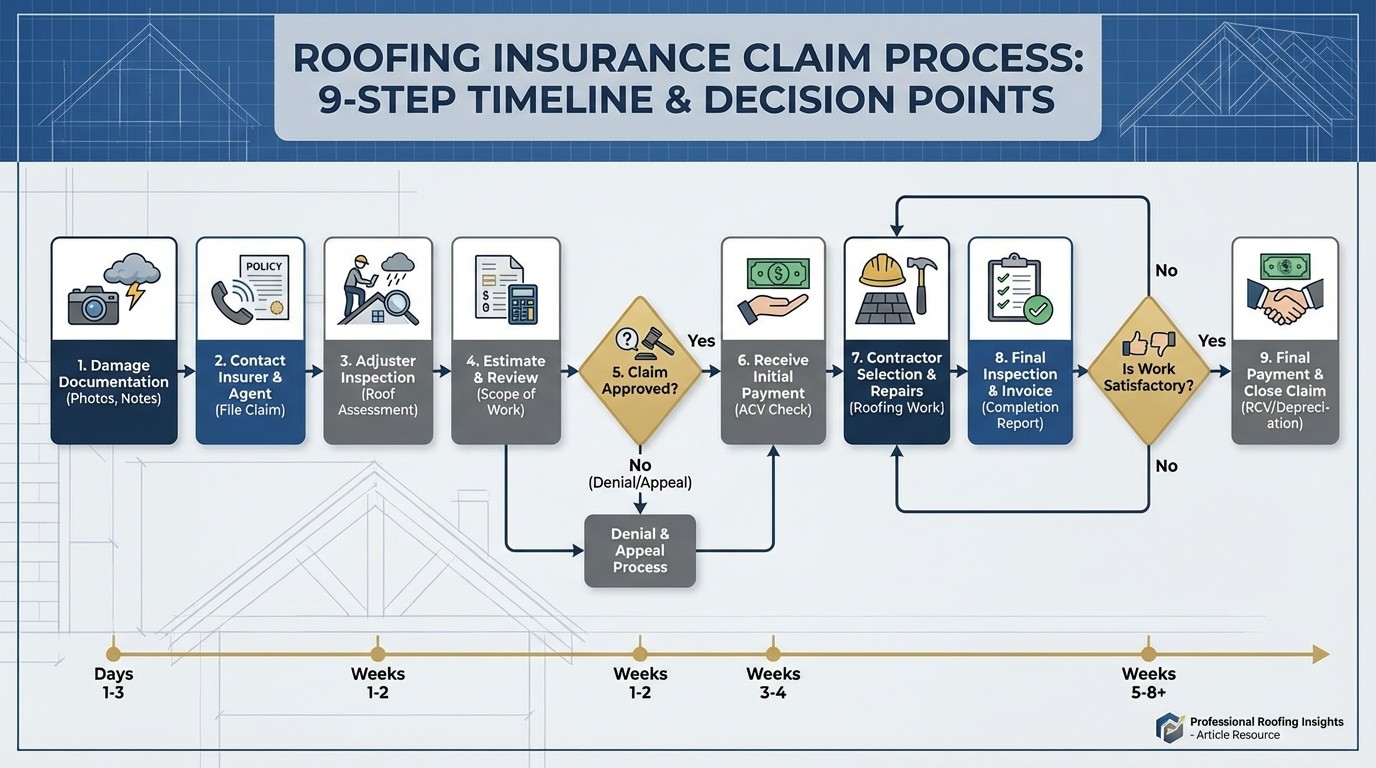
According to the Insurance Information Institute, average wind damage claims are $9,000-$13,000 nationally. Process takes 30-45 days. See our guide to getting insurance to pay for roof replacement for detailed claim strategies.
Common Insurance Mistakes
Never make permanent repairs before adjuster inspects wind damage to roof, this voids coverage. Emergency tarping is acceptable. Get your own contractor inspection first for negotiation leverage when adjuster's wind damage to roof estimate seems low.
File within 30-60 days while wind damage is fresh and clearly attributable to the specific storm event.
Wind Damage Repair Costs
Repairing wind damage to roof costs $300-$800 for minor damage affecting 5-10 shingles. Moderate damage covering one roof slope runs $1,500-$4,000. Severe damage affecting 50% or more costs $5,000-$15,000. Full replacement costs $8,000-$25,000 depending on roof size and material. After insurance, most homeowners pay $1,500-$3,000 out-of-pocket.
Repair Cost Breakdown
Minor repairs:
5-10 missing shingles: $300-$800
Flashing repair: $200-$500
Soffit/fascia repair: $400-$900
Emergency tarping: $200-$600
Moderate damage:
One roof slope: $1,500-$4,000
Multiple flashing locations: $800-$1,500
Severe damage:
Two+ roof slopes (50%+): $5,000-$15,000
Underlayment/deck repair: $2,000-$5,000 additional
Full replacement:
Asphalt shingles: $8,000-$15,000
Metal roofing: $15,000-$30,000
Cost Factors
Steep roofs (7/12+ pitch) increase labor 20-40%. Geographic location varies rates ($80-$150 per square). Storm-affected areas see 10-20% temporary increases during peak repair season.
Insurance Impact
Most homeowners pay deductible plus upgrades. If replacement costs $12,000 with $2,500 deductible, you pay $2,500.
When damage exceeds 40-50% of replacement cost, insurance approves full replacement. Estimate your roof replacement cost to understand expenses.
Steps to Take After Discovering Wind Damage
Acting quickly preserves evidence and maintains coverage eligibility.
Step 1: Ensure Safety - Check for exposed wires or structural instability. Call utilities if you smell gas or see exposed wires.
Step 2: Document Damage - Take ground-level photos showing all damage. Collect shingle pieces from yard. Note storm date and discovery date.
Step 3: Contact Insurance - Call within 24-48 hours to file. Get claim number and adjuster information.
Step 4: Emergency Tarping - If you have exposed underlayment or active leaks, arrange emergency tarping. Insurance covers this. Save receipts.
Step 5: Professional Inspection - Get independent inspection ($150-$250) before adjuster visits for documentation leverage.
Step 6: Obtain 3+ Contractor Estimates - Get detailed written estimates from licensed contractors. Verify licenses directly.
Step 7: Review Adjuster's Report - Compare adjuster's estimate with contractor quotes. Provide documentation for supplements if estimate seems low.
Step 8: Schedule Repairs - Choose contractor based on experience, warranty, and references, not just lowest price. Never pay full amount upfront.
Timeline: Adjusters schedule within 3-7 days. Repairs begin 1-2 weeks after approval. Full replacements take 2-5 days of active work.
Finding a Qualified Storm Damage Contractor
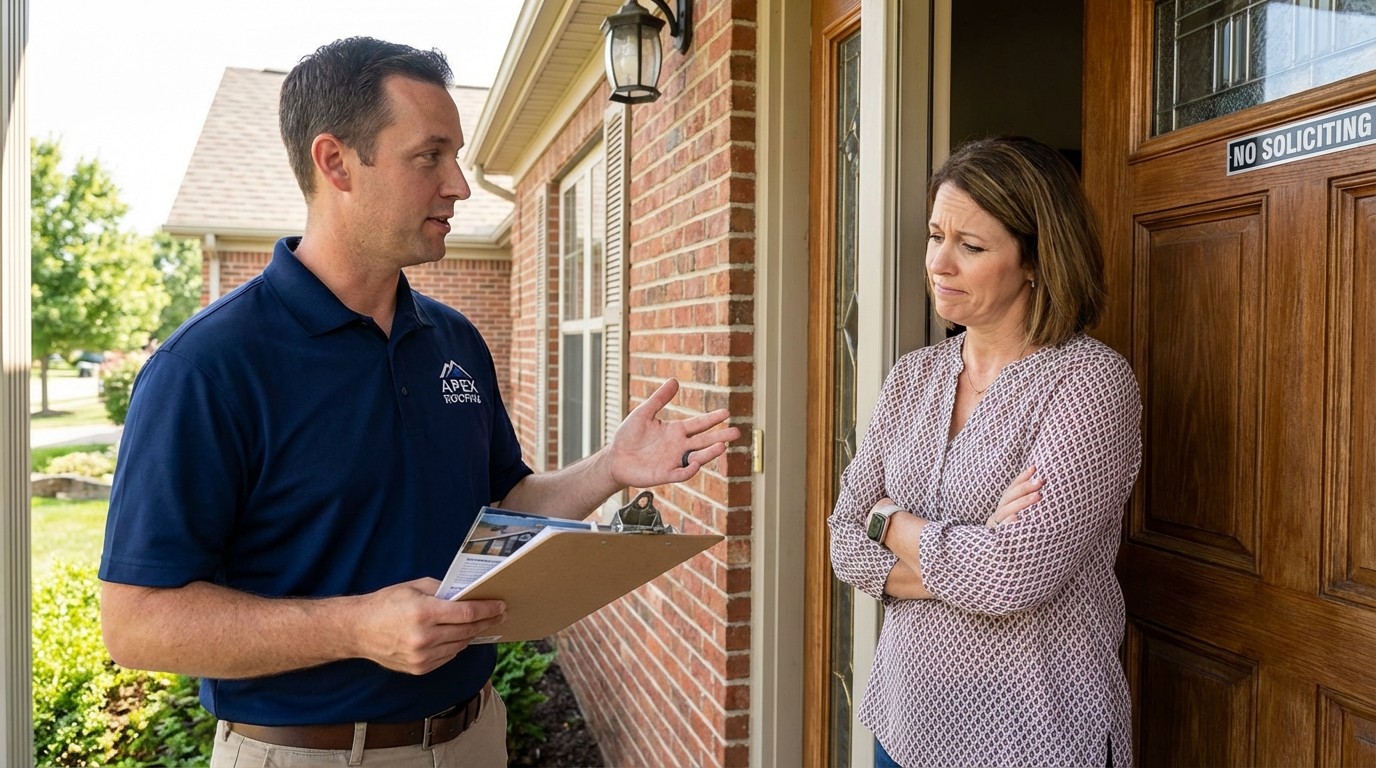
After windstorms, out-of-state contractors flood areas with poor work and upfront payment demands.
Storm Chaser Red Flags
Watch for warning signs:
Out-of-state plates, no local address
"We'll waive your deductible" (insurance fraud)
Immediate pressure to sign or "limited time" pricing
Full payment demanded upfront
No verifiable local references
Storm chasers account for 40% of roofing fraud after weather events.
What to Look For
Local presence: 5+ years operating with physical office. Verify address on Google Maps.
Licensing/insurance: State license, liability insurance ($1M minimum), workers' comp. Call licensing board to verify.
Storm expertise: Experience with insurance wind damage claims and supplement negotiation.
Payment terms: Milestone-based (10-15% deposit, 30-40% at delivery, remainder at completion). Never more than 15% upfront.
Questions to Ask
Before hiring for wind damage roof repair, ask:
1. How long in business locally?
2. License number for verification?
3. Experience with insurance wind claims?
4. Three local references from past year?
5. Workmanship warranty details?